What a Blockchain Actually Is (Without the Hype)
Strip away the marketing language, and a blockchain is a shared ledger that no single party controls. When a transaction is submitted (say, sending bitcoin from one address to another), that transaction is broadcast to a network of computers called nodes. Those nodes verify the transaction against a set of rules coded into the protocol, bundle it with other recent transactions into a block, and add that block to a growing chain of previous blocks.
What makes this arrangement meaningful is the cryptographic link between each block. Every block contains a fingerprint of the previous one, computed from its entire contents. Change anything in a historical block, and every fingerprint from that point forward becomes invalid. Rewriting history would require the attacker to redo the computational work for every block that came after, in full, and faster than the honest network continues to extend the chain. On a large, healthy network, that is economically prohibitive.
This design produces a record that is transparent, auditable, and resistant to retroactive manipulation. It also means no central authority needs to be trusted to maintain the ledger honestly. The rules are enforced by math and the distributed incentive structure, not by any company or government.
Coins vs Tokens: Why the Difference Matters
The distinction between coins and tokens is one of the first things beginners get wrong, and it matters for practical reasons.
Coins are the native currency of their own blockchain. Bitcoin runs on the Bitcoin network; Ether runs on Ethereum. When you send BTC, you are using the base-layer settlement system directly. Coins are required to pay transaction fees on their respective networks, which gives them intrinsic demand beyond speculation.
Tokens, by contrast, are built on top of an existing blockchain. Most tokens on Ethereum conform to the ERC-20 standard, which is a set of common functions that wallets and exchanges can interact with predictably. Tokens can represent almost anything: governance rights in a protocol, fractional ownership of an asset, in-game currency, or a claim on future yield. The enormous variety of tokens in existence means quality ranges from carefully engineered protocol infrastructure down to outright scams with no purpose beyond separating buyers from their money.
For a beginner, the practical implication is this: owning a token does not mean owning a piece of a blockchain. Evaluate what the token actually does and whether that function generates genuine demand.
Wallets Explained: You Don't Own Crypto, You Own Keys
The phrase "crypto wallet" is somewhat misleading. A wallet does not store cryptocurrency in the way a physical wallet stores cash. What it stores (or more precisely, what it gives you access to) is a private key.
Your private key is a long string of random data that proves ownership of a blockchain address. Anyone who possesses that key can move any funds associated with that address. The private key is typically encoded as a seed phrase: twelve or twenty-four words generated from a standardised word list. This seed phrase can regenerate your private keys from scratch, which means it is the master credential for everything in your wallet.
The single most important security habit in all of crypto is storing your seed phrase offline, on paper or stamped metal, in a location only you can access. Never photograph it. Never type it into any website or app. Never share it with anyone who claims to be providing support. Every person who has ever been drained via a "helpful" wallet assistant was tricked into surrendering this one thing.
When you hold crypto on an exchange, you do not have a private key. The exchange holds it on your behalf, which introduces custodial risk: if the exchange fails, is hacked, or freezes withdrawals, your access to the funds depends on their co-operation.
The 5 Scams Beginners Encounter First
The crypto space has a disproportionate density of fraud, and newcomers are targeted systematically because their inexperience is visible. The five patterns beginners encounter most frequently are worth memorising.
Impersonation scams involve someone posing as a celebrity, influencer, or exchange support agent, typically offering to "double your crypto" or demanding your seed phrase to resolve a fabricated problem. No legitimate support agent will ever ask for your seed phrase under any circumstances.
Fake exchange platforms are polished websites that accept deposits and show impressive returns in a dashboard, then freeze withdrawals when the victim tries to exit. Verify any platform against official sources before depositing.
Phishing links arrive via email, social media, and even paid search advertisements, directing users to counterfeit versions of legitimate sites. Always type exchange URLs manually or use saved bookmarks.
Airdrop scams promise free tokens in exchange for connecting your wallet to a website, which then executes a transaction draining your funds. Free tokens that require wallet connection are almost never free.
Rug pulls involve project developers who build enough social credibility to attract investment, then withdraw all liquidity and disappear. Projects with anonymous teams, no locked liquidity, and aggressive promotional spending are the highest-risk category.
Your First 7 Days: A Safe Learning Sequence
The instinct to buy before understanding is the root cause of most beginner losses. A safer entry sequence prioritises knowledge over exposure.
In your first two days, focus entirely on understanding private keys and seed phrases. Open a test wallet, generate a seed phrase, and practice backing it up without any funds involved. In days three and four, study the specific platform you intend to use (its fee structure, its withdrawal limits, its security settings) before depositing anything. Day five is the right point to make a small, deliberately affordable first purchase, treating it as tuition rather than investment. Days six and seven should be spent reviewing what you experienced: what fees you paid, what actually happened on-chain, and what you would do differently.
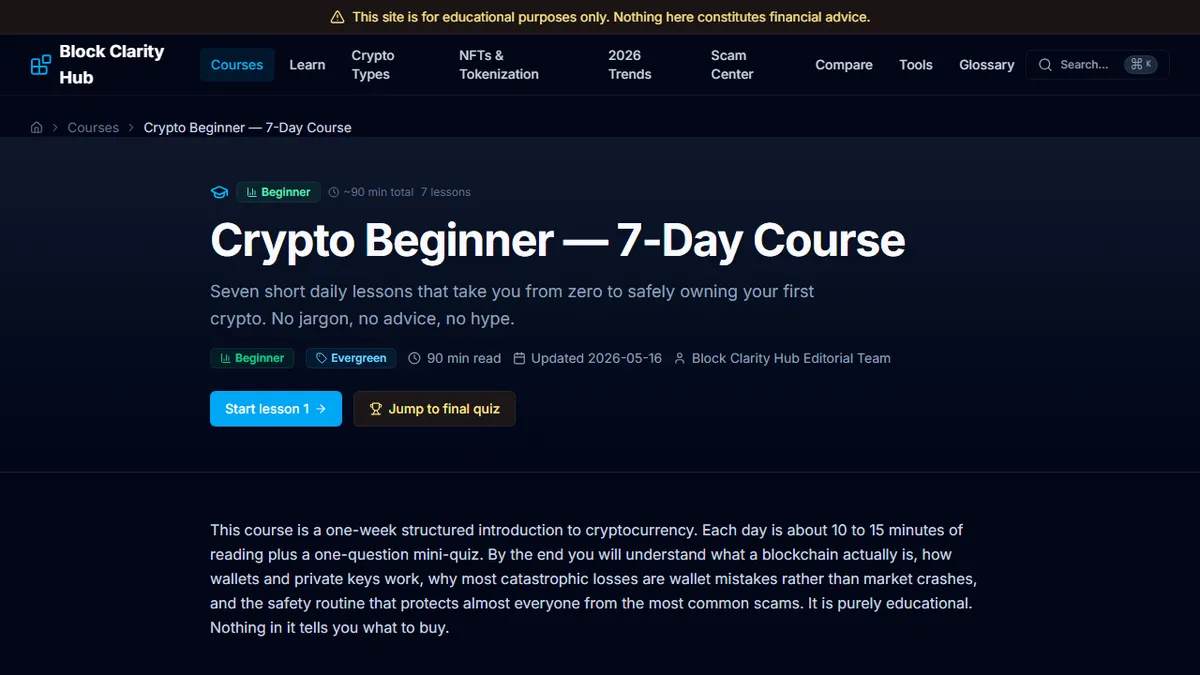
For a structured progression through these fundamentals, the structured 7-day crypto beginner course covers each concept in dedicated daily lessons with a final knowledge quiz.
Where to Learn More Once the Basics Click
Once the mechanics of wallets, keys, and transactions feel intuitive, the next productive areas of study are the specific risks of wherever you plan to put your money. DeFi, staking, NFTs, and trading each carry distinct technical risks that differ substantially from simply holding on an exchange.
The most durable habit you can build at this stage is reading on-chain data directly. Block explorers like Etherscan make every transaction publicly visible. Developing the ability to verify what is actually happening — rather than relying on what a project claims is happening — is the skill that separates durable participants from those who eventually learn an expensive lesson.