The Date Is the Point
If you have ever looked at a list of crisis helplines, you have probably seen a phone number, a logo, and nothing else. No date. No source. Just a number that someone typed into a webpage at some point in the past, possibly years ago. The date next to a helpline number is not a formatting quirk. It is the single most useful piece of information on the page.
A crisis line number is infrastructure. It has to connect to a real desk, staffed by real people, funded by a real organisation. That infrastructure changes. Numbers get retired. Services merge. Hours shrink. A helpline that was 24/7 in 2023 might now close at midnight. A text line might have been replaced by a webchat. None of this is visible in the number itself. The only way to know is to check, and the only way to trust a check is to see when it happened.
That is why a growing number of directories now publish a check date beside every contact. The date tells you that a human being looked at the provider's own official page, confirmed that the number still works, and wrote down when they did it. Without a date, you are looking at an unverified claim. With a date, you are looking at a verification record you can weigh for yourself.
Why Numbers Go Stale
Helplines are not like emergency services numbers that are written into law. Most are run by charities and non-profits, often on short-term funding. When a contract ends, a phone number can stop routing to a support desk and start routing to a recorded message. When an organisation rebrands or merges, it may switch to a new number and leave the old one active for a while — or not.
There are also quieter failures. A number can be correct but the service behind it can change its hours. A line that used to answer at 3am may now only answer during office hours, with no announcement to callers until they have already dialled. A text service can change its keyword. A webchat link can break. None of these changes require anyone to update the old directory that is still showing the number. Directories copy from each other, and errors propagate. The date is the only way to tell whether a listing is current or a fossil.
Even official-looking sources are not immune. Government pages get outdated too. That is why a serious directory will check a number even when it comes from a government site, and will say so. The date next to a listing is a record of a specific verification event, not an opinion, and the strongest records name the source they checked.
What "Checked" Actually Means
The word "checked" can mean many things. Some directories scrape numbers automatically from the web, which means they are only as good as whatever they scraped. Others accept submissions from users. Neither of those is verification.
A real check means a person went to the provider's own published page, found the number there, and confirmed that it matches the listing. Ideally it means they also confirmed what the service actually offers — phone, text, webchat, hours, languages, age limits. The date records when that happened. Some checks are stronger than others. A number checked against a named government page, such as the NHS 111 mental health option, carries more weight than one copied from a third-party forum. The site's own listings note the difference between a check against the provider's page and a check against a government page.
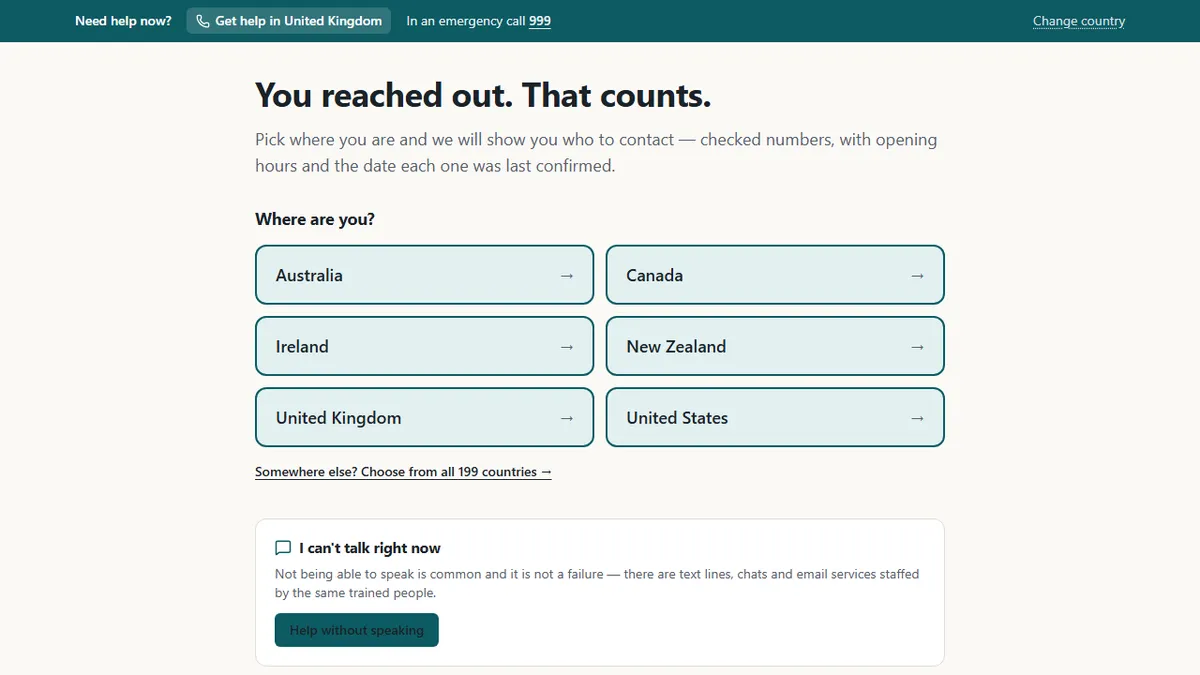
You can see this standard in action on the live help now page. Every contact there carries a date, and every date is attached to a named source. That is the model to look for elsewhere. If a directory cannot tell you when it last checked a number, it cannot tell you whether the number works.
How to Read a Date
A date next to a helpline number gives you a simple question: is this recent enough to trust? There is no universal cutoff, but a few rules of thumb help.
If the date is within the last few months, the number has probably been verified recently. If it is more than a year old, treat it as unverified. If there is no date at all, assume the listing is stale until proven otherwise. This is not cynicism. Helplines change on timescales that make a two-year-old listing unreliable.
The same logic applies to numbers you save for yourself. If you put a crisis line in your phone today, write the date in the contact name or notes. Six months from now, you will not remember when you checked it. A contact called "Samaritans 116123 2026-08" is more useful than one called "Samaritans", because it tells you when the number was last confirmed. If you share a helpline with a friend, tell them when you last used it or checked it. That one detail turns a rumour into a usable fact.
What a Date Does Not Tell You
A date is not a guarantee. It tells you that a number worked on the day it was checked. It does not tell you that the number will work tomorrow, that the person on the other end will be helpful, or that the service is right for you. A recent date is a strong signal, not a promise.
It also does not tell you about the quality of the service. A helpline can be verified and still have long wait times, limited hours, or a narrow remit. The date is one piece of information among many. Look for the date, but also look at what the listing says about the service — who it is for, when it operates, what contact methods it supports. A verified number with the wrong hours is still the wrong number for your situation.
This is why the best directories publish more than a number. They publish the date, the source, and the details of the service. That combination is what makes a listing trustworthy. A date alone is better than nothing, but a date plus a named source plus a clear description is the standard worth demanding.
The Cost of a Wrong Number
It is easy to think of a wrong number as a minor inconvenience. In a crisis, it is not. Someone who has summoned the courage to call a helpline and reaches a dead line may not call again. They may interpret it as proof that no one is there. The cost of a stale listing is more than a wasted call: it is a lost connection at exactly the moment a connection matters most.
This is why the stakes on verification are so high. A directory that publishes an unchecked number is doing more than making a small mistake: it is putting a barrier between a person in distress and the person who could help them. That is also why the best directories would rather publish fewer numbers than publish unverified ones. They know that a number with a date is a promise, and a number without one is a gamble.
What You Can Do With a Date
The next time you look at a helpline directory, make the date part of how you judge it. Prefer listings that show when they were checked. Prefer directories that name their sources. If you run a website, a poster, or a resource list, add a check date to every number you publish — and update it. A poster that says "checked August 2026" is more honest than one that simply prints a number and hopes.
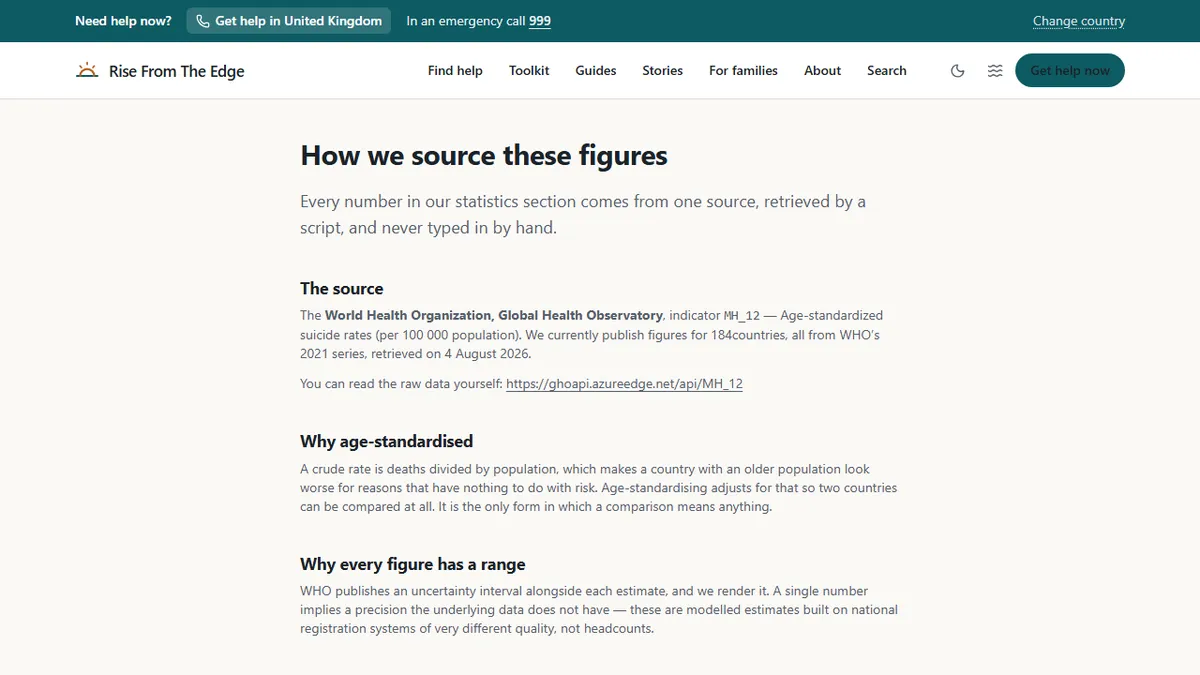
You can also verify a number yourself in under two minutes. Go to the provider's official website, find their contact page, and compare. If the number matches and the page has been updated recently, you have done the same check a good directory does. If you want to understand how a site decides which sources are trustworthy, their sourcing standards page explains the process in detail. The principle is simple: a number is only as good as the last time a human confirmed it.