How Bundle Discounts Are Calculated (and Why 15% Isn't Always 15%)
Insurance carriers market bundling with headline numbers that rarely reflect the actual math on your specific policy. When a company advertises a 15% multi-policy discount, that percentage typically applies to the base premium before other adjustments, not to the final premium you see on the bill.
The mechanics vary by insurer. Some apply the discount to both policies proportionally. Others give a larger discount to the auto policy and a smaller one to home. A few front-load the discount in the first year as an acquisition incentive and reduce it at renewal. What the advertisement says and what appears on the declarations page after all rating factors are applied can look quite different.
The only honest way to evaluate a bundle discount is with complete quotes (bundled versus separate) for your specific situation. Generic percentage claims serve the carrier's marketing goals more than your financial decision.
Auto + Home: The Most Common Bundle and Its Real Savings Range
The auto-and-home bundle is where multi-policy discounts do their most significant work. Across carriers and states, the actual premium reduction for combining these two policies typically falls between 5% and 25%, with meaningful variation by state, risk profile, and insurer.
In low-competition markets where one or two carriers dominate, bundle discounts tend to be modest, because the alternative of shopping across carriers is less attractive. In competitive markets with many admitted carriers, discounts are often more generous because the carrier values locking in two lines of business.
For a homeowner paying $1,800 annually for home insurance and $1,200 for auto, a genuine 15% discount on both would save $450 per year. At the upper end of the range, the savings can exceed $600. But neither figure matters if the bundled premiums at one carrier start from a higher base than the competing quotes at two separate carriers.
When Splitting Carriers Beats Bundling
Bundling is a convenience product as much as a savings product, and that distinction matters when one carrier is genuinely cheaper for a specific line of business regardless of bundle status.
The most common scenario where splitting wins is when a driver has a recent accident or violation on their record. Some carriers are significantly more competitive for high-risk auto than others, and the carrier with the best high-risk auto rates may have mediocre home insurance pricing. The discount at the bundling carrier may not bridge that pricing gap.
Geographic risk factors create a similar split. Coastal homeowners in hurricane-exposed states often find that their best available home insurer (perhaps a surplus lines carrier or a specialist) does not offer auto insurance at all. In that situation, the bundle option simply does not exist, and they optimize each policy independently.
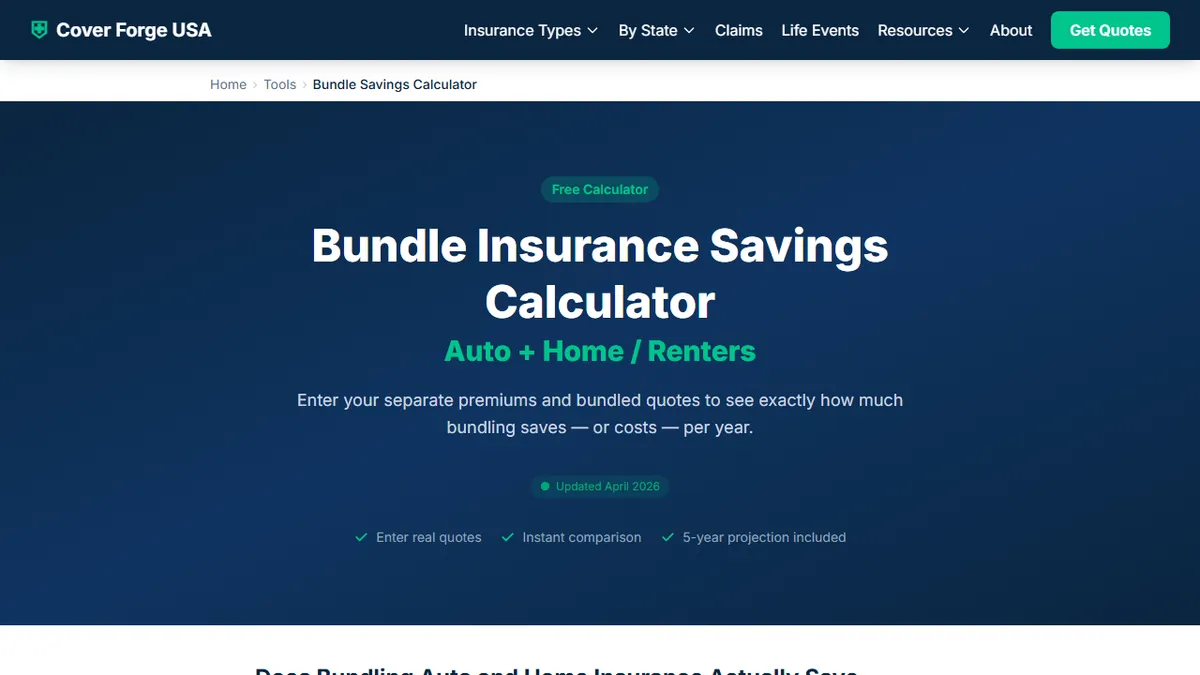
To compare separate vs bundled premiums side by side, you need complete quotes in both formats. Comparing a bundled quote from one carrier against only the auto or only the home from a second carrier will produce a misleading result.
Policies That Bundle Well vs. Policies Better Kept Separate
Not all bundling combinations perform equally.
Auto and renters insurance bundles consistently show strong discounts relative to the individual premiums involved. Because renters insurance has low base premiums, even a 10% discount may represent meaningful value as a percentage, and the absolute cost of maintaining the bundle is low if a better auto quote doesn't materialize.
Auto and home bundles, as discussed, are worth evaluating carefully but require full comparative quotes before accepting.
Specialty policies (boat, motorcycle, RV, classic car) sometimes bundle with auto or home for modest discounts, but the base premiums for specialty vehicles are driven heavily by underwriting factors specific to the risk. The bundle discount often plays a secondary role compared to the carrier's underlying pricing for that vehicle type.
Life insurance is rarely enhanced meaningfully by bundling with property and casualty policies. Life carriers and P&C carriers operate different underwriting models, and life insurance pricing is primarily driven by age, health history, and coverage amount rather than carrier loyalty discounts.
Step-by-Step: Running Your Own Bundle Comparison
The comparison process requires more discipline than most people apply, but it is not complicated.
First, gather complete quotes from at least three carriers for the bundle you are considering: auto plus home is the most common case. Each quote should reflect identical coverage limits across carriers so the comparison is meaningful.
Second, separately request single-policy quotes for each coverage type from carriers that specialize in that line. If you have a clean driving record, several direct-to-consumer auto carriers may beat bundled pricing on auto alone.
Third, total the costs across the three scenarios: bundled at Carrier A, bundled at Carrier B, and split with the best auto quote plus the best home quote from different carriers.
Fourth, factor in intangibles. Managing one carrier relationship, one renewal date, and one claims contact has real value. If splitting saves $150 per year but requires managing two renewal conversations and two separate claims processes in the event of an incident involving both your car and your home, the convenience factor reasonably matters.
Red Flags: When a Bundle Is Just Locking You into One Weak Insurer
Bundling's biggest risk is that it substitutes convenience for competitiveness. A single carrier renewal becomes the default, and most policyholders do not shop at renewal with the same diligence they applied at initial purchase.
Three warning signs suggest a bundle is costing more than it saves. First, your renewal premium has increased more than 10% in a year without a change in your claims history or risk profile. This indicates the carrier is raising rates on existing policyholders who are unlikely to shop because of the bundled inertia. Second, your carrier's financial strength rating has declined. AM Best ratings below A indicate potential claims-paying concerns. Third, your state's insurance department complaint index for the carrier is notably higher than the industry average, which can predict claims-handling problems that a low premium may not compensate for adequately.
Bundle discounts reward loyalty, but they should not be an excuse to stop watching what you are paying for. An annual comparison (even a quick one) is sufficient to ensure the bundle is still the best arrangement for your specific policies.