Why Polo's Reputation for Cost Is Only Half the Story
The image of polo as a sport exclusively for the ultra-wealthy has deep roots (silver trophies, champagne marquees, bespoke tailoring) but it obscures a much more accessible reality for the vast majority of players who participate at club level. The sport's intimidating reputation tends to describe the patronage end of the market, where a high-goal team can cost hundreds of thousands annually. That world bears almost no resemblance to what a beginner encounters at a regional club on a Tuesday evening.
Understanding where polo's costs actually concentrate is the first step toward budgeting sensibly. The expenses split into four distinct categories: lessons, horse hire or ownership, equipment, and club membership. Each one has a wide range depending on country and club type, and each one contains genuine opportunities to manage spending without compromising the quality of your learning experience.
Your First Lesson: What You Pay and What's Included
A beginner lesson at most polo clubs bundles together the horse, instruction, basic protective gear loan, and access to a managed playing surface. In the United Kingdom, introductory sessions typically run between £80 and £150, with the higher end representing venues that provide polo ponies with polished schoolmaster temperaments and instructors who hold formal coaching qualifications. In Argentina, polo's heartland, that same lesson might cost the equivalent of £20 to £40, reflecting the depth of local horse supply and coaching availability.
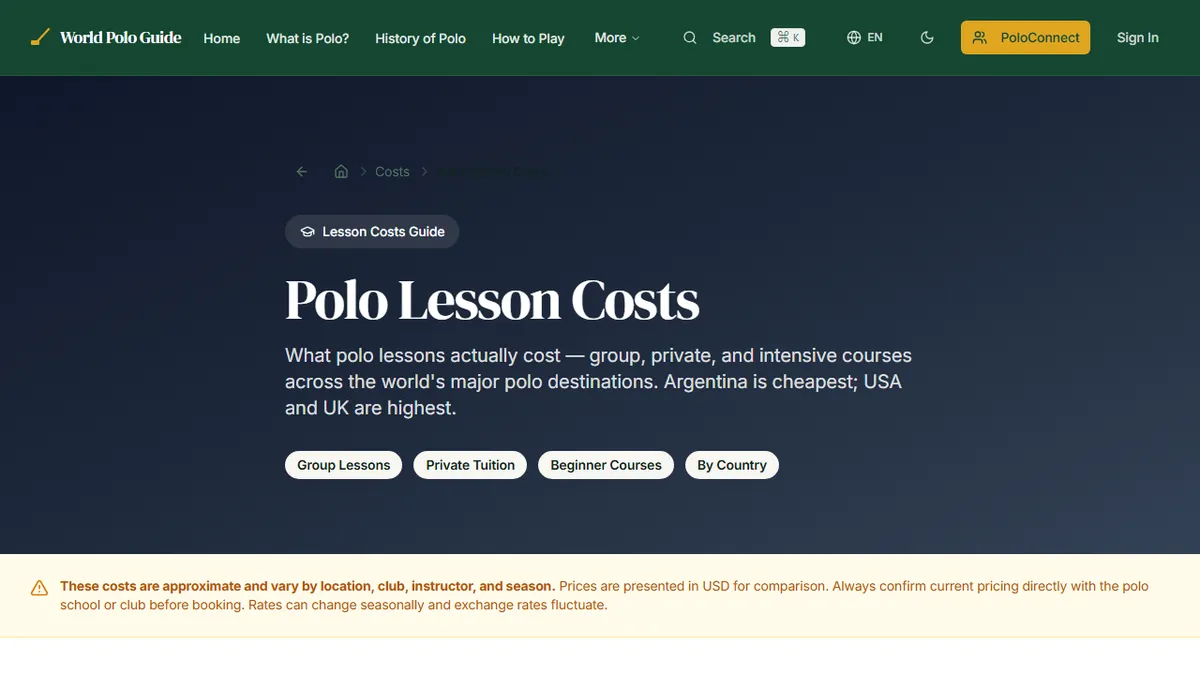
The United States sits in the middle. Clubs in Florida's Wellington circuit and California's Santa Barbara corridor charge anywhere from $100 to $200 for a supervised beginner session, while clubs in less competitive polo markets may offer group clinics at significantly lower rates. For a full picture of polo lesson pricing by country and level, the variation is substantial and directly influences where a budget-conscious beginner should consider starting.
What most first lessons include is more generous than new players expect: a suitable horse, a loaner helmet, loaner knee guards, and often a borrowed mallet for the session. The only thing most clubs require you to bring is appropriate riding boots.
Horse Hire vs. Horse Ownership: The Cost Cliff
The single largest financial decision a new polo player faces is whether to hire horses or own them. Hiring keeps costs variable: you pay per chukka, per lesson, or per match day, with no fixed overhead. At most UK clubs, horse hire runs between £40 and £80 per chukka for a suitable club horse. Across a month of regular play, that might total £300 to £600 depending on how often you participate.
Ownership changes everything. A competent club polo pony in the UK costs between £5,000 and £20,000 to purchase, and annual upkeep (shoeing, feed, stabling, veterinary care, insurance) typically adds another £8,000 to £15,000 per year on top. This is the cost cliff that separates casual participation from serious investment. For a first-year player, ownership almost never makes financial sense unless you already have land, stabling, and equestrian infrastructure in place.
The smart approach for year one is to hire, then reassess. Playing on a range of different horses also accelerates your learning dramatically, exposing you to varying temperaments, mouth strengths, and movement patterns that ownership of a single horse cannot replicate.
Equipment You Must Buy vs. Equipment You Can Borrow
Many clubs maintain loan equipment specifically to reduce the barrier for beginners, and smart use of these resources can significantly compress year-one spending. The items you must own from the start are riding boots and a whip. Clubs rarely lend these for hygiene and sizing reasons. A pair of serviceable polo boots runs from £80 for entry-level leather to £400 or more for custom-made options. A decent beginner's boot in the £120 to £180 range provides adequate protection and comfort.
Helmets are the most critical safety purchase, and most beginners should own one rather than borrow from a shared pool within a few months of starting. A helmet meeting the appropriate certification standard (PAS015 in the UK, NOCSAE in the US) costs between £80 and £250. Knee guards, which protect against impact and mallet contact, range from £30 to £100.
Mallets are one item most clubs lend freely to beginners. Buying your own before you know your preferred length and flex is a waste of money that many new players make within weeks. Wait until an instructor recommends a specific specification before purchasing.
Club Membership Fees Around the World
Annual membership fees fund the infrastructure that makes polo possible: ground maintenance, jumps and boards, irrigation systems, and administrative overhead. At British clubs, annual social or playing membership for a junior or beginner often falls between £500 and £1,500. Full playing membership with guaranteed chukka slots and tournament entry can reach £3,000 at well-resourced venues.
In Argentina, club dues are negligible relative to UK and US equivalents (often the equivalent of £100 to £300 annually), reflecting the local economy and the sheer number of clubs available. American membership costs vary enormously: a small Midwest club might charge $500 per year, while a Florida winter-season membership with extensive facilities could reach $5,000.
Some clubs offer trial membership options that run for a single season, which is a sensible route for beginners who want to play regularly before committing to a full annual fee.
Total Year-One Budget: Three Realistic Scenarios
Scenario A — Low Commitment, UK: Twelve lessons over the year (horse hire included), equipment basics (boots, helmet, knee guards), social membership. Total spend: approximately £2,800 to £4,200.
Scenario B — Moderate Commitment, UK: Weekly lessons through the season (six months), regular hired chukka participation, full playing membership, personal equipment. Total spend: approximately £6,000 to £9,000.
Scenario C — Serious First Year, Argentina: Intensive six-week immersion at a polo school including daily lessons, accommodation, and equipment loan. Total spend: approximately £2,500 to £5,000 for a significantly higher volume of playing time than either UK scenario.
The Argentine immersion route is increasingly popular with British and American beginners precisely because it compresses years of UK progress into weeks, at comparable or lower total cost.
Five Ways to Cut Costs Without Cutting Corners
Share a lesson. Group lessons cost 40 to 60 percent less than individual sessions. The trade-off in individual attention is real, but for basic swing mechanics and ground coverage, group formats work well.
Buy used equipment thoughtfully. Second-hand boots, knee guards, and even helmets (if their history is verifiable) can be purchased from departing members at substantial discounts.
Choose an entry-level club first. Prestige venues charge a premium for atmosphere and facilities that have no bearing on teaching quality at beginner level.
Start in Argentina. Even with flights, a four-to-six-week Argentine polo school often delivers more chukkas per pound spent than a full UK season of weekend lessons.
Hire before you buy anything. Every item you borrow or hire in year one is money available for the year two investment in a better mallet, better boots, or more playing time.
The sport rewards patience in equipment purchasing far more than in riding development. The two costs that are genuinely non-negotiable — a good certified helmet and appropriate boots — represent a combined investment of around £250, which is modest relative to the broader entry cost of almost any equestrian discipline.