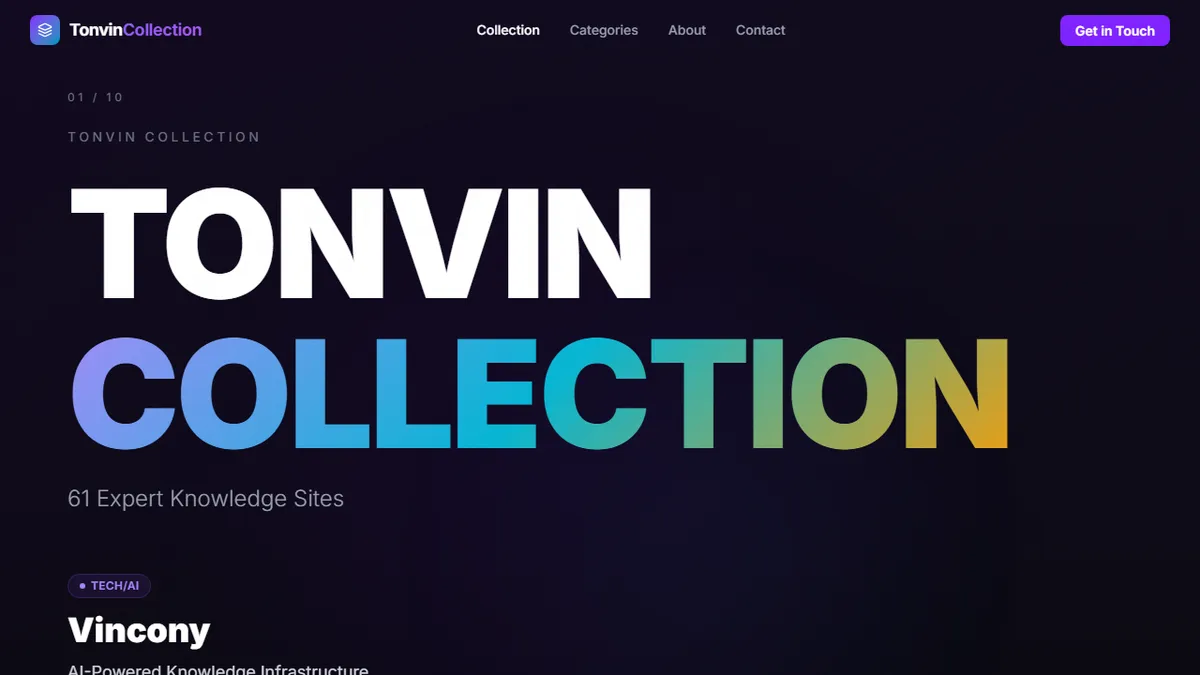
What the Tonvin Collection Actually Is
Most publishing networks operate by buying existing properties or churning out generalist content farms. The Tonvin Collection took a different approach: building each site from scratch around a specific subject area, staffing it with editorial knowledge of that subject, and then connecting those sites through a shared technical backbone rather than a shared brand voice.
The result is the full portfolio of 61 specialist reference websites, a structure that looks, on the surface, like a lot of separate publications but is in practice a single coherent knowledge network with consistent editorial standards and a unified data infrastructure underneath.
The sites range from combat sports encyclopedias to aviation references, peptide research databases to Southeast Asian travel guides. What they share is not subject matter but an editorial commitment: every article is written to answer a specific question at depth, not to fill a word-count target.
The Nine Subject Categories and How They Were Chosen
The nine subject categories reflect the genuine depth of coverage the network has committed to developing, not marketing buckets. Combat sports forms one of the largest clusters, with dedicated encyclopedias for Muay Thai, Lethwei, Kun Khmer, Krav Maga, boxing, and MMA. These are not blog summaries of each discipline; they are structured databases of techniques, rules, history, and practitioner guidance.
Science and health forms another major cluster, covering peptide research, biohacking protocols, longevity science, and nootropics. These sites operate under careful regulatory framing and cite published research rather than anecdote.
Technology coverage spans AI models, open-source software, and cybersecurity tools. Travel and living guides cover specific cities and countries in the Southeast Asian region and beyond. Law and rights resources address UK media law, maritime labour conventions, and US consumer protection. The remaining categories cover business, language learning, lifestyle, and investigative journalism.
The criteria for adding a new site were consistent: the subject had to support a genuine reference audience who needed more than a Wikipedia summary, and the editorial team had to have access to meaningful source material.
Shared Editorial Principles Across Every Site
Across all 61 properties, the editorial approach rests on a few governing principles that distinguish the network from general content publishers.
First, specificity over breadth. Every article targets a defined question from a reader who already knows the basics. The Muay Thai encyclopedia does not explain what fighting is: it explains what neck wrestling is and why head position determines the outcome of a clinch exchange. The aviation reference skips what a plane looks like and instead decodes METAR weather reports field by field.
Second, currency. Sites covering rapidly changing subjects (AI models, visa programs, drug regulations) are structured with regular update cycles and clearly dated content. Readers in these categories are often making decisions that depend on whether information is current.
Third, primary sourcing. Where claims can be traced to official sources (regulatory bodies, academic literature, competition records), the network insists on that traceability. Opinion is clearly labelled as such and positioned separately from factual reference material.
How the Tech Infrastructure Ties the Network Together
The technical architecture connecting the 61 sites is less visible to readers than the editorial content, but it is what makes the network's scale manageable. A shared deployment platform handles hosting, build pipelines, and performance monitoring across properties. A unified knowledge graph, built around Vinony, allows certain data to surface across multiple sites where it is relevant: fighter records that appear in both a technique encyclopedia and a competitive history database, for instance.
Database infrastructure runs on Supabase, giving each site structured access to its content and user data without requiring bespoke backend development per property. A shared content delivery configuration means that peak traffic on any single site does not destabilise others in the network.
This shared infrastructure also enables consistent analytics. Editorial decisions across the network are informed by aggregate data about what readers search for, where they leave, and which reference sections generate sustained return visits, not just single-session page views.
Which Sites to Start With Depending on Your Interest
For readers arriving at the Tonvin Collection without a specific destination in mind, entry points depend on where your existing knowledge sits.
If you follow combat sports, the Muay Thai Bible and MMA Fight Bible are the most comprehensive starting points: both cover technique, history, and competition at a level that serves both casual fans and serious practitioners. The Lethwei Bible and Kun Khmer Bible serve readers who want to go deeper into Southeast Asian striking arts specifically.
For AI and technology, the AI Model Wiki and the open-source AI models directory cover the landscape from different angles (one encyclopedic, one directory-structured) and together provide a thorough picture of the current model ecosystem.
For travel and living in Southeast Asia, the Bangkok Knowledge and Pattaya Knowledge sites are built for practical use rather than inspiration, with the visa, cost, and logistics detail that most travel blogs omit.
Whatever the entry point, the underlying architecture means readers who start in one part of the network will find the same editorial standard when they follow a link to another property. That consistency is the clearest signal of what the Tonvin Collection is actually trying to build.