A financial flag is a place to start reading. Before repeating it, find the charity's filed accounts, locate the relevant passage and check what surrounds it.
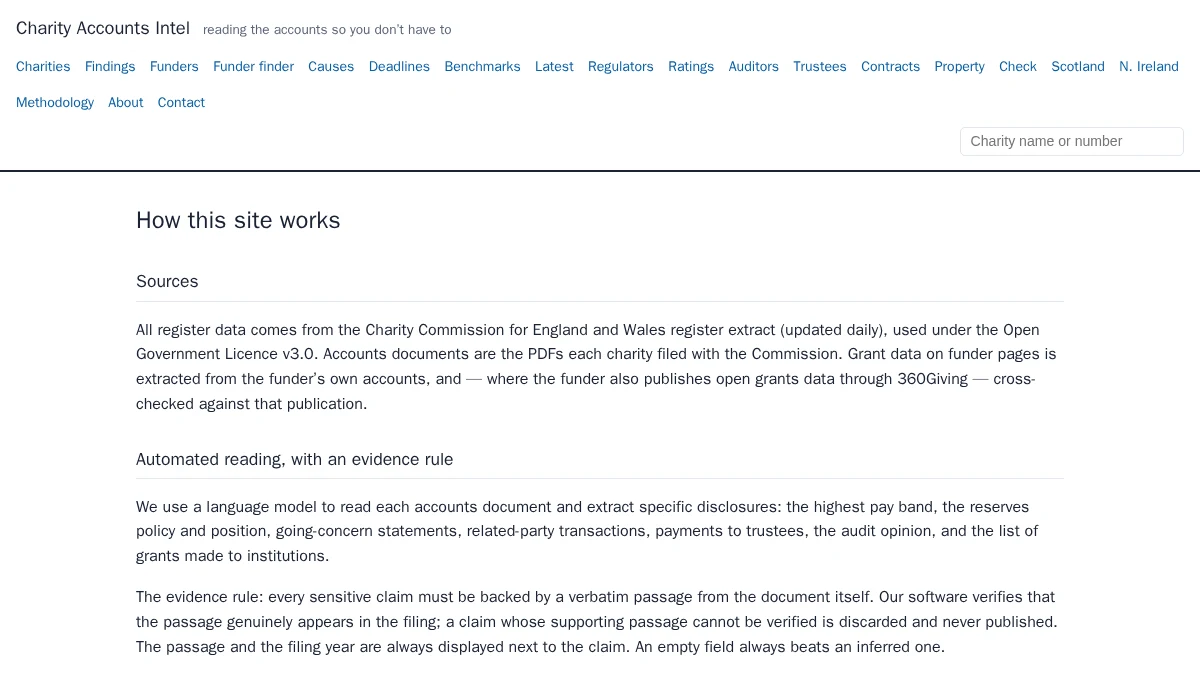
Charity Accounts Intel's methodology describes automated extraction of disclosures such as reserves, trustee payments and audit opinions. It says findings are paired with supporting text and the filing year. That describes the site's method; it does not remove the need to check a particular finding against its source.
Match the charity before opening the accounts
Copy the charity number and name from the record you are investigating. Use the official charity-register gateway to check the identity. It covers registered charities in England and Wales and links to the separate Scottish and Northern Irish registers.
Use the number to distinguish similar names, then compare the organisation shown in the accounts with the register entry. If you cannot establish the match, leave the finding unresolved. Do not attach a flag to a different charity because its name looks familiar.
You can start from Charity Accounts Intel's charity directory, but retain the official register reference beside your notes. The Commission confirms that the accounts and annual reports it publishes on its register are publicly accessible. Commission guidance for charitable companies
Match the document and reporting period
Open the accounts associated with the finding. Record the period stated in the document, rather than substituting the date someone uploaded or filed it. Save the document URL, title and the date you accessed it.
Search for a short, distinctive part of the supporting passage. If text search fails, inspect the relevant pages visually; do not conclude that the wording is absent solely because a PDF search found nothing.
Read the whole note and its heading. Check whether the figure belongs to the current or comparative period, which unit it uses, and whether the text concerns the charity alone or a wider group. Those are questions for this document, not assumptions to fill in from the flag.
Keep a compact verification note
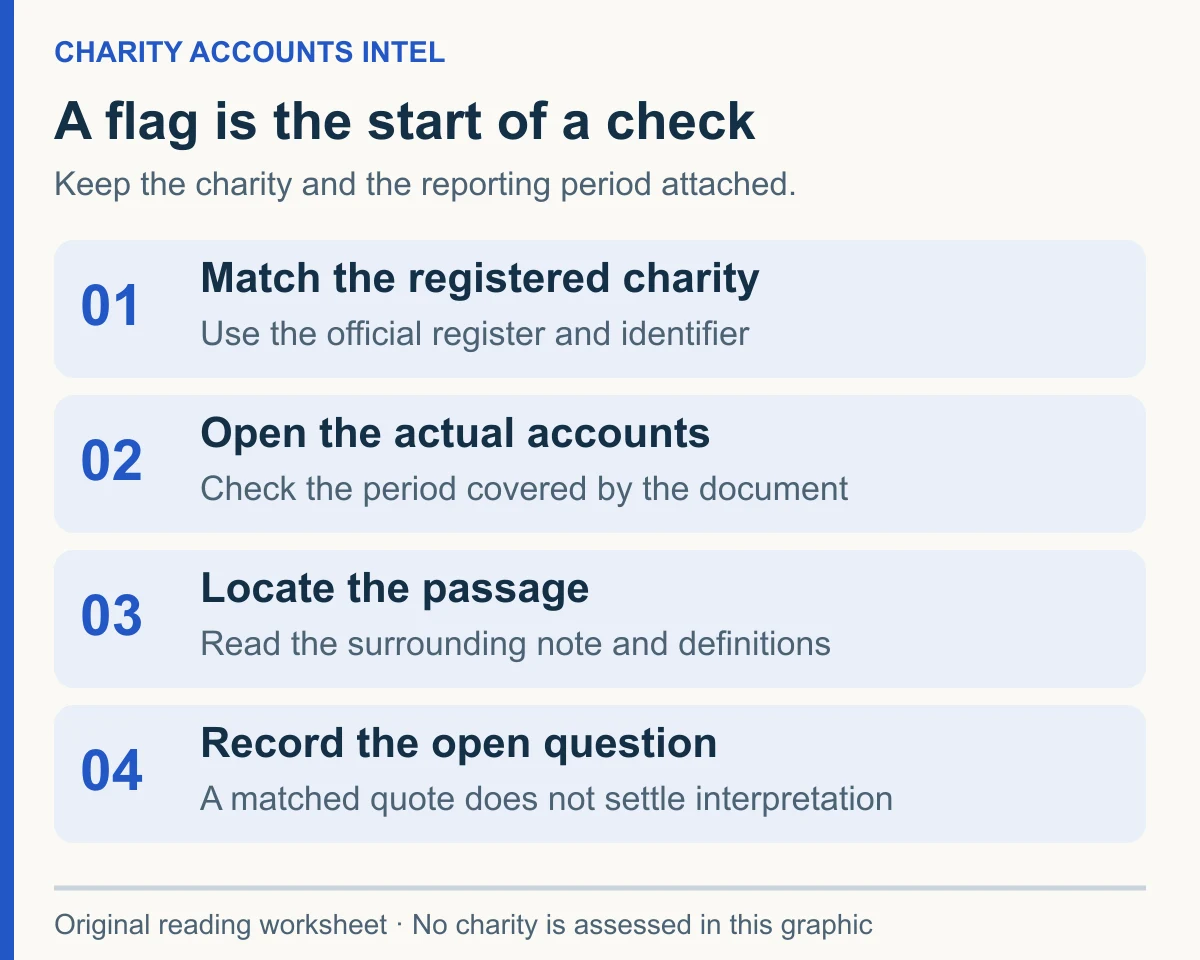
Our suggested record has five lines:
- Identity: charity name, number and register URL.
- Document: title, reporting period, source URL and access date.
- Passage: page or note reference and the exact point being checked.
- Context: relevant definitions, comparative columns and explanatory text.
- Result: supported as written, needs qualification, or unresolved.
For a fictional example, imagine a flag says “reserves below target”. The accounts note gives a target range and explains the position at the reporting date. Your research note should retain that range, date and explanation. It should not replace them with a claim that the charity has run out of cash.
Reserves need a particular definition. The Commission's England and Wales guidance describes them in terms of funds freely available for charitable purposes and excludes restricted funds from that definition. Do not substitute a bank balance for the reserves figure without examining the calculation. Reserves guidance, CC19
If the finding and the filing do not agree, keep both references and describe the mismatch precisely. The useful outcome is a verified passage or an identifiable question, rather than a verdict on the charity's management.