What Each City Is About in One Paragraph
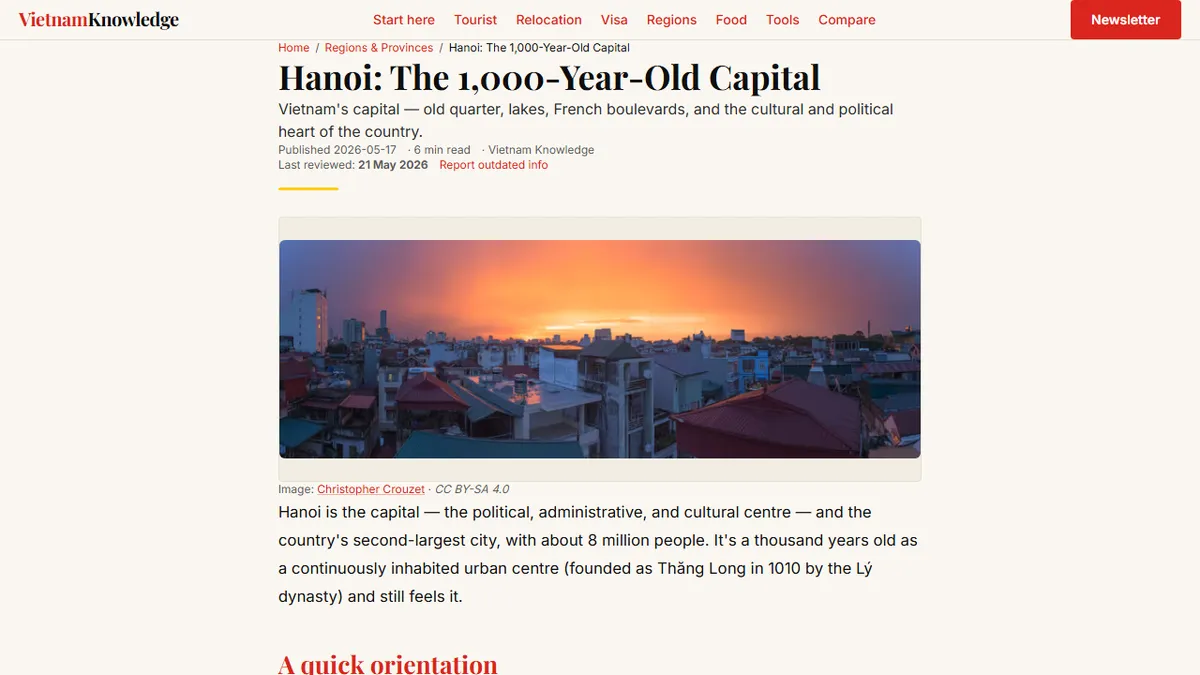
Hanoi is the capital: a thousand-year-old city of lake districts and French colonial boulevards, narrower and slower than its southern counterpart, with a food culture built around a single great breakfast dish and dozens of refined street-food traditions that have not much changed in fifty years. Ho Chi Minh City (still widely called Saigon) is the commercial engine, a sprawling, air-conditioned, restless place that rewrote itself after reunification and has been accelerating ever since. Where Hanoi rewards careful observation, HCMC rewards motion.
Atmosphere and Pace — Old-Quarter Hanoi vs District 1 HCMC
The Old Quarter in Hanoi is a genuinely ancient commercial district where streets are named for the trades once conducted on them: Hang Bac for silver, Hang Vai for cloth, Hang Gai for silk. It is dense, walkable, and best experienced on foot at a pace that allows for detours into courtyard temples and pavement food stalls. The French Quarter to the south adds wide tree-lined boulevards and some of the finest colonial architecture in Southeast Asia.
District 1 in HCMC is the opposite proposition: towers, traffic, and the energy of a city that does not sit still. The pavements are wider, the buildings newer, and the sense of historical continuity thinner. What HCMC has instead is dynamism: an intensity of commerce, dining, and street life that produces its own distinct pleasure once you stop expecting it to look like the north. For a neighbourhood-by-neighbourhood breakdown of the Vietnamese capital, the contrast becomes even clearer: Hanoi's districts each have their own character in a way that HCMC's do not.
Food Differences That Actually Matter
This is not a contest (both cities are outstanding food destinations), but the character of the food differs enough to inform your choice. Hanoi's street food tradition is more conservative: recipes are closely guarded and changes happen slowly, which means the pho you eat in the Old Quarter descends from a very specific tradition. Bun cha is a Hanoi lunch dish that barely exists in the south. Chả cá La Vong, turmeric-marinated fish fried at the table with dill, is a one-dish restaurant experience found almost exclusively in the capital.
HCMC is more eclectic and more forgiving of substitution. The city's banh mi is considered by many to be the superior version: the bread crisper, the fillings more varied. Com tam (broken rice with grilled pork and accompaniments) is an HCMC institution. The southern city also has the deeper Chinese-Vietnamese culinary influence, producing a different range of noodle dishes, dim sum traditions, and sweet soups. The district guide for HCMC first-timers identifies which neighbourhoods carry which food traditions most authentically.
Cost Comparison on Accommodation, Food, and Transport
Both cities are more expensive than the rest of Vietnam, but the gap is less dramatic than visitors expect. In broad terms, budget accommodation in Hanoi's Old Quarter runs slightly cheaper than equivalent quality in HCMC's District 1, but not dramatically so. Street food is at similar price points across both cities: a bowl of pho or a banh mi can be had for 30,000 to 50,000 dong in either place, with tourist-facing restaurants commanding two to three times that amount regardless of location.
Transport within HCMC is slightly more expensive on Grab, partly because distances between destinations are greater. The city is simply larger and more spread out. Hanoi is walkable in a way that HCMC is not, which means transport costs can remain genuinely low if you are happy to cover a few kilometres on foot or by bicycle.
Connectivity — Which Is Easier to Fly Into From Your Origin
Noi Bai International Airport in Hanoi and Tan Son Nhat International in HCMC both receive major international routes from Europe, North America, and across Asia. For travellers from Europe and the UK, HCMC tends to have marginally more direct routing options. From Australia and New Zealand, both cities are similarly served. From East Asian hubs — Tokyo, Seoul, Hong Kong — both airports see comparable frequency.
The more practical consideration is often which end of the country your itinerary favours. If you plan to travel north-to-south and exit from HCMC, fly into Hanoi. If you want to start in the south and work your way toward the centre, HCMC makes the more logical entry point.
Day-Trip Options From Each Base
Hanoi's day-trip options are exceptionally strong. Ha Long Bay is a three-to-four hour drive and receives the majority of its visitors as cruise day-trippers or overnight guests from the capital. Ninh Binh, with its limestone karst scenery and river temple complexes, is two hours south and workable as a day excursion. The villages around the Red River Delta are accessible and largely untouristed.
HCMC's day trips are less dramatic but historically significant. The Cu Chi Tunnels are an hour west and one of the most visited war sites in the country. The Mekong Delta towns of My Tho and Ben Tre are reachable as day excursions, though most people find that an overnight in Can Tho justifies itself.
Who Should Start Where — A Decision Matrix
Start in Hanoi if you are arriving from an East Asian hub, if you prioritise history and street food over beach access, if you want to build north-to-south and feel the country's transition in real time, or if you plan to include Ha Long Bay or Sapa in your itinerary.
Start in HCMC if you are arriving from Australia or flying direct from a Middle Eastern hub, if your itinerary focuses on the Mekong Delta and the south, if you are more interested in the modern commercial energy of a major Asian city than in preserved historical streetscapes, or if you only have a week and want to be close to Phu Quoc's beaches.
There is no wrong answer. Both cities reward arrival with an open schedule and two or three nights before you form firm opinions.