Mistake 1 — Eating Only in Hotels and Tourist Restaurants
The pull of air conditioning and an English menu is understandable on day one, but staying inside the tourist bubble for an entire trip is one of the costlier food mistakes a first-time visitor can make, and not just in monetary terms. Hotel restaurants in Vietnam typically serve an approximation of Vietnamese cuisine calibrated for cautious Western palates: less fish sauce, muted spice, smaller portions of aromatics. The actual food is outside, and often served from a cart or a tiled shopfront with plastic stools.
Walking two blocks away from the main tourist drag in any Vietnamese city will reveal lunch counters doing serious trade with office workers and motorbike taxi drivers. These places are not secrets; they are just off the beaten track by about 90 seconds. A bowl of rice with braised pork and a pickled vegetable at such a place will cost a fraction of a hotel breakfast and taste considerably more like Vietnam.
Mistake 2 — Assuming All Street Food is Unsafe
The fear of street food is one of the most persistent and poorly founded anxieties in first-time Vietnam travel. For a practical understanding of what the actual hygiene risks look like at Vietnamese street stalls, the pattern is clear: high turnover, visible fire, and busy lunch crowds are better indicators of safety than the formality of a dining room.
A stall that turns over a pot of soup every two hours is serving fresher food than a tourist restaurant reheating the same batch through a slow afternoon. The practical indicators to look for are simple: choose stalls with active cooking, fresh garnishes set out at the start of service, and enough customers that nothing is sitting. Ice from sealed bags in proper cafes is generally fine; crushed ice from an anonymous bag warrants more caution.
Mistake 3 — Ignoring Regional Differences (North vs Central vs South)
Vietnam runs 1,650 kilometres from its northern highlands to the Mekong Delta, and the food changes so substantially across that distance that eating only the dishes you already know locks you out of most of the tradition. Visitors who arrive in Hanoi and eat pho every morning, then reach Ho Chi Minh City expecting the same bowl, are in for a surprise: the southern version is sweeter, the broth richer, the condiment plate larger and loaded with bean sprouts and basil.
Hue, the former imperial capital, sits between the two and has a culinary tradition that is arguably more technically complex than either: layered spice pastes, fermented shrimp sauce, and an entire repertoire of royal court dishes. Asking a restaurant in Da Nang to make you "the local speciality" will get you a different answer than the same question in Can Tho, and both answers are worth pursuing.
Mistake 4 — Ordering Bia Hoi Without Understanding the Ritual
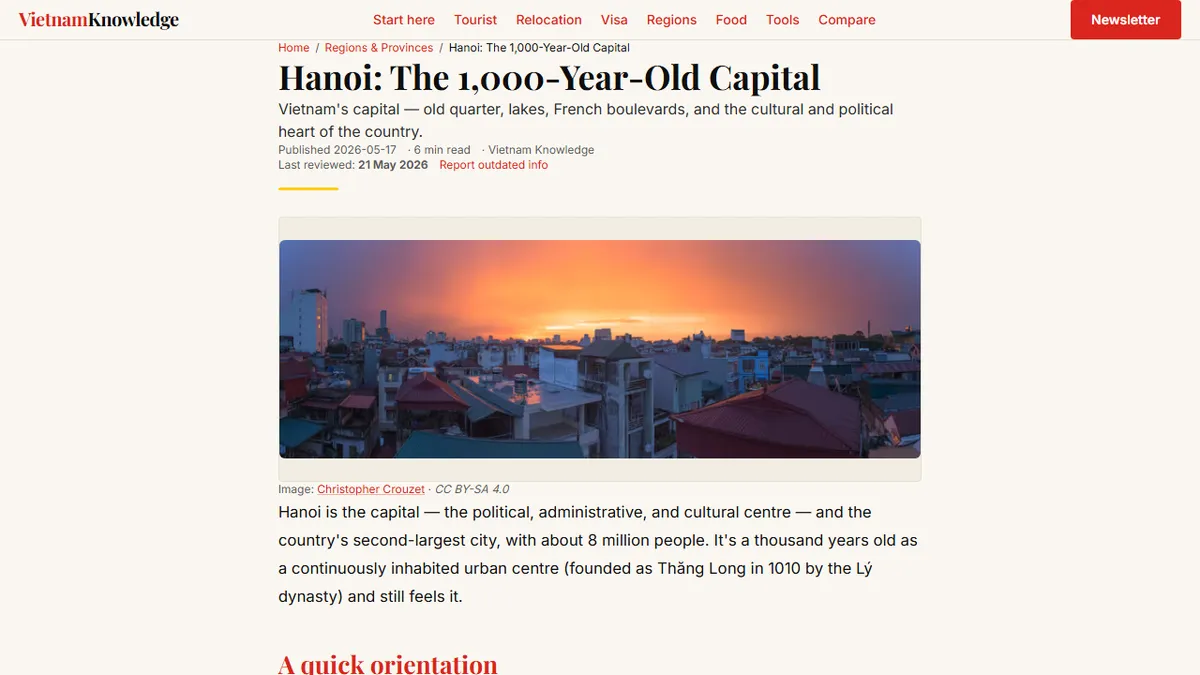
Bia hoi — fresh draught beer brewed daily and sold at roughly 5,000 dong a glass — is one of the genuine pleasures of spending time in northern Vietnam, particularly in Hanoi. The mistake first-timers make is not in the ordering but in the expectation: arriving at a bia hoi corner and expecting a bar experience rather than a street corner social ritual.
Bia hoi is best consumed late afternoon, on a low plastic stool, alongside snacks that accumulate as the evening progresses. It is not consumed quickly or alone; the social convention involves rounds, small food dishes arriving uninvited, and a level of spontaneous conversation with adjacent tables that requires no shared language beyond a raised glass. Treating it as a quick drink on the way somewhere else misses most of what makes it worth doing.
Mistake 5 — Missing the Breakfast Window
Vietnamese breakfast operates on a narrow schedule that no one tells you about. In most cities, the serious breakfast stalls, those serving pho, banh mi, and bun bo Hue, are at peak production between 6:30 and 9:00 in the morning and often sold out or significantly diminished by 10:00. Arriving at 10:30 expecting a full-service breakfast operation and finding only the dregs of a pot that was excellent three hours earlier is a common disappointment.
The solution is simple but requires accepting that Vietnam runs on a different morning timeline than most Western countries. Eating at 7:00 feels early until you realise that the woman who has been at her stall since 5:00 considers you a late arrival. The quality of a bowl of pho eaten on a low stool at 7:15 a.m., surrounded by people on their way to work, is meaningfully different from the same dish eaten at noon in a tourist-facing restaurant.
Mistake 6 — Defaulting to Pho When Bun Cha or Com Tam Would Shine
Pho has achieved global recognition, which makes it the safe default for visitors who do not know what else to order. This is not wrong (pho is genuinely excellent), but choosing it reflexively means missing two dishes that many experienced eaters consider equally significant.
Bun cha is Hanoi's grilled pork and rice noodle dish, eaten at lunch and essentially unavailable in the evening at most traditional spots. A bowl of fatty pork patties and sliced belly grilled over charcoal, served in a sweet-sour dipping broth with a tangle of cold rice noodles and a plate of fresh herbs, is as much a Hanoi experience as the city's pho. Com tam is broken rice topped with grilled pork, a fried egg, pickled vegetables, and fermented pork skin strips. It is the default working lunch of Ho Chi Minh City and one of the most satisfying meals the country produces for under two dollars.
Mistake 7 — Refusing to Bargain at Market Stalls
The reluctance to bargain in markets is common among first-time visitors from countries where prices are fixed, and it leads to two different problems. The first is straightforwardly paying significantly more than the local rate. The second is subtler: refusing to engage with the bargaining process at all is, in market culture, a way of declining to participate in the interaction rather than simply a preference for transparency.
Bargaining in Vietnamese markets is not aggressive negotiation; it is a social exchange with a rough script. A vendor states a price, the buyer counters at roughly sixty percent of that price, and the two arrive somewhere in between through two or three rounds of offer and counter-offer. Walking away after a few rounds without buying is acceptable and carries no lasting offence. Buying the first price stated, by contrast, signals either disengagement or inexperience, and neither serves the buyer particularly well.