Why Most Initial Abuse Reports Go Nowhere
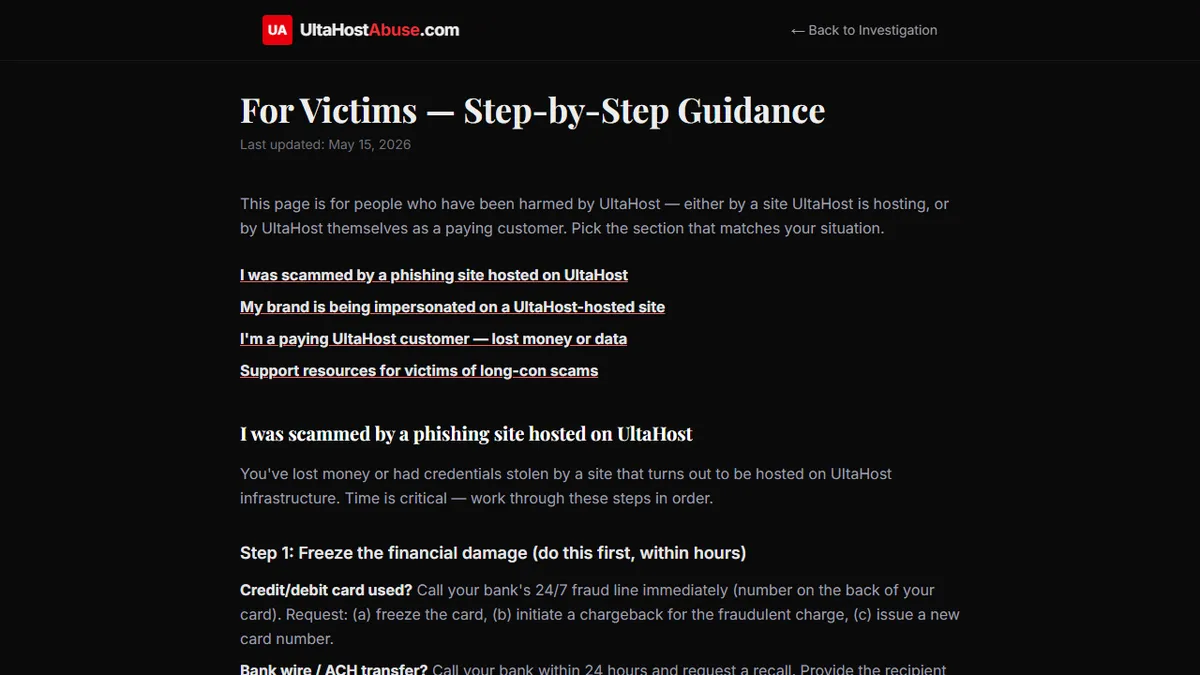
The abuse reporting experience for most victims follows a predictable and frustrating arc. You discover a site impersonating your bank, your business, or a well-known brand. You find the abuse email address for the registrar or hosting provider. You write a clear, detailed report explaining exactly what the site is doing and who it is harming. You receive an automated acknowledgement, or nothing at all. A week later, the site is still live.
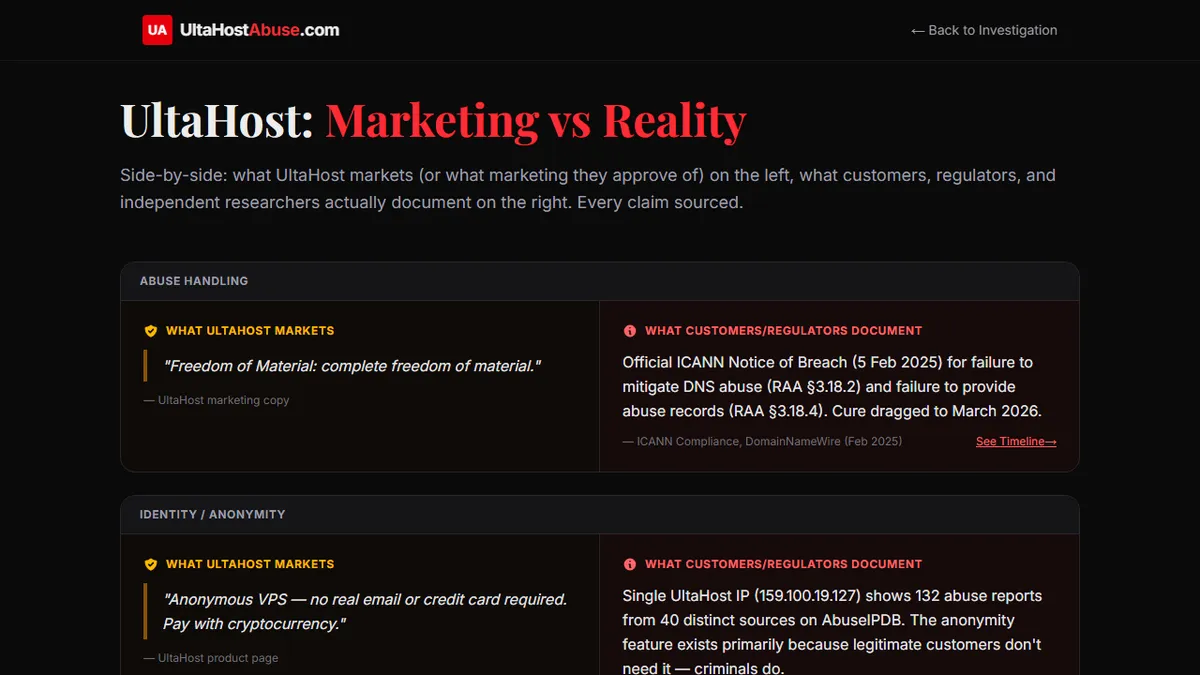
This is not a failure of your report. It is the intended outcome for a subset of hosting providers whose business model depends on keeping criminal customers online. Understanding this distinction matters because it changes your strategy. A legitimate host that is slow to respond needs follow-up. A host that has commercially committed to ignoring abuse reports needs to be escalated around entirely, not just pressed harder.
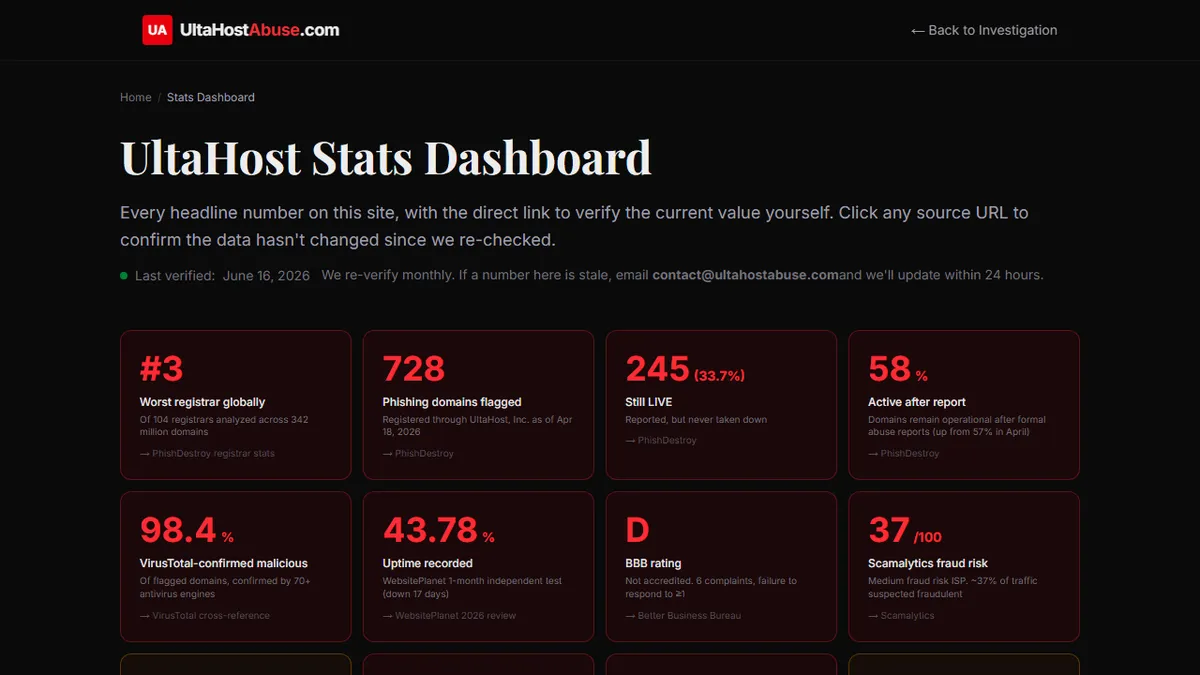
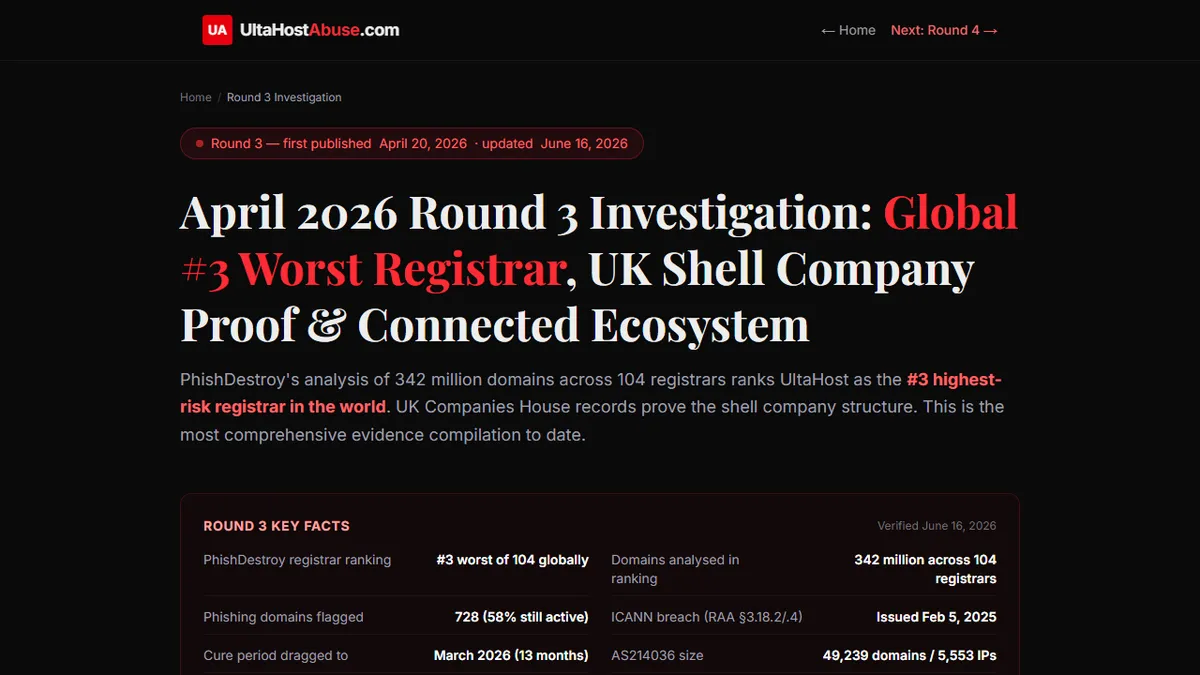
Research tracking reported phishing domains has found that some providers leave a majority of reported sites active for extended periods after formal complaints. With certain registrars, rates of continued-activity post-report exceed 50 percent. If you are dealing with one of those providers, escalation beyond the initial report is the primary mechanism available to you, not an optional one.
Step 1: Documenting Evidence Before You File Anything
Before you send a single complaint, document everything in a form that cannot be altered or disputed. Take full-page screenshots of the phishing site using a tool that captures the complete URL in the browser address bar. Record the exact date and time of each screenshot. Use a service like the Wayback Machine to create an archived copy of the URL — this establishes an independently verifiable timestamp that does not depend on your own files.
Capture the WHOIS record for the domain. Run a VirusTotal scan on the URL and screenshot the results, particularly any malware detection flags. If the site is impersonating a specific brand, document the specific elements being copied: logos, color schemes, login forms, contact information. Save the source code of the page if you have technical means to do so.
This evidence package serves multiple purposes. It makes your initial report more credible and specific, which increases the probability of action at the first contact. It creates the foundation for all subsequent escalation steps, where vague complaints are easily dismissed. And it establishes a timestamped record that is valuable in any subsequent legal proceedings.
Step 2: Reporting to the Registrar and Hosting Provider
The registrar controls the domain name. The hosting provider controls the server where the site lives. These are often different companies, and both need to receive a report.
Most registrars publish an abuse contact on their website (typically an email address of the form abuse@[registrar].com and sometimes a web form). The hosting provider will have a similar contact. Your report should include the full domain name, a direct link to your documented evidence, a clear statement of what the site is doing and who it is harming, and a specific request for suspension of the domain and/or the hosting account.
Note the date and time you sent each report. If you do not receive a substantive response within 48 to 72 hours, send a follow-up referencing your original report and its timestamp. Keep copies of all correspondence. If the registrar does not respond after two follow-ups, this non-response is itself evidence you will use in subsequent escalation steps.
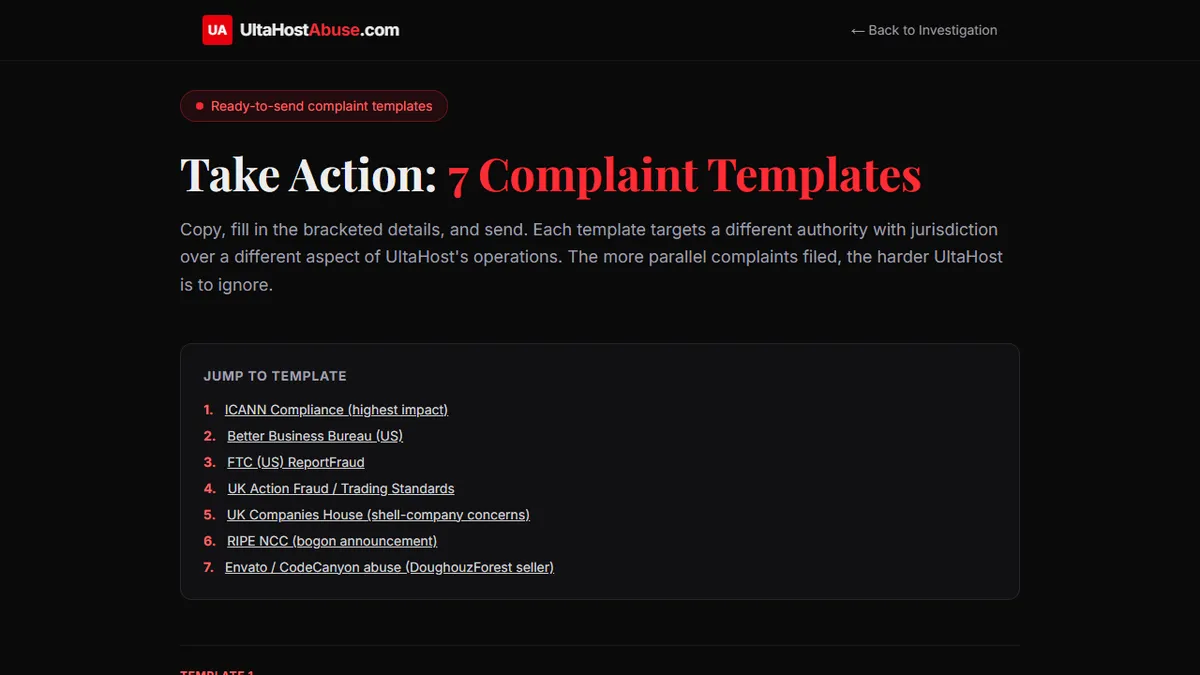
The ready-to-send complaint templates for ICANN, FTC, and UK Action Fraud cover the exact language and format that tends to produce results at each stage of the escalation chain.
Step 3: Escalating to ICANN and Upstream Network Carriers
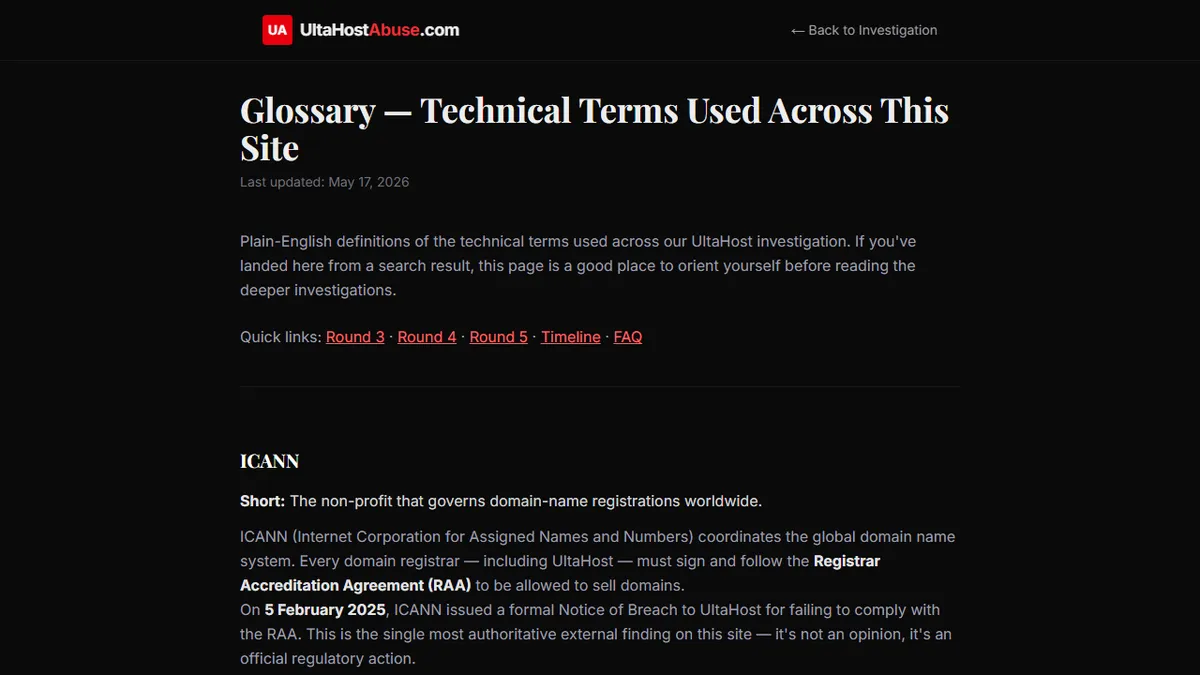
If the registrar fails to act, ICANN's Contractual Compliance department accepts complaints about registrars that are not meeting their obligations under the Registrar Accreditation Agreement. A complaint to ICANN is not a guaranteed takedown mechanism (ICANN's enforcement process is slow), but it adds to the formal compliance record of the registrar and, in the aggregate, contributes to the kind of enforcement action that produces breach notices and eventually accreditation termination.
The upstream network carrier is a more immediately effective escalation path. Every hosting provider connects to the internet through one or more tier-one or tier-two network carriers. Those carriers have their own abuse policies and their own reputational interests in not facilitating criminal infrastructure. Finding the upstream carrier for a given IP address requires a simple WHOIS lookup on the IP, which will reveal the Autonomous System Number and the upstream network. Most major carriers have abuse contacts and respond more reliably than downstream hosting providers.
RIPE NCC (for European IP ranges), ARIN (for North American ranges), and other Regional Internet Registries maintain abuse contact databases. Filing with the appropriate registry sends your report to the entity that controls the IP address allocation, adding another layer of pressure.
Step 4: National and International Cybercrime Bodies
If financial harm has occurred (if the phishing site has already stolen money or credentials from you or others), national cybercrime bodies should receive your report early in the process, not as a last resort. In the United States, the FBI's Internet Crime Complaint Center and the FTC both accept reports. In the United Kingdom, Action Fraud is the primary reporting body. In the European Union, Europol's European Cybercrime Centre maintains reporting channels, and most member states have national cyber units.
These bodies rarely produce fast individual results, but reporting serves two functions. First, it adds your case to a formal record that may contribute to larger investigations against organised phishing operations. Second, your report number becomes evidence of due diligence that is relevant if you later pursue civil or insurance claims.
For brand impersonation specifically, brand protection firms operate in this space and have established relationships with platforms, registrars, and law enforcement that can accelerate individual takedowns significantly. They come at cost, but for ongoing campaigns targeting a specific brand, they are often more efficient than self-reporting.
Step 5: Public Evidence Repositories That Create Legal Timestamps
Platforms like PhishTank, OpenPhish, and the Anti-Phishing Working Group's eCrime repository accept public submissions of phishing URLs. Adding your documented case to these repositories serves several purposes beyond the immediate report.
Once a domain is listed in a major abuse database, it begins appearing in browser security warnings, email spam filters, and antivirus flagging. The practical impact on the phishing operation is significant: many potential victims will receive a warning before reaching the fake page. This reduces the harm in real time even before the domain is taken down.
More importantly, these repositories create timestamped, independently verifiable evidence that the domain was known-malicious at a specific date. That timestamp is legally significant: it establishes the timeline of harm, counters any claim by the operator that the malicious use was recent or unintended, and provides evidence useful in ICANN complaint filings and civil actions.
What to Do If the Phishing Domain Stays Live After All of This
Some domains will remain active despite exhausting every standard escalation path. This is the reality when dealing with providers that have structurally committed to ignoring abuse. At this point, your options shift toward managing harm rather than forcing immediate takedown.
Notify the brand being impersonated directly, if it is not your own. Large brands typically have dedicated brand protection teams with legal resources and platform relationships that may achieve what regulatory complaints could not. Document your entire escalation chain (every report, every non-response, every escalation) in a single organized file. This documentation has value in any future litigation and contributes to the public evidence record that eventually produces regulatory pressure.
Protect your own exposure: change any credentials that might have been captured, monitor for fraudulent activity, and alert others who might be targeted. And consider whether your escalation chain has reached its natural limit or whether there are still paths you have not tried.