The First Decision Is Not Whether to Reply
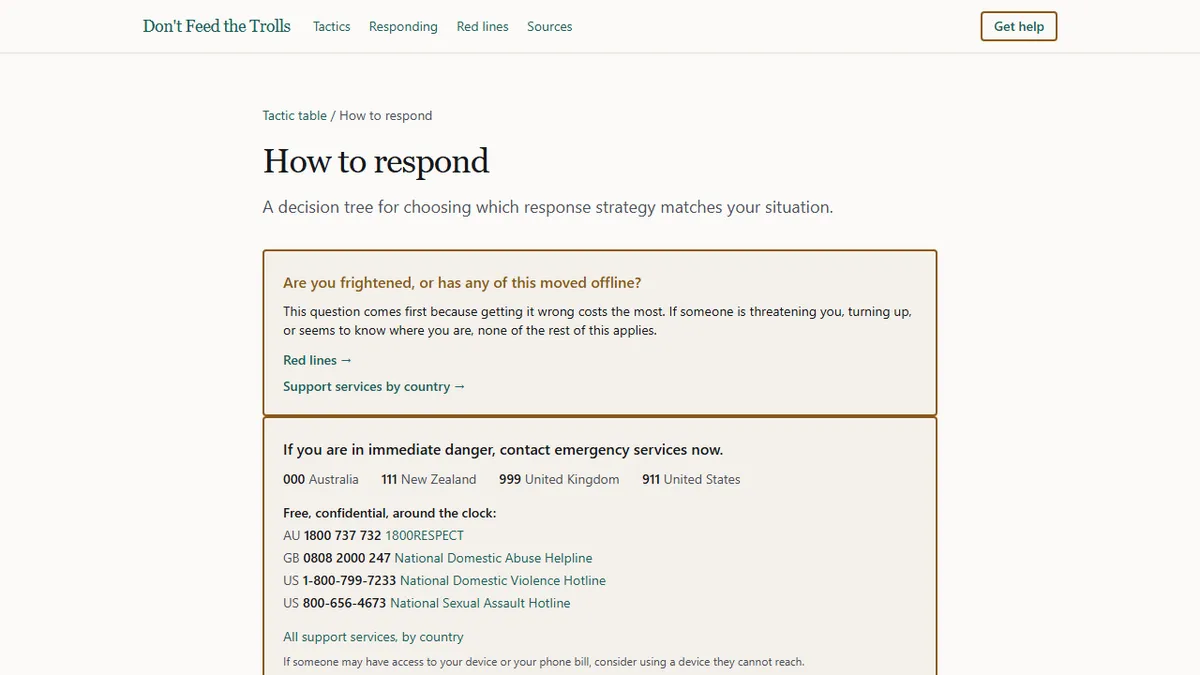
Most moderator guidance reduces to a single line: don't feed the trolls. That line is true, but only inside a particular band of behaviour. It was built for the bored provocation that wants a reaction, not for the organised campaign that wants you gone. The first thing a moderator needs is not a thicker skin but a way to tell which game is being played. A decision tree for moderators is a better starting point than a slogan, because it forces you to sort the incident before you choose a response.
The sorting needs to happen before the adrenaline does. A single message can look like ordinary rudeness, or like a sincere question, or like a coordinated attack, depending on context. The same words can be flamebait in one thread and evidence in another. The practical skill is reading the pattern across messages, not the tone of any one message.
When Disengagement Actually Works
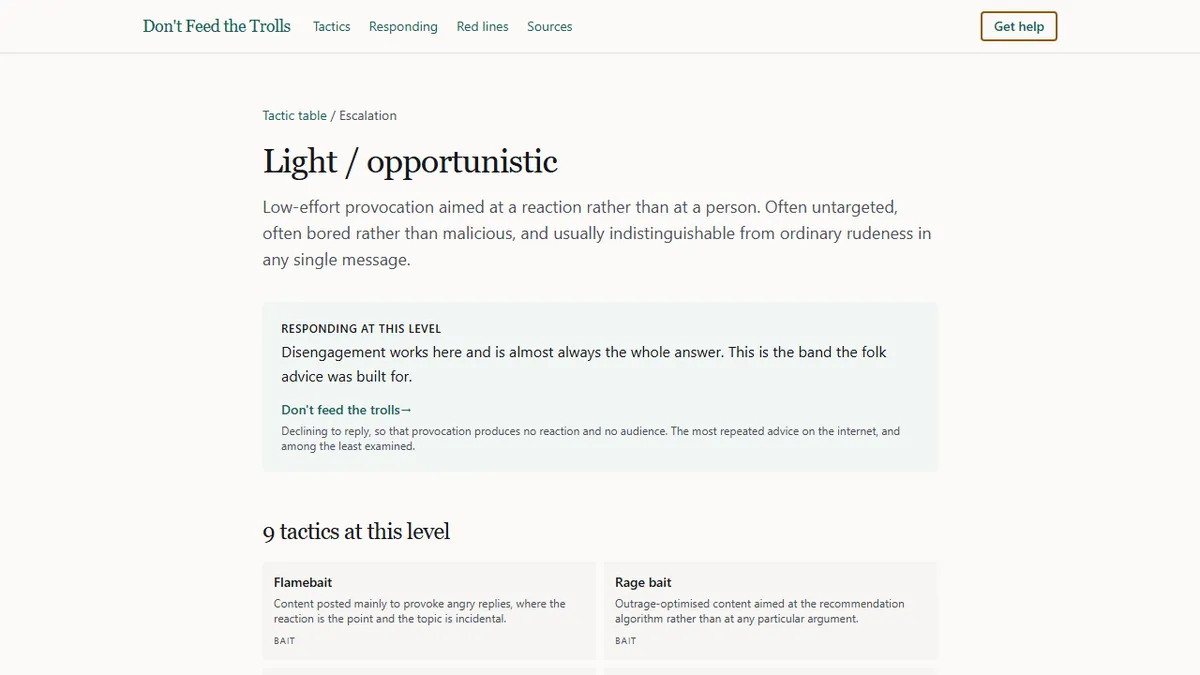
At the light end of the spectrum, disengagement is not a fallback; it is the complete answer. Low-effort provocation aimed at a reaction rather than at a person — rage bait calibrated for the algorithm, shitposting that degrades a discussion, necroposting that revives a settled argument — all of it depends on someone taking the hook. If nobody replies, the exchange ends. The folk advice was built for exactly this band, and it works there.
Classic reactive trolling is harder because the provocation is now personal. Ad hominem baiting, quote-dunking, tone policing, the "just joking" defence: these are designed to pull you into self-defence rather than argument. Disengagement still usually works, but the pull is stronger because the bait is aimed at you. The useful move is to recognise the pattern by name. Naming it to yourself — "this is ad hominem baiting" — breaks the automatic loop of defensiveness and makes walking away a choice rather than a defeat.
The Sophisticated Middle: Judge the Exchange, Not the Sentence
The hardest cases are the ones that look reasonable. Sealioning is relentless, superficially polite demands for evidence that exhaust the target while preserving the appearance of good faith. Just Asking Questions advances a claim entirely through insinuation, so nothing is ever asserted and nothing can be rebutted. Concern trolling opposes something while posing as a worried supporter. Each individual message is defensible; the bad faith lives in the pattern across the conversation.
This is where "don't feed the trolls" becomes genuinely dangerous advice. It tells you to disengage from something that does not look like a troll, so you keep answering, or it makes you feel foolish for being bothered by a polite question. The better rule is to judge the exchange rather than the sentence. If the conversation resets every time you answer it, if the goalposts move each time you meet the standard, if the demand for evidence never ends, you are not having a debate. You are being processed by a tactic. Recognition matters more than response.
If you do reply, counter-speech is the narrow exception: replying in public so onlookers see a claim answered, rather than to persuade the person who made it. It works only when there is a real audience beyond the two of you, and when you are a bystander speaking up rather than the target. If you are the target, reply tends to extend the exchange and hand the other person the engagement they wanted.
When It Stops Being a Conversation
Coordinated and multi-account tactics change the math. Sockpuppetry manufactures the appearance of independent agreement. Brigading brings an organised group from elsewhere to overwhelm a discussion. Dogpiling relies on volume rather than any single message being harmful. Astroturfing manufactures grassroots support for an organised interest. In all of these, disengaging no longer ends it, because you were never the audience. The product is manufactured consensus; the weapon is volume.
At this level, the real moves are documentation, platform reporting and support. The moderation instinct to reply is not just useless; it feeds the volume. The better instinct is to record what happened, note the accounts involved, and report through the platform's process. That is also where platform filter limitations matter. Automated systems catch some things and miss others, and knowing what they actually catch keeps you from expecting a single report to solve a coordinated problem.
Documentation here is not a bureaucratic chore. It is the evidence that a pattern exists. A single message from one account looks like rudeness. Ten accounts posting the same framing within an hour looks like coordination. The record is what makes the distinction visible to a platform, to a journalist, or to a researcher.
Red Lines Are a Different Category
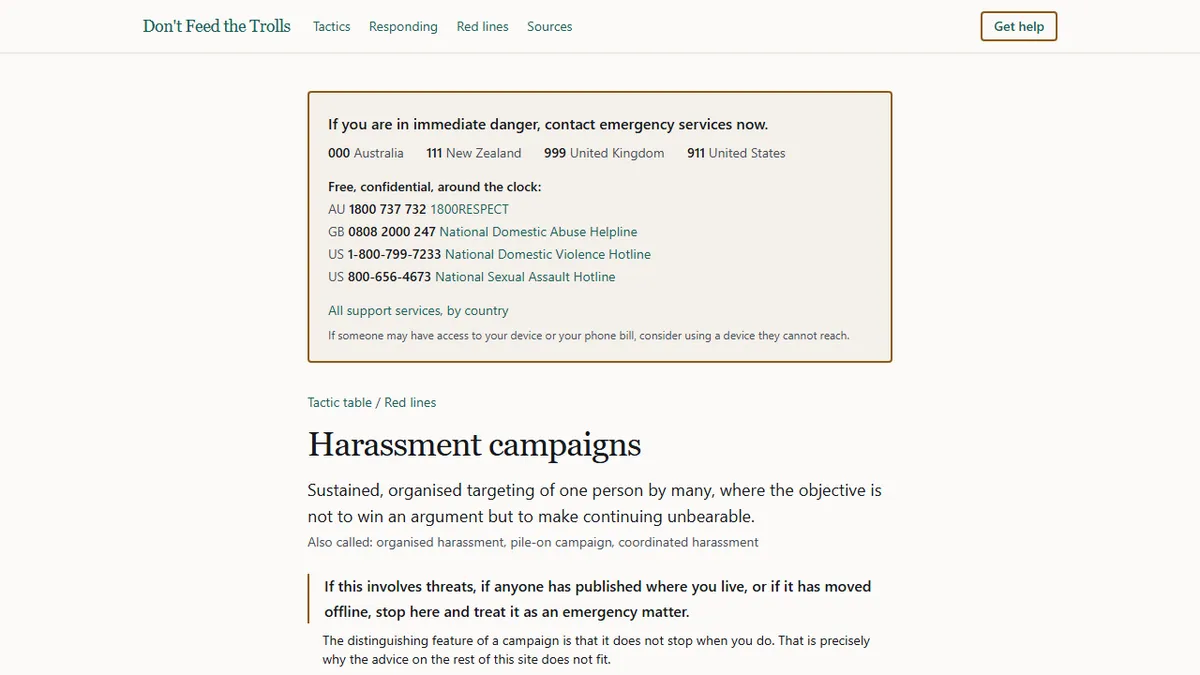
Doxxing, swatting, stalking and sustained harassment campaigns are not the far end of the trolling spectrum. They are a different kind of act. Treating them as continuous with flamebait is how real harm gets minimised. The advice that applies to a bored provoker does not apply to someone publishing your home address to expose you to harm from strangers.
The response to a red line is not engagement and not disengagement. It is documentation first, then contact with the relevant platform and authorities. The red lines overview page makes the distinction explicit because it changes what you do. If you are facing doxxing, swatting, stalking or an organised harassment campaign, the correct move is to stop reading general trolling advice and treat the situation as what it is: a safety issue.
This matters for moderators in a specific way. A moderator who dismisses a red-line threat as "just trolling" fails the person being targeted. A moderator who reports a red-line incident through the same channel as a spam complaint wastes time. The categorisation is not academic; it determines whether the response is a ban button or an emergency call.
Building a Policy Before You Need It
The value of a decision guide is that you make the call before the moment arrives. A moderator who has already decided that light provocation gets no reply, that covert manipulation gets named and documented, that coordinated attacks get reported, and that red lines get escalated immediately can act without hesitation. Hesitation is where the damage happens.
The honest version of this advice is that you will still get it wrong sometimes. You will ignore something you should have documented, or reply to something you should have ignored. That is normal. The goal is not to never feed a troll. It is to know which game you are in, and to have a policy that matches the game rather than a slogan that pretends all games are the same.