One object, many names
Walk into a lounge in London and ask for a hookah. You will probably be corrected: "You mean shisha." Walk into a lounge in Istanbul and ask for shisha. You will get a blank look — it's nargile. In Paris, it's chicha. In São Paulo, narguile. In Chicago, hookah. Same glass base, same metal stem, same hose, same bowl of flavoured tobacco. The word you use depends on where you learned the object, not on the object itself.
These names are not random marketing choices. They are historical artefacts, each one tracing back to a different material, a different trade route, a different empire. The waterpipe travelled from Persia to the Ottoman Empire to British India to the cafes of Europe, and every culture that adopted it renamed it according to what it saw: a coconut, a glass vessel, a pot, a bubbling sound. If you know the etymology, you can predict what word you will need in any given country. And if you are looking for a place to smoke, using the local word is the difference between finding a lounge and walking past it.
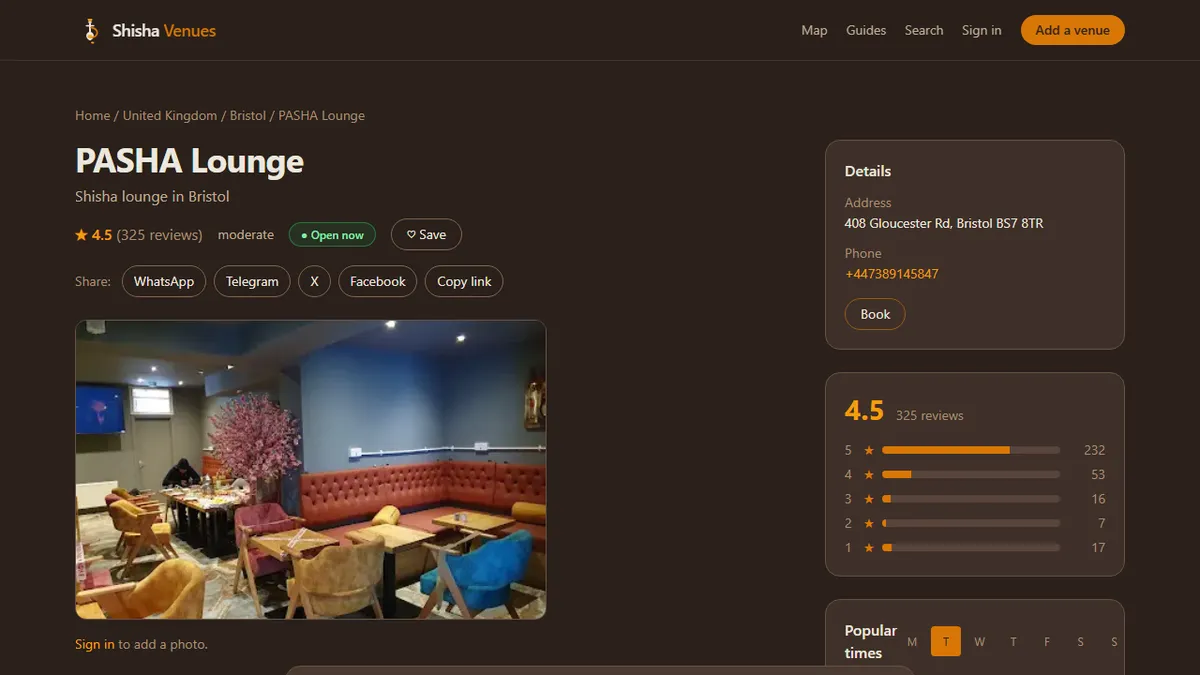
The directory at Shisha Venues groups its listings by country and city and labels them with the vocabulary that locals actually use: shisha in the UK, UAE, and Germany; hookah in the US; nargile in Türkiye; chicha in France; narguile in Brazil. That is not pedantry. It is practical navigation.
Nargile: the coconut that started it
The Turkish word nargile comes from the Persian nārgil, which means coconut. Early waterpipe bowls were carved from coconut shells, and the name stuck even after metal and glass replaced the original material. In Türkiye, nargile is not a loanword or a slang term; it is the standard word for the entire apparatus. You order a nargile, you smoke a nargile, and the cafes that serve it call themselves nargile cafes.
The scale of the word's dominance in Türkiye is visible in any serious directory. Shisha Venues currently lists more than three thousand nargile venues across Turkish cities, from Adana to Afyonkarahisar. That number includes tiny tobacco shops, dedicated nargile lounges, and cafes where the waterpipe is one attraction among many. The name is so normal that it does not need explanation. If you ask for a hookah in Istanbul, you are using a word that arrived via India and English, and the person serving you may not connect it to the thing in front of them.
Shisha: what the glass gave us
Shisha comes from the Persian shishe, meaning glass. In the Persian-speaking world and in the Arab Levant, the word originally referred to the glass base of the waterpipe. Over time it expanded to mean the whole apparatus, and in many places it also came to mean the flavoured tobacco itself. That is why you will hear people say "I bought some shisha" when they mean the molasses-soaked tobacco, not the pipe.
The word travelled to Europe with migrants from the Middle East and settled most firmly in the UK, Germany, and the UAE. In London, the menu will list shisha flavours, not hookah flavours. In Dubai and Berlin, the word on the sign is shisha. The word has become so associated with the social ritual that many people use it for the entire experience: "Let's go for a shisha" means let's sit, drink tea, and smoke.
This is the source of the confusion. A traveller from the US arrives in London and asks for a hookah. A Londoner hears "hookah" as an Americanism, not as a different name. The object is identical, but the word carries a passport.
Hookah: the Indian Ocean route
Hookah comes from the Urdu and Hindi word huqqa, meaning a pot or vessel. The word entered English through British India, where the waterpipe was already a fixture of Mughal court culture. British soldiers and administrators encountered it, adopted it, and carried the name back to England. From there it crossed the Atlantic and became the default in North America.
In the US, hookah is the name for the pipe, and shisha is the name for the tobacco. That distinction is not made everywhere. A Londoner might say "shisha" for both the pipe and the smoke. An American will say "hookah lounge" and "hookah flavours." The word also survives in South Asia as hookah, and the onomatopoeic hubble-bubble is still used informally, named for the sound the water makes as air bubbles through it.
The hookah name emphasises the water vessel. It is a reminder that the waterpipe is, at its core, a filtration device — the smoke passes through water before it reaches the hose. Whether that water does anything meaningful is a separate question, but the name preserves the idea.
Chicha and narguile: Europe's split personality
France and Brazil show how the same object can take two completely different names from two different routes. French chicha is a cousin of shisha, adapted to French spelling and pronunciation. It is the standard word in France, used in the North African cafes where the practice is most visible. To a French speaker, chicha is as French as the cafe terrace it is served on, even though the word is an import.
Brazilian Portuguese uses narguile, which sits much closer to the Turkish nargile. Portuguese inherited the word through its own contacts with the Ottoman world, and it remains the term you will see on menus and in shops across Brazil. The two names are only a few letters apart, but they point to different histories: one through the Arab world to France, the other through the Ottoman world to Portugal and Brazil.
This is why a single global name has never emerged. The waterpipe did not spread through one channel. It spread through multiple empires, multiple migrations, and multiple languages at different times. Each wave of transmission left its own word behind.
Why the name matters when you travel
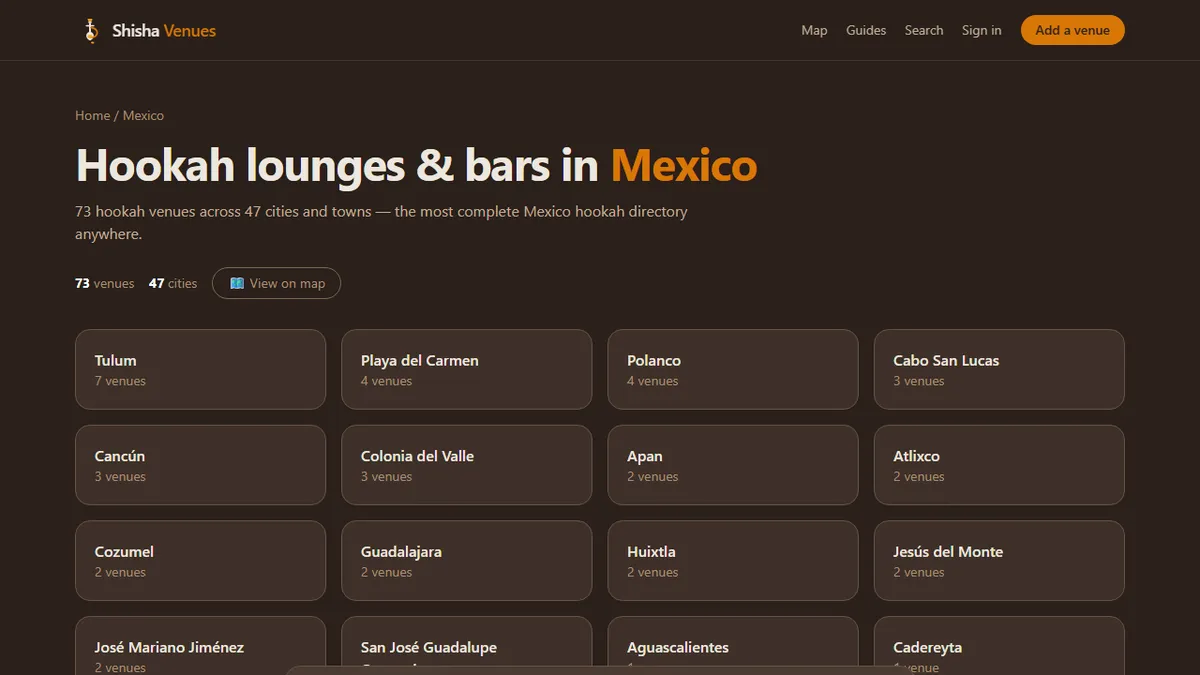
When you are looking for a place to smoke in a new city, the word you search with determines what you find. Search "shisha" in Mexico City and you may get results, but search "hookah" or "narguile" and you will get a different list. The directory's venues in mexico are a useful starting point because they are grouped by city, but the labels on local signs will tell you which word is actually in use. The same search behaviour that works in London will not necessarily work there.
The same logic applies in Cyprus, where the island's mix of Turkish, Greek, and English influences means you might see nargile, hookah, and shisha all within a few streets. A directory that lists hookah lounges in cyprus is using English as a convenient umbrella term, but if you stand outside a venue and the sign says "nargile," you now know exactly what is inside.
The word is a map
The many names for the waterpipe are not a problem to be solved. They are a record of how the object moved through the world. Coconut shells from Persia became nargile. Glass from Syrian workshops became shisha. The water vessel of Mughal India became hookah. Each name is a clue to the route it took, and each one is still alive in a different region.
The next time you order, use the local word. It will get you better service, better search results, and a better chance of finding the lounge you are looking for. And if you run a venue, make sure it is listed under the name your customers actually use. If the directory does not have it yet, add your venue — the right word is the difference between a full room and an empty one.