O-A vs Annual O Extension: Which Route Suits You?
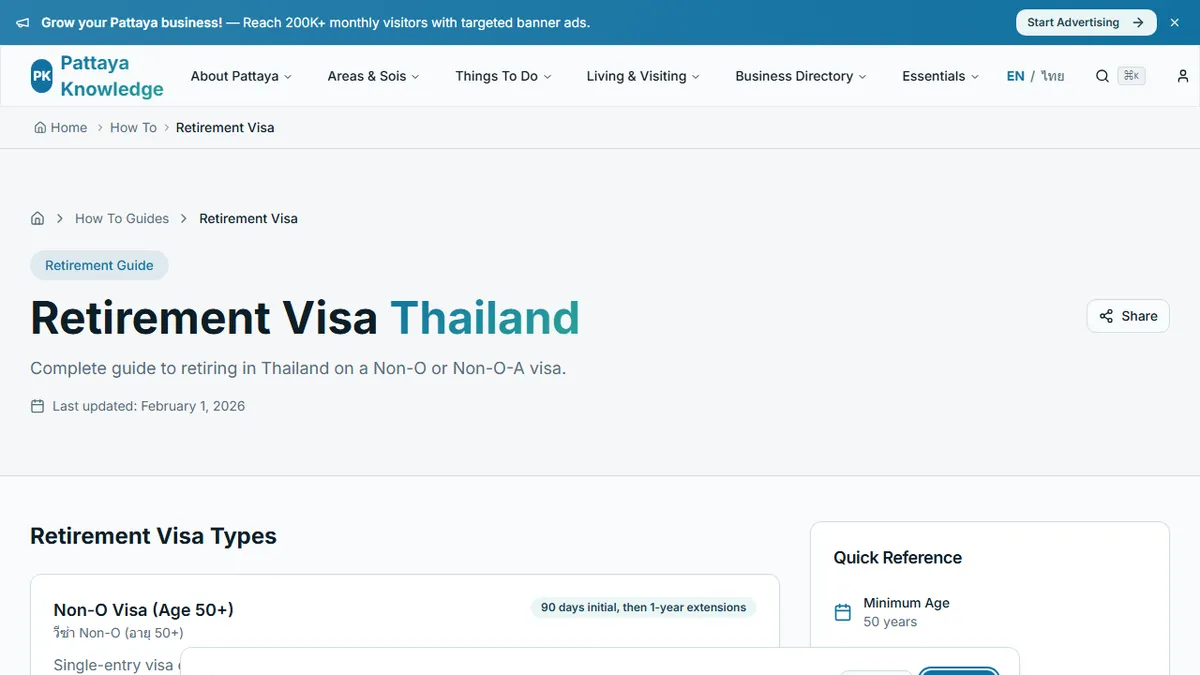
Thailand offers two main paths for retirees seeking long-term residency. The Non-Immigrant O-A visa is applied for at a Thai consulate or embassy in your home country before you travel. It grants a one-year stay from the date of entry, with the option to extend annually inside Thailand. The annual O extension, by contrast, is obtained at an immigration office within Thailand — typically on the back of a tourist visa or visa-exempt entry that you convert once you are already in the country.
The practical difference matters more than it might first appear. The O-A requires you to demonstrate health insurance at the point of application, whereas the O extension route still requires insurance but the verification process sits with immigration rather than the consulate. For applicants who already have a qualifying insurance policy, the O-A from abroad tends to be cleaner and less subject to the inconsistencies that can appear at immigration counters. For those already living in Thailand who want to transition to a long-stay arrangement, the O extension pathway is usually more straightforward. Consult the official retirement visa requirements and document checklist before deciding which route to begin.
The 800,000 THB Bank Deposit Rule Explained
The financial threshold for a Thai retirement visa is 800,000 THB held in a Thai bank account. This is not a transfer you make the week before your appointment. The funds must be "seasoned," meaning they need to have been deposited for at least two months before the application date and must remain at or above that balance for the three months following the extension being granted.
The seasoning requirement catches a significant number of first-time applicants off guard. Transferring 800,000 THB the day you open your account and walking into immigration two weeks later will almost certainly result in a rejection. Thai immigration officers check account statements, not just the current balance, and will flag deposits that appear within the two-month window.
An alternative to the lump-sum deposit is demonstrating a monthly income of 65,000 THB or more via a foreign pension, annuity, or salary transfer, with letters from your bank or embassy to certify the amount. Some applicants use a combination approach, where a smaller deposit is topped up by documented monthly income. Each arrangement has its own documentary requirements, so verify the specific combination rules before your appointment.
Health Insurance Requirements for the O-A Visa
Health insurance has been mandatory for O-A applicants since late 2019. The minimum thresholds are 40,000 THB for outpatient cover and 400,000 THB for inpatient. Policies must be issued by a Thai or approved foreign insurer and must be valid for the full duration of your visa period.
In practice, many of the international expat health plans sold by providers operating in Thailand (Pacific Cross, Cigna, April, AXA, and BUPA among them) can be structured to meet these minimums. However, some travel insurance policies that might seem equivalent do not qualify because they are not classified as health insurance or because the cover period is capped below twelve months. Read the fine print carefully and confirm with the issuing insurer that the policy specifically meets the O-A visa requirements before purchasing.
Documents You Need Before Your Appointment
Preparing your documents in advance is the single most effective way to avoid a wasted trip to Jomtien Immigration. The standard document set includes your passport with at least eighteen months of remaining validity, your TM.7 application form, four passport photos taken within six months, proof of address in Thailand (usually a TM.30 form filed by your landlord or condo manager), bank statements and a letter from your Thai bank confirming the deposit balance, your health insurance certificate, and the 1,900 THB application fee in cash.
Some nationalities also require a police clearance certificate from their home country. The certificate must typically be apostilled and in some cases translated. Check the current requirements at the Royal Thai Consulate covering your home region before you travel, as these requirements are updated periodically.
Visiting Jomtien Immigration: What to Expect on the Day
Jomtien Immigration Office sits on Soi 5 off Jomtien Beach Road. It handles most visa extensions and renewals for the Pattaya region. Arrive early. The office opens at 8:30am and queues build quickly, especially mid-week when 90-day reporters and extension applicants overlap. Take a numbered ticket from the machine at the entrance before doing anything else.
Officers will check your documents at the initial counter before directing you to the correct desk for your application type. Bring every document in both original and photocopy: immigration desks frequently need multiple copies of the same page, and there is a photocopy vendor outside but the queue can add time. If anything is missing or unclear, you will typically be told to return rather than wait on-site, so thoroughness at this stage pays off.
Renewal Timeline and Common Reasons Applications Fail
Retirement visa extensions must be renewed annually. The recommended window to begin your renewal is 30 to 45 days before the current permission expires — many applicants aim for around 30 days out, which gives a buffer without triggering the rule that prevents early renewals beyond 45 days from expiry.
The most common reasons applications are rejected fall into a predictable set: the bank deposit has not been seasoned for the full two months, the balance dipped below 800,000 THB at any point in the preceding three months, the health insurance policy does not meet the minimum cover thresholds, or the TM.30 address notification has not been filed or is out of date. A second category of failures involves documents: expired passport photos, missing signatures, or income letters that lack the required consular certification. Running through your checklist twice before the appointment, and confirming your bank balance and TM.30 status are both current, eliminates the majority of these issues before they become problems.