What Pig-Butchering Scams Actually Are
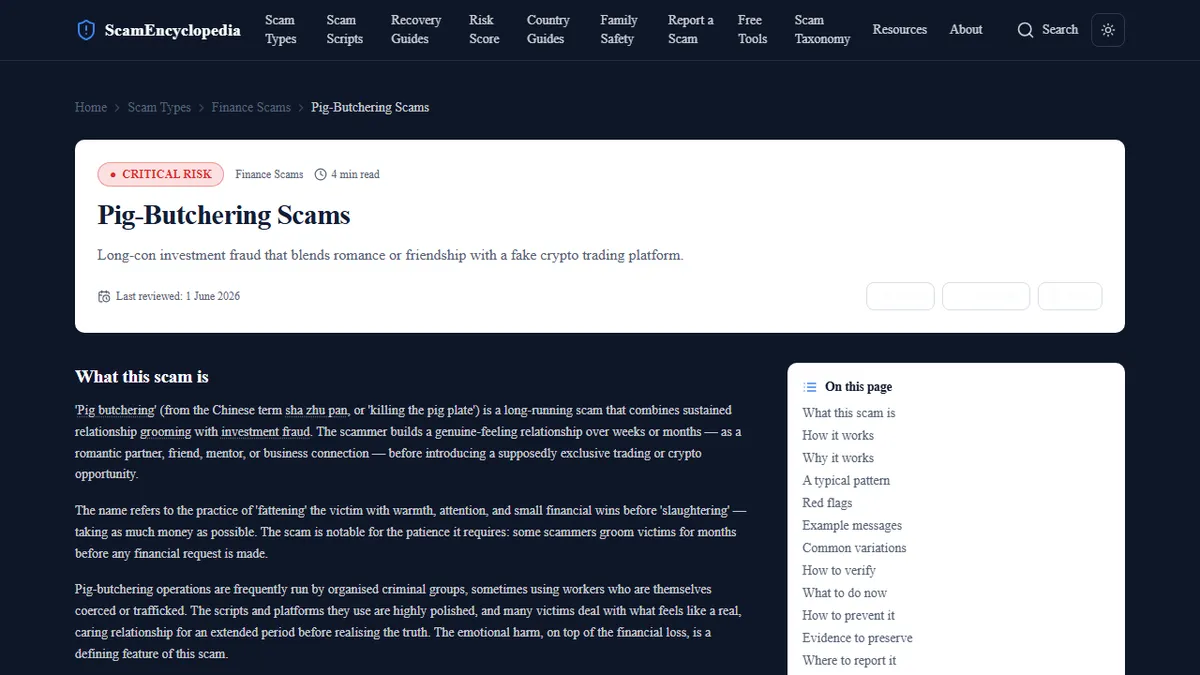
The name is blunt by design. Pig butchering (known in fraud circles as "sha zhu pan") is a long-game fraud in which operatives invest weeks or months cultivating a target's trust before introducing a fraudulent cryptocurrency trading platform. The "pig" is the victim; the "butchering" is the eventual financial extraction. Understanding this as a structured operation, not a spontaneous crime of opportunity, is the starting point for recognising it before any money moves.
These scams are not purely about cryptocurrency. They are about manufactured relationships. The crypto platform is the mechanism; the engineered friendship or romance is the vehicle. Victims have described conversations indistinguishable from genuine connections: daily check-ins, shared jokes, remembered details, expressed concern. For a detailed account of how pig-butchering operations are structured from the first contact, the architecture of each phase reveals how deliberate every stage is.
The Grooming Timeline: How Trust Is Built Before the Ask
Most pig-butchering operations follow a recognisable timeline. The first two to four weeks are devoted entirely to relationship building. No investment platform is mentioned. No opportunity is floated. The operative simply converses, consistently, warmly, and with apparent emotional availability. They remember your job title, ask follow-up questions about your children, and share what sounds like a genuine personal life.
Weeks three to six typically introduce casual references to personal financial success. The operative mentions a trading portfolio, an uncle who taught them about markets, or a platform they use to supplement their income. Nothing is pushed. The subject is raised and then dropped. This is deliberate: the goal is for the victim to ask follow-up questions rather than feel solicited.
The actual ask, when it comes, is framed as an invitation to share in something good rather than a pitch. By that point, the relationship feels real enough that the opportunity feels safe. The window for breaking the cycle is entirely in the earlier phases.
Red Flag 1: Unsolicited Contact from an Attractive Stranger
Pig-butchering operations typically begin with a misdirected text, a LinkedIn connection request, an Instagram DM, or a WhatsApp message claiming to have the wrong number. The opening is designed to seem accidental: a misrouted message that turns into a conversation.
The immediate red flag is not the contact itself but what follows it. A genuine stranger who messaged the wrong number will disengage after the mistake is acknowledged. A pig-butchering operative will pivot smoothly, express pleasant surprise, and start a conversation. If someone you have never met online is unusually warm, unusually curious about you, and unusually persistent across multiple days, that pattern matters.
Red Flags 2 Through 4: Platform Introductions, Early Withdrawals, and Expert Mentorship
Once the relationship has been cultivated, the introduction to trading typically comes through a casual mention. The operative might share a screenshot of a small profit, describe a trade they executed that morning, or invite you to watch how the platform works before committing anything. This is Red Flag 2: a romantic or friendly contact who steers conversation toward financial opportunity.
Red Flag 3 is the early demonstration of profit. Many pig-butchering platforms allow victims to deposit a small amount and withdraw a genuine return. This is a calculated cost of the operation: a real payout of £50 or $100 buys credibility worth thousands later. If a platform lets you withdraw easily once and then becomes complicated on subsequent attempts, that asymmetry is deliberate.
Red Flag 4 is the arrival of an expert. After the initial introduction, a platform "analyst," "account manager," or the operative's "family member in finance" begins advising on trades. This manufactured authority figure provides a rationale for increasingly large deposits.
Red Flags 5 Through 7: Withdrawal Blocks, Tax Fees, and the Recovery Scam Follow-Up
Once deposits reach a significant level (commonly between £5,000 and £50,000), victims attempting to withdraw discover that the funds are inaccessible. The explanations given follow predictable patterns: a "compliance hold" requiring identity verification, a minimum trading threshold not yet reached, or a regulatory filing requirement.
Red Flag 5 is any platform that blocks withdrawals after initially allowing them. Red Flag 6 is a demand for a "tax payment" or "release fee" to access funds, sometimes expressed as a percentage of the portfolio balance. No legitimate regulated investment platform charges upfront fees to release your own money. This mechanism is designed to extract additional payments from victims already committed to recovering what they believe they have earned.
Red Flag 7 is the recovery scam that often follows. After victims report the fraud online or seek help, a second set of operators (sometimes connected to the original group) makes contact offering to recover the lost funds for a fee. This is a second fraud that compounds the original loss.
How to Verify Any Investment Platform Before Depositing
Verification takes less than ten minutes and removes most risk. Start with the financial regulator in your country: the FCA in the UK, ASIC in Australia, the SEC in the United States. Search the regulator's register for the platform's exact legal name and registration number. Pig-butchering platforms either have no registration at all or falsely claim affiliation with a regulated entity. Always verify the registration number directly on the regulator's website rather than trusting a document provided by the platform.
Next, search the platform's domain name using a WHOIS lookup tool. Platforms registered within the last twelve months with anonymous ownership details warrant significant caution regardless of how professional the interface appears.
Finally, search the platform name alongside words like "fraud," "withdrawal problem," or "scam warning" on independent forums. Victims of pig-butchering operations almost always post publicly. If a platform has a genuine trading history, positive discussions will exist alongside complaints. A complete absence of any third-party commentary, positive or negative, is itself a warning sign.
What to Do If You Recognise These Signs in a Current Conversation
Stop transferring money immediately. Do not explain to the operative why you are stopping. That gives them an opportunity to counter your reasoning, and pig-butchering teams train specifically for victim hesitation. Simply cease contact.
Screenshot all conversations, transaction records, and platform screenshots before accounts are deleted or access is revoked. Report the contact details and platform URL to your national fraud reporting service. If you have deposited funds via a regulated UK bank, contact the bank's fraud team immediately: some transfers may be recoverable under the Contingent Reimbursement Model, though eligibility depends on the circumstances.
The emotional difficulty of stepping back from a relationship that felt genuine is real and should not be minimised. Pig-butchering operatives are often skilled at creating attachment. Recognising that the warmth was manufactured does not make the loss of the perceived relationship feel less significant — but acting on the recognition is the only path to limiting the damage.