Why the 1988 Framework Is Finally Being Replaced
The Housing Act 1988 created the assured shorthold tenancy, and for nearly four decades that framework has defined the private rented sector in England. It gave landlords security, certainty, and, crucially, the power to evict without giving any reason, provided the correct paperwork was served. For tenants, the flip side was permanent insecurity: any tenancy could end with two months' notice and no right of challenge.
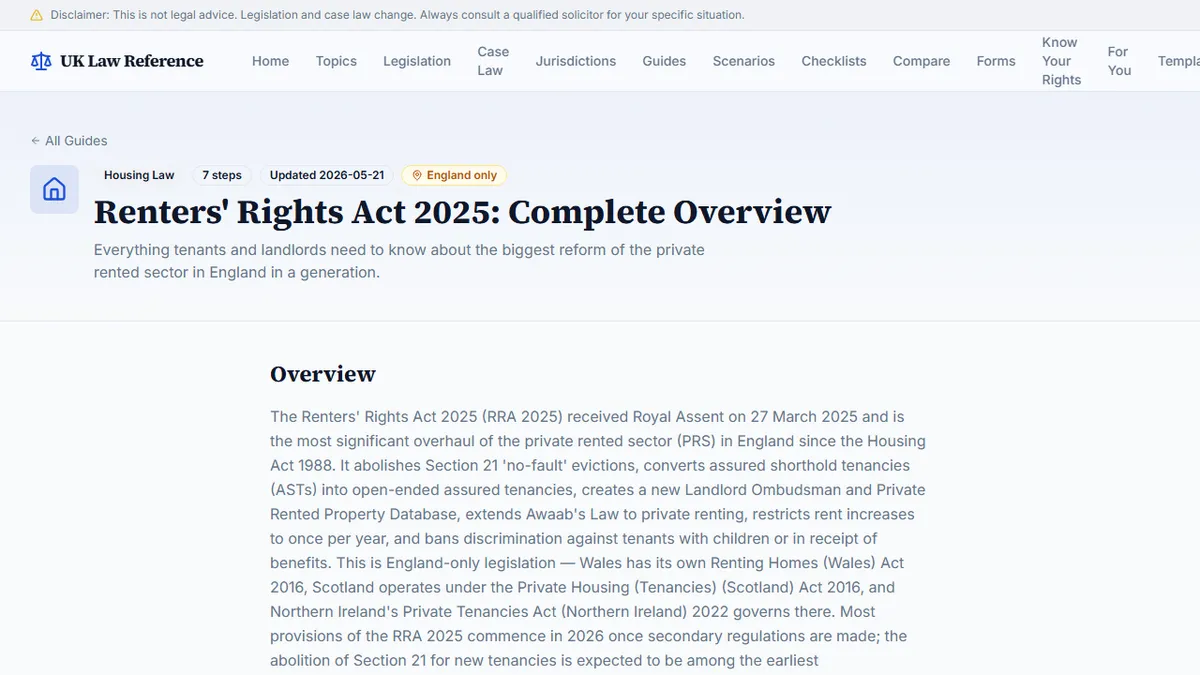
By the early 2020s, that balance had shifted from practical flexibility to a widely documented source of housing precarity. Section 21 evictions (the so-called no-fault route) were associated with retaliatory use against tenants who complained about conditions, and with the rapid displacement of families from communities after years of residence. The Renters' Rights Act 2025 is the legislature's answer. For a comprehensive breakdown of every provision, the full overview of the Renters' Rights Act 2025 is the place to start.
End of Section 21: What No-Fault Eviction Abolition Really Means
Section 21 of the Housing Act 1988 allowed landlords to recover possession simply by serving a prescribed notice and waiting for the relevant period to expire. No ground was required, no reason had to be stated, and tenants had no meaningful way to resist if the notice was correctly served. The Renters' Rights Act abolishes this route entirely.
After abolition, every possession claim must rely on a specific statutory ground — the same structured grounds that previously applied only to assured tenancies. This does not mean landlords can no longer recover their properties; it means they must point to a reason that the law recognises. Understanding how Section 21 abolition affects current tenancies is important for anyone mid-tenancy, since the transition rules determine exactly when the new regime takes effect for existing agreements.
Periodic Tenancies as the New Default — and What That Costs Landlords
The Act ends fixed-term assured shorthold tenancies as a standard product. Going forward, all new tenancies will be periodic from the outset, rolling on a month-to-month basis without a fixed end date built into the agreement. This means no more six-month or twelve-month initial terms that expire and require renewal.
For tenants, this creates genuine security of tenure: the tenancy continues indefinitely until either the tenant chooses to leave or the landlord successfully establishes a ground for possession. For landlords, it removes the ability to regain possession simply by allowing a fixed term to expire, which was a common alternative to Section 21 in practice. Landlords who relied on fixed terms as a form of soft eviction will need to adapt their approach entirely.
The New Grounds for Possession Landlords Can Still Use
Abolishing Section 21 does not mean landlords have lost all recourse. The Act expands and clarifies the existing Schedule 2 grounds for possession, including several that were not previously available or were rarely practical. Landlords can still seek possession if the tenant has accumulated at least two months of rent arrears, has caused significant damage to the property, or has engaged in antisocial behaviour. These are mandatory grounds where possession must be granted if proved.
Discretionary grounds (where the tribunal weighs circumstances) include cases where the landlord genuinely wishes to sell the property or move in a close family member. These grounds now carry a six-month notice requirement and cannot be used within the first year of a tenancy, preventing landlords from issuing tenancies as a short-term holding measure. Courts will scrutinise the genuineness of these grounds, and false claims carry significant penalties.
Rent Increases: What the Act Actually Limits
The Act does not introduce rent controls in the traditional sense, but it does restrict the mechanism through which landlords can increase rent. Landlords may raise rent only once per year through a prescribed process requiring a minimum two months' written notice. Tenants who believe an increase is above market rate have an explicit right to challenge it at a First-tier Tribunal.
The Tribunal will assess whether the proposed rent is in line with local market comparators and can reduce it to the market rate if not. Crucially, the Tribunal cannot order a rent lower than the previous contractual rent (the floor is what the tenant was already paying), but it can reject above-market increases. This is a significant practical protection against the strategy of pricing long-term tenants out through escalating rents.
Pet Permissions and Discrimination Protections
The Act introduces a qualified right for tenants to request permission to keep a pet. Landlords must not unreasonably refuse such a request, and the Act specifies that a blanket no-pets clause in a standard tenancy will no longer be enforceable by default. Landlords can require tenants to take out pet damage insurance as a condition of consent, which addresses the principal concern about liability for damage.
On discrimination, the Act strengthens existing protections by making it explicitly unlawful for landlords to refuse to let to tenants in receipt of housing benefit or universal credit. Courts had begun to develop case law in this direction, but the legislative provision puts the position beyond doubt and makes the remedy more accessible for affected tenants.
Timeline: When Do the Changes Take Effect?
The Act received Royal Assent in 2025, but not all provisions come into force on the same date. The abolition of Section 21 and the move to periodic tenancies apply immediately to new tenancies from the commencement date. Existing fixed-term tenancies will transition to the new regime on a separate date set by secondary legislation, giving landlords and tenants a period to adjust their arrangements. The rent increase provisions and the strengthened discrimination protections take effect on commencement, with no grandfathering for existing agreements.