Defining the Models: What Makes Something Micro-SaaS
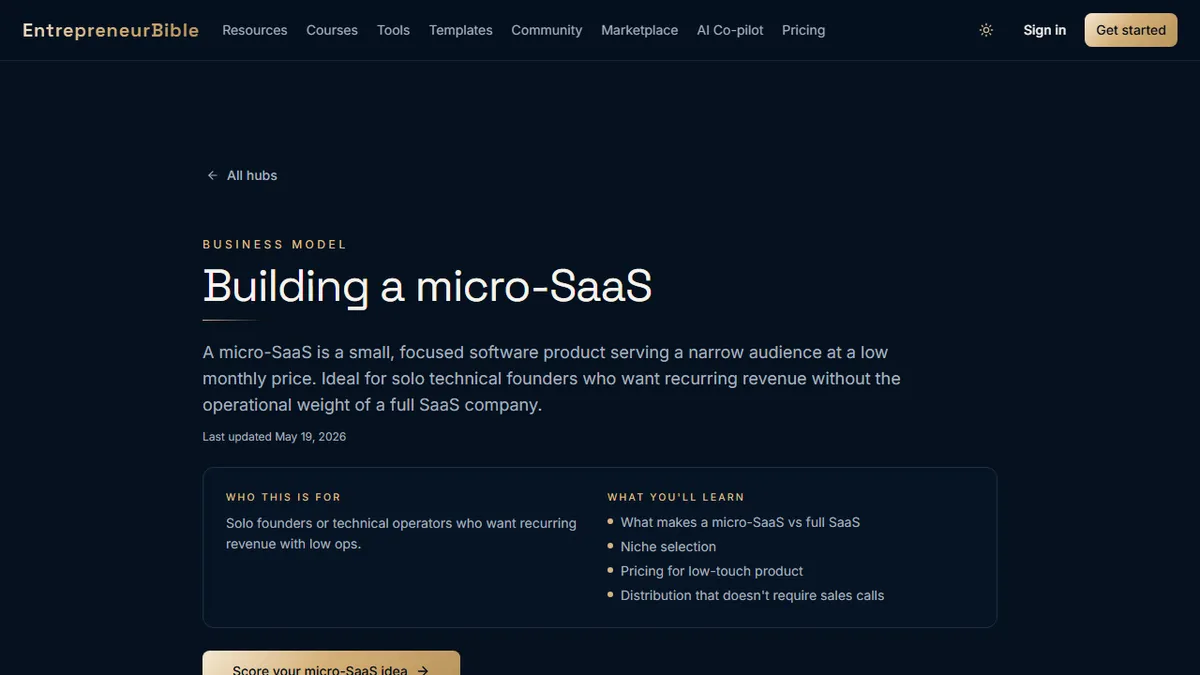
The term micro-SaaS gets used loosely, but its defining characteristics are fairly consistent. A micro-SaaS product solves a narrow, specific problem for a defined niche audience. It is typically built and operated by one person or a very small team, requires minimal infrastructure overhead, and targets a revenue ceiling somewhere between two thousand and twenty thousand dollars per month in monthly recurring revenue. The founder is also the product manager, the support team, the marketer, and often the developer.
Full SaaS (the venture-fundable variety) shares the same subscription revenue model but operates with entirely different ambitions. It targets a large addressable market, typically raises capital to fund growth ahead of revenue, requires a team to build and maintain, and competes in markets where marketing spend and sales capacity determine outcomes as much as product quality does.
Both are legitimate. Neither is universally superior. The right choice depends almost entirely on the resources, risk tolerance, and personal goals of the person building it.
Capital and Time: The Real Starting Requirements
A full SaaS product intended to compete in a meaningful market rarely reaches a defensible position in under eighteen months. The build cycle is longer, the sales cycle is longer, and the time to establish brand credibility among target buyers is longer. The capital requirements scale accordingly, not necessarily in the venture-funded sense, but in the sense that twelve to twenty-four months of personal runway is the realistic minimum commitment before external signals confirm or deny the thesis.
Micro-SaaS can reach initial paying customers in weeks. The scope is narrow enough that an MVP can be built over a long weekend, validated with a small community, and iterated into a paying product before significant capital is committed. Monthly infrastructure costs for a solo-operated micro-SaaS product are typically under a hundred dollars. The primary input is time, and the feedback loops are short enough that wrong assumptions get corrected quickly.
Revenue Ceilings and Growth Trajectories Compared
This is where the models diverge most sharply. A successful micro-SaaS at five thousand to fifteen thousand dollars per month generates a comfortable income for a solo operator. In many regions, it covers living expenses with room for reinvestment. But the revenue ceiling is real. Narrow niches have limited addressable markets, and micro-SaaS products rarely survive attempts to expand beyond their original scope without losing the simplicity that made them work.
Full SaaS targets markets where a million-dollar ARR company is still considered early-stage. The trajectory from zero to meaningful revenue is steeper and slower, but the ceiling is much higher. The full SaaS business model hub covers the capital dynamics, team scaling patterns, and competitive dynamics that determine whether a full SaaS company reaches the revenue levels that justify its complexity.
When Full SaaS Makes Sense for a Solo Operator
There are scenarios where a solo founder should pursue full SaaS despite its demands. If the founder has deep domain expertise in a market underserved by existing tools, has strong evidence of willingness to pay at meaningful price points, and has the financial runway to survive a long development and sales cycle, full SaaS can be worth the complexity.
Technical co-founder credentials also matter here. A solo founder who can build an entire product without outsourcing removes a major cost centre and extends runway considerably. If that founder also has existing distribution (a newsletter, a professional network, prior customer relationships), the early customer acquisition problem becomes more tractable.
When Micro-SaaS Is the Smarter First Move
For most first-time solo founders, micro-SaaS is the more rational starting position. It teaches the mechanics of recurring revenue without overwhelming complexity. It generates real feedback from paying customers quickly. And it produces cash that can fund subsequent, larger attempts.
The deep-dive micro-SaaS operating guide covers the full operating logic: niche selection, pricing, customer retention at scale, and the points where a micro-SaaS product either stabilises as a cash-generating asset or becomes a platform for expansion.
Micro-SaaS is also the right move when personal financial constraints make an eighteen-month runway commitment impossible, when the target market is inherently niche, or when the founder values independence and simplicity over growth potential and capital intensity.
Hybrid Path: Start Micro, Expand Later
A growing pattern among successful solo founders is treating micro-SaaS as a deliberate first stage rather than a permanent destination. Build a product that solves one problem extremely well. Reach five to ten thousand dollars per month in recurring revenue. Use that revenue as both financial runway and market research — the paying customers reveal adjacent problems and expansion opportunities that are impossible to predict from the outside.
This approach is lower risk than committing immediately to full SaaS ambitions, and it produces a founder who understands recurring revenue mechanics, customer retention dynamics, and product iteration cycles from direct experience rather than theory.
Decision Checklist Before You Choose
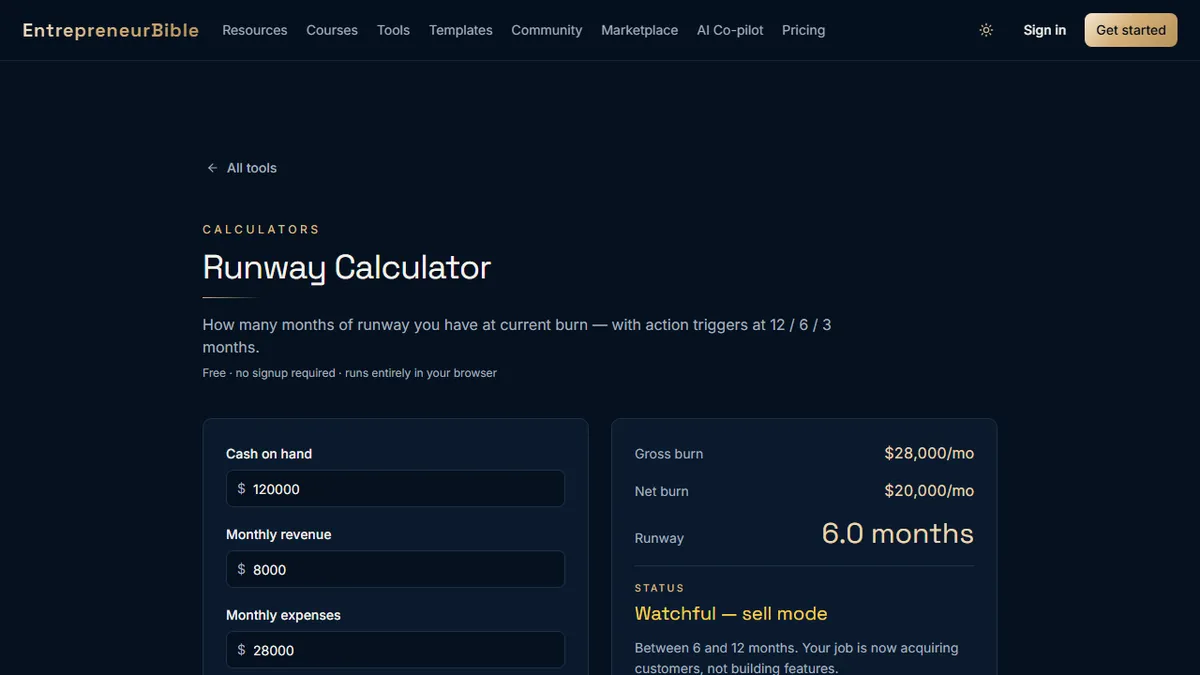
Before committing to either model, answer these questions honestly. What is your available financial runway in months? How large is the specific market you are entering, and is it large enough to support the revenue target you need? Do you have the technical capability to build the product unassisted, or will you need to hire or outsource? How much complexity can you personally sustain before quality degrades?
If your runway is under eighteen months, your market is inherently niche, and you need revenue within six months to validate the effort, micro-SaaS is almost certainly the right first move. If you have a genuine market gap, deep domain knowledge, extended runway, and a large addressable market, full SaaS becomes a rational path. Most solo founders reading this belong in the first category, at least to start.