The Three-City Puzzle
Seattle, Portland, and Denver are the three cities that come up most often when someone on the West Coast or Mountain West starts planning a food trip. All three have reputations that precede them. All three have enough restaurants to keep you busy for a week. But they are not interchangeable, and choosing the wrong one can leave you surrounded by excellent food that you did not actually want to eat.
The decision comes down to a few honest questions. Do you want seafood and a waterfront market? Do you want a compact city with a high ceiling for creative cooking? Or do you want hearty food at altitude, with a brewery on every corner? Each city answers one of those questions better than the other two.
Seattle: Seafood, Rain, and a Waterfront That Delivers
Seattle's food identity is tied to the water. The most famous addresses sit along the waterfront or inside Pike Place Market, and the classics are still holding up. The Crab Pot, at 4.2 stars, is the loud, messy, crab-legs-on-the-table experience. Ivar's Acres of Clams, at 4.3, is the older, more restrained version of the same idea. Neither is the best-rated spot in the city, but both are worth knowing because they define what Seattle food tourists actually do.
The city's higher-rated listings are more interesting. Von's 1000 Spirits sits at 4.6. Piroshky Piroshky, the hand-held pastry stand in Pike Place, holds 4.5. Din Tai Fung, the dumpling powerhouse, also holds 4.5. Japonessa Sushi Cocina and Duke's Seafood South Lake Union are both at 4.5. The pattern is clear: Seattle rewards seafood, dumplings, and comfort food that makes sense in the rain.
The weather matters more than people admit. A Seattle food trip in November is a different experience from one in July. The city shines when you can duck into a warm restaurant, order something rich, and watch the drizzle hit the window. If that sounds good, Seattle is your city. If you were hoping to eat outdoors, you should probably look at the other two.
Portland: The Compact City With the Highest Ceiling
Portland's top scores are the most striking of the three cities. Farmhouse Kitchen Thai Cuisine in the Pearl District holds a 4.9 rating, the highest of any restaurant listed in these three cities. Fogo de Chão and Screen Door both sit at 4.7. Mother's Bistro & Bar and Andina are both at 4.6. Portland City Grill, Voodoo Doughnut, Deschutes Brewery, and Cheryl's on 12th are all at 4.5. That is a dense cluster of high ratings in a city that is noticeably smaller than Seattle or Denver.
Portland also has a personality that rewards wandering. The downtown core is walkable, the food cart pods are still a real part of the scene, and the donut culture is not a gimmick. Voodoo Doughnut gets the lines, but Blue Star Donuts holds a 4.4 and is the better choice if you want something less theatrical. The city's Thai, Vietnamese, and Peruvian options are strong enough that you could skip the obvious tourist spots and still eat better than in most American downtowns.
The trade-off is that Portland is not a seafood city in the way Seattle is. It is not a steak-and-green-chile city in the way Denver is. It is a city where a 4.9 Thai restaurant and a 4.7 Southern brunch spot can share the same neighborhood without feeling like a compromise. If you want variety and are willing to walk a few blocks between meals, Portland gives you the most upside.
Denver: The High-Altitude Contender
Denver's restaurant list is more spread out, which makes sense for a city built around neighborhoods and strip malls rather than a single waterfront. The top rating belongs to Tom's Watch Bar near Coors Field at 4.9, followed by Corinne Denver at 4.8 and Kona Grill and The Denver Central Market at 4.7. Sam's #3, a classic breakfast spot, holds 4.6. Voodoo Doughnut's Denver location also holds 4.6. Torchy's Tacos, the Texas import, sits at 4.3.
The food in Denver leans hearty. Green chile appears on breakfast plates, smothered burritos, and burgers. Steakhouses are common. The brewery scene is among the strongest in the country, and many restaurants are built around the idea that you will want a cold pint after a day in the mountains. That is not a weakness. It is just a different kind of food trip.
One thing to remember: altitude changes how you eat and drink. Alcohol hits harder, appetites can be smaller on the first day, and dehydration is a real risk. A smart Denver itinerary starts with a light, hydrating meal and saves the heavy steak dinner for the second night. The restaurants will still be there.
How to Compare the Actual Numbers
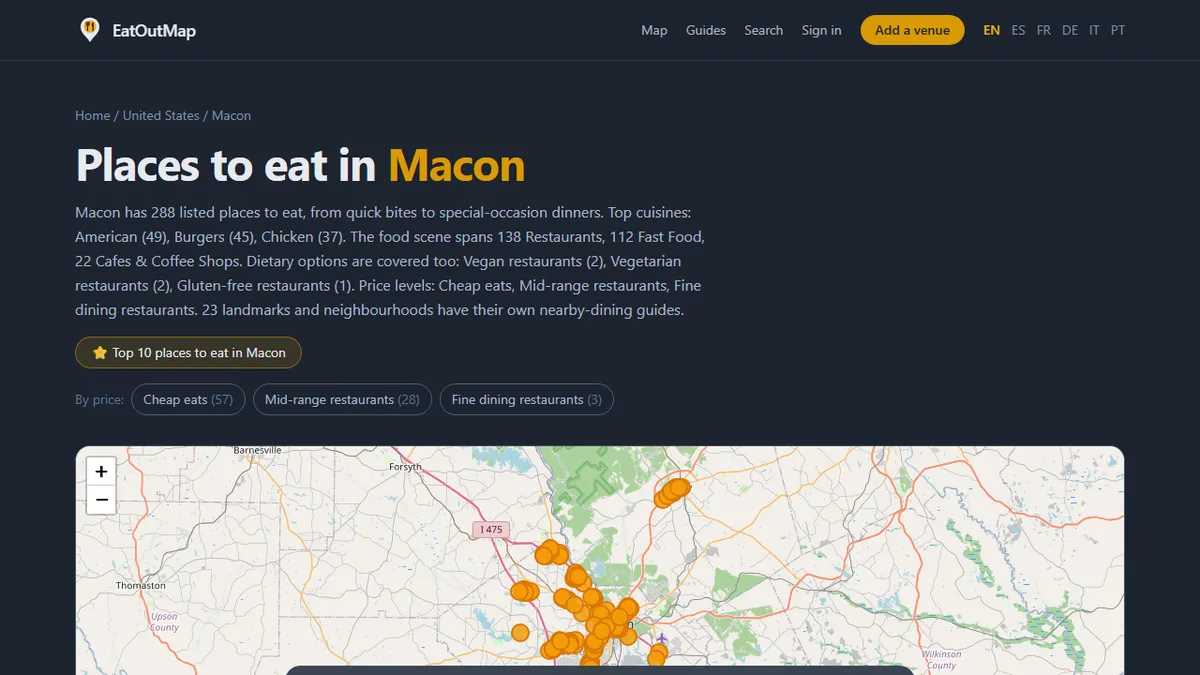
Rating scores only help if you can see them side by side. The fastest way to do that is to open eatoutmap's searchable city directory and look at the listings yourself. The same system that ranks Seattle's waterfront institutions also covers smaller scenes; macon's restaurant listings are a good example of how consistent the data can be. Once you see the rating scale applied across very different cities, it is easier to trust the numbers when you compare a 4.9 Thai place in Portland against a 4.9 sports bar in Denver.
A few practical rules for reading ratings. A 4.9 is not meaningfully better than a 4.7 when the styles are completely different. A 4.2 seafood shack can be exactly what you want if you are standing on the waterfront. The rating tells you how consistently a restaurant delivers what it promises. It does not tell you whether that promise matches your craving.
The Practical Side: Budget, Transit, and Timing
Seattle is the most expensive of the three, especially if you stay near the waterfront or downtown. Portland is the most walkable and the easiest to explore without a car. Denver is the most spread out, and you will likely need a rideshare or rental car unless you stay right in the center.
Timing matters more than people expect. Seattle and Portland are best in late spring through early fall, when the rain lets up and outdoor seating opens. Denver is more forgiving because the climate is drier, but summer afternoons can be hot and winter nights can be brutally cold. If you are planning around a specific restaurant, check whether it does reservations. A place like Din Tai Fung or Screen Door without a reservation can mean a long wait at peak hours.
The Verdict: Match the City to the Craving
Seattle is the pick when you want seafood, a legendary market, and restaurants that feel like a refuge from the rain. Portland is the pick when you want the highest concentration of creative cooking and are happy to eat your way through a compact downtown. Denver is the pick when you want hearty food, a serious beer scene, and the option to spend one day in the mountains and one day eating green chile.
There is no objective winner. There is only the city that matches the trip you actually want. Look at the ratings, check the neighborhoods, and book the flight. The food will be waiting.