The Subscription Creep Problem: How $20 Became $80+
It starts innocently enough. A ChatGPT Plus subscription lands on the credit card for $20 a month, because GPT-5 feels indispensable for drafts and brainstorming. Then a colleague recommends Claude for long-document work, and another $20 disappears. Google AI Pro follows because Gemini integrates neatly with the rest of the Google workspace. Perplexity Pro comes along for research tasks that require live web citations. Before anyone has stopped to total the bill, the monthly AI spend has quietly climbed past $80.
This is subscription creep: the gradual accumulation of recurring charges, each justifiable in isolation, that collectively are a significant and largely unexamined expense. It is not a niche problem. Analysts tracking consumer AI spending have noted that power users in knowledge-work roles routinely maintain three to five active AI subscriptions simultaneously, often with substantial capability overlap between them.
The uncomfortable question that rarely gets asked: are four separate accounts actually delivering four times the value of one?
What You Actually Get per Subscription (and What You Don't)
Each of the major AI platforms sells access to its own model and, in most cases, only its own model. ChatGPT Plus gives you GPT-5 and a handful of OpenAI-specific tools: the image generator, the voice interface, the memory features. It does not give you Claude. Claude Pro gives you Anthropic's models and nothing else. Google AI Pro gates you inside the Gemini ecosystem. Perplexity Pro centres on their search-focused model with web retrieval.
The redundancy is significant. All four platforms handle general writing, summarisation, and question-answering competently. You are not paying for four specialisations as much as you are paying for four overlapping general-purpose chat interfaces with minor feature distinctions on the margins.
What none of them give you in isolation: access to the others, cross-model comparison, the ability to route a specific task to the model best suited for it, or a unified credit system that does not charge you when you are only using one of the four.
Real Cost Comparison: ChatGPT Plus vs Claude Pro vs Gemini Advanced vs Perplexity Pro
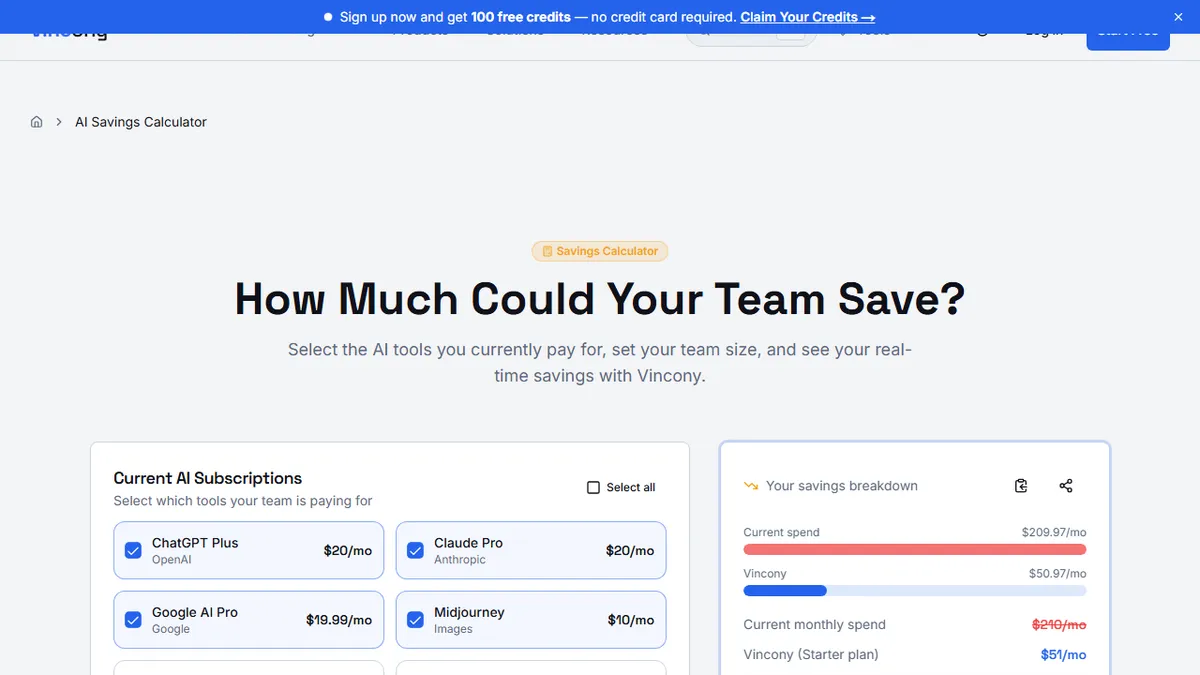
The numbers are straightforward. ChatGPT Plus runs at $20 per month. Claude Pro also costs $20 per month. Google AI Pro sits at $19.99 per month. Perplexity Pro adds a further $20 per month. Running all four simultaneously costs approximately $80 monthly, or just under $960 per year.
For most users, the actual utilisation rate across those four accounts is uneven. A research-heavy user might lean heavily on Perplexity and barely open Google AI Pro for weeks at a time. A developer might use Claude extensively for code review and rarely need Perplexity at all. Yet the fixed subscription structure charges the same regardless of whether you use the platform twice a month or two hundred times. There is no adjustment for light months, no credit rollover for unused capacity.
The waste is structural, not behavioural. Even a disciplined user who consciously tries to justify each subscription will still pay for idle capacity in at least two of the four platforms in any given month.
What a Unified Platform Changes About the Equation
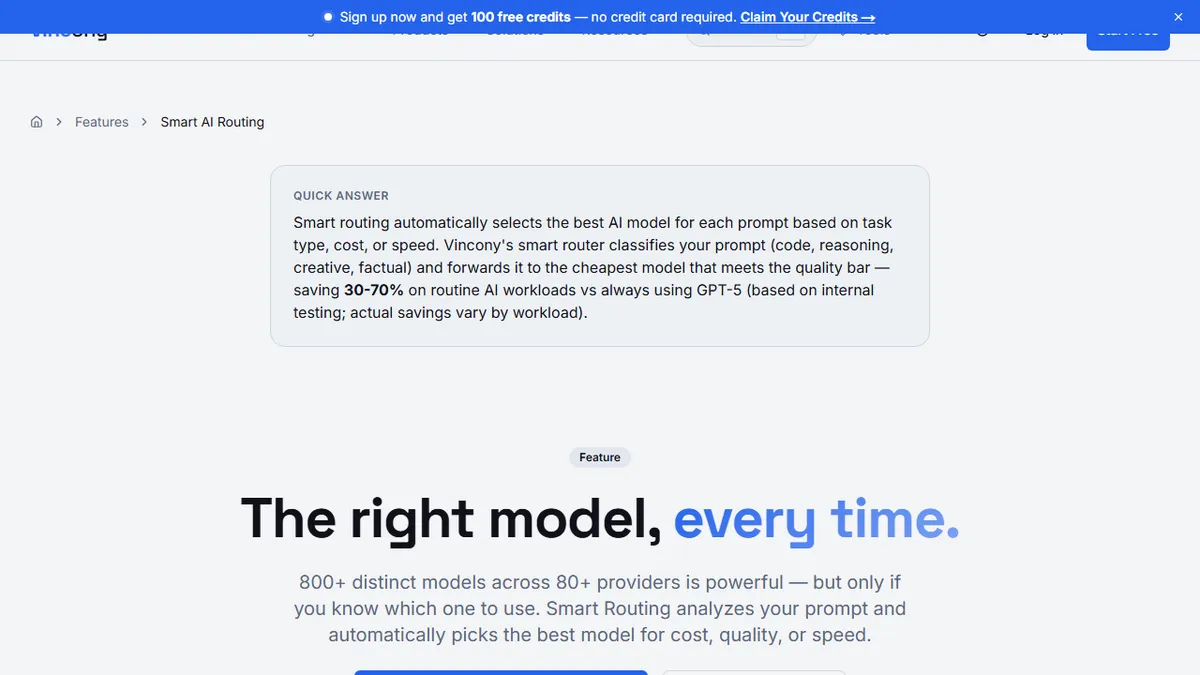
A unified AI platform that aggregates models from multiple providers under a single account fundamentally changes the cost structure. Instead of four separate flat fees, there is one account and credit-based pricing that tracks actual consumption. When you use GPT-5 for a writing task, you spend credits on that interaction. When you use Claude for a code review, credits cover that specific generation. When you do neither for three days, no credits disappear.
The math shifts in the user's favour. A single platform subscription that provides access to all the major models (OpenAI, Anthropic, Google, and dozens more) typically costs less per month than two of the individual subscriptions it replaces, even before accounting for the credit-only-when-used structure. You can calculate how much you could save by consolidating AI plans directly, using your actual usage patterns rather than theoretical averages.
When Multiple Subscriptions Still Make Sense (Honest Exceptions)
The case against subscription stacking is strong, but not universal. There are scenarios where maintaining a direct subscription to a specific provider makes genuine sense.
Power users with very high-volume requirements for a single model sometimes find that a direct provider subscription offers better rate economics at scale than a unified platform. If you are generating hundreds of outputs daily from GPT-5 specifically, OpenAI's API pricing may outperform a credit-based aggregator once the volume reaches certain thresholds.
Professionals who require model-specific guarantees (enterprise data handling agreements, specific compliance certifications, or vendor-specific SLAs) may have contractual reasons to maintain direct relationships with one or more providers.
And some people have a strong personal preference for a particular platform's interface, history management, or integration ecosystem that genuinely improves their workflow in ways a unified alternative does not replicate. These are real exceptions, not rationalisations.
How to Audit Your AI Spend Today
The audit takes less than ten minutes. Open your bank or credit card statement and identify every AI-related subscription charge from the past three months. List each service, the monthly cost, and a rough estimate of how frequently you actually used it in a meaningful way; not how often you opened it, but how often it contributed to work you could not have done differently without it.
For each platform where honest reflection reveals you used it fewer than a handful of times per month, ask whether that capability is available elsewhere in your stack. If the answer is yes, that subscription is a candidate for cancellation.
The goal is not to reduce capability: it is to stop paying for idle capacity. A well-chosen unified platform can preserve or expand your access to the models you value while eliminating the dead weight of subscriptions you maintain out of habit rather than need.
The Practical Next Step
Consolidation is not complicated. Identify which models you actually use regularly, verify that a unified platform provides access to those models, run both side by side for a single billing period, then cancel the redundant direct subscriptions once you have confirmed the migration works for your workflow. Most users discover they miss nothing and save considerably on their first full month.
The AI subscription market has structured itself to benefit from user inertia. The four-subscription habit is not irrational: it formed incrementally, for reasons that made sense at each individual step. Questioning it collectively, rather than defending each charge in isolation, is the straightforward corrective.