Mistake 1: Treating the Notice as a Final Eviction Order
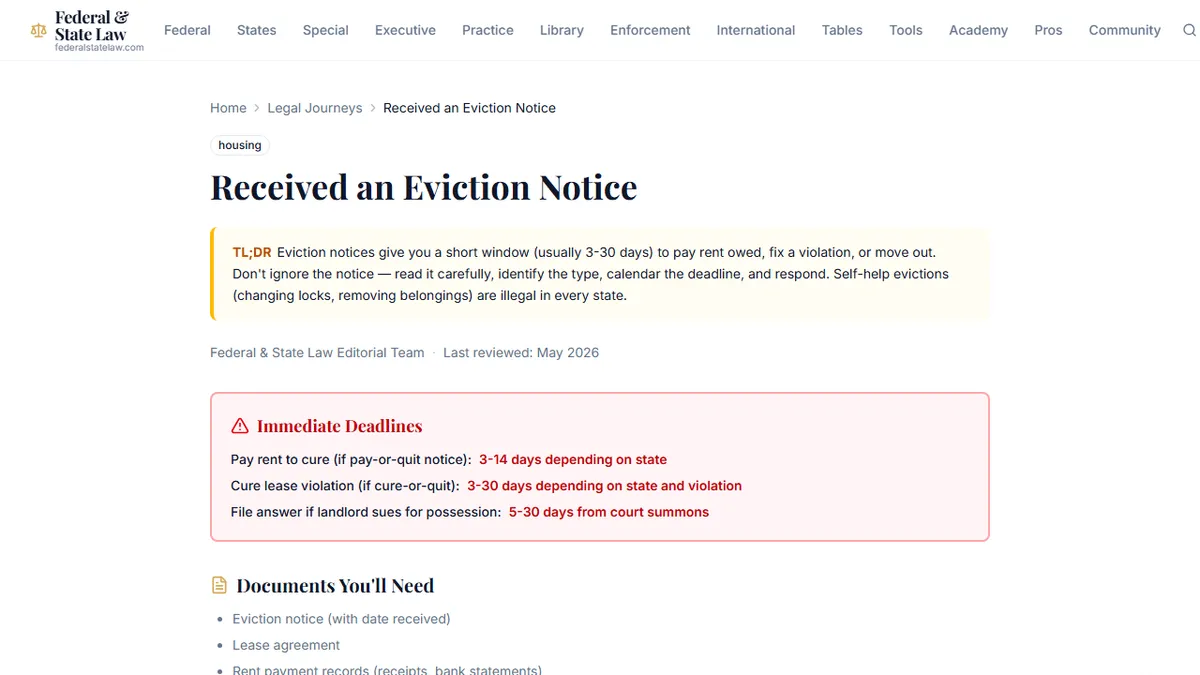
The most damaging mistake tenants make is believing an eviction notice means they must leave immediately. It does not. An eviction notice (whether a pay-or-quit, cure-or-quit, or unconditional quit notice) is the first step in a legal process, not the final one. A landlord cannot physically remove a tenant based on a notice alone. To actually force a tenant out, the landlord must file a lawsuit (usually called an unlawful detainer or summary possession action), serve the tenant with court papers, attend a hearing, obtain a court judgment, and then wait for a law enforcement officer to carry out any physical removal.
The gap between receiving a notice and a court-ordered eviction can range from weeks to months, depending on the state. Tenants who misread the notice as an immediate order to vacate often pack up and leave, surrendering a legal process that might have protected them. Some states even provide additional grace periods or hardship protections that tenants forfeit by voluntarily vacating.
The step-by-step walkthrough for tenants who just got an eviction notice maps out the full timeline from notice receipt to court hearing so you understand every stage before reacting.
Mistake 2: Moving Out Before the Court Date
Closely related to the first mistake, many tenants pack their belongings and move out voluntarily after receiving a notice, either because they are frightened or because they believe they have no legal ground to stand on. This is almost always the wrong move.
Vacating before a court date waives your ability to present defenses that might have resulted in the eviction being dismissed. Courts regularly dismiss eviction cases on procedural grounds: the notice was served improperly, the notice period was too short under state law, the landlord failed to accept a rent tender, or the landlord violated habitability standards that provide a counterclaim. By leaving voluntarily, you give up the chance to raise any of these defenses.
Moving out early also has financial consequences. In many jurisdictions, a tenant who voluntarily vacates may still owe remaining rent through the end of the lease term and loses any leverage to negotiate a cash-for-keys arrangement or a clean eviction record. If your credit or rental history matters for your next housing application, how the eviction is resolved (not just that it occurred) can make a significant difference.
Mistake 3: Ignoring the Specific Notice Type and Cure Period
Not all eviction notices are identical. The type of notice your landlord served determines both your legal exposure and your available responses, and conflating them leads to costly errors.
A pay-or-quit notice gives you a specific number of days (three days in California, five days in Florida, fourteen days in New York) to pay overdue rent before the landlord can file for eviction. If you pay in full within that window, the notice becomes void and the landlord cannot proceed. Many tenants receive a three-day notice and assume the window has passed when it has not, or assume the landlord will refuse payment when the law may actually require the landlord to accept it.
A cure-or-quit notice arises from a non-monetary lease violation: unauthorized pets, unauthorized occupants, illegal activity clauses. The cure period gives you time to correct the violation. An unconditional quit notice (typically reserved for serious or repeated violations) gives no opportunity to cure and is the most serious type. Understanding which notice you received is the first analytical step, and getting it wrong means responding to the wrong problem entirely.
Mistake 4: Failing to Document the Rental Condition
Tenants who receive eviction notices often focus entirely on the financial or lease-violation aspect and neglect a parallel risk: the condition of the rental unit at the time of the dispute. This oversight costs them in two ways.
First, if the landlord is alleging property damage or lease violations related to unit condition, contemporaneous documentation is your primary defense. Photographs and video of the unit, dated and preserved, establish a baseline. Without them, the eviction hearing may devolve into a credibility contest between the landlord's assertions and your unsupported denials.
Second, habitability conditions in the unit may provide an affirmative defense to non-payment of rent in many states. If the landlord has failed to maintain the unit in a livable condition (persistent mold, broken heating, pest infestation), some state laws allow tenants to withhold rent or pay reduced rent without being in breach of the lease. Documenting these conditions immediately is essential to raising that defense. Once the unit is vacated, the evidence is gone.
Mistake 5: Not Knowing Your State's Unique Tenant Protections
Eviction law is almost entirely state and local law, and the variation is enormous. A tenant who looks up generic "eviction rights" online without filtering for their specific state may rely on rules that simply do not apply where they live.
Some states require landlords to provide relocation assistance when terminating certain types of tenancies. Several states and cities have just-cause eviction ordinances that prohibit no-fault evictions, meaning a landlord cannot evict a tenant merely because they want the unit back if the tenant is not in violation of the lease. Some jurisdictions have retaliatory eviction protections that prohibit a landlord from filing for eviction shortly after a tenant has complained about habitability conditions or contacted housing authorities.
In states and cities that have enacted emergency tenant protections at various points, there may be additional notice requirements or payment plan obligations that a landlord must satisfy before an eviction can proceed. None of these protections apply automatically. You must know they exist and raise them.
What to Do Instead: A Tenant's First 72 Hours
The first thing to do after receiving any eviction notice is read it carefully. Note the type of notice, the cure or payment deadline, the stated reason for the eviction, and the name and contact information for the landlord or property manager.
If the notice is a pay-or-quit and you can pay the full amount demanded within the notice period, do so in a traceable way (a money order, a certified check, or a payment method that generates a record) and keep proof. If the landlord refuses a lawful tender, that refusal may be a complete defense.
If the notice is for a lease violation, determine whether the violation is one you can cure and whether the cure period is still open. Document the cure with photographs, written communication, and any receipts.
Regardless of the notice type, contact a local tenant rights organization or legal aid program as soon as possible. Many provide free consultations, can review your specific notice, and can advise whether your landlord has followed the required procedure. An improperly served or legally defective notice can be challenged at the court hearing — but only if you appear to raise the issue.
Do not move out, do not ignore the notice, and do not assume the outcome is predetermined. Eviction is a legal process with procedural requirements, and those requirements exist to protect tenants as much as landlords.