On this page
A useful report form lets someone locate the incident, explain the concern and state what remains unknown. It should not require a reporter to prove another person's motive or decide a legal category before asking for help.
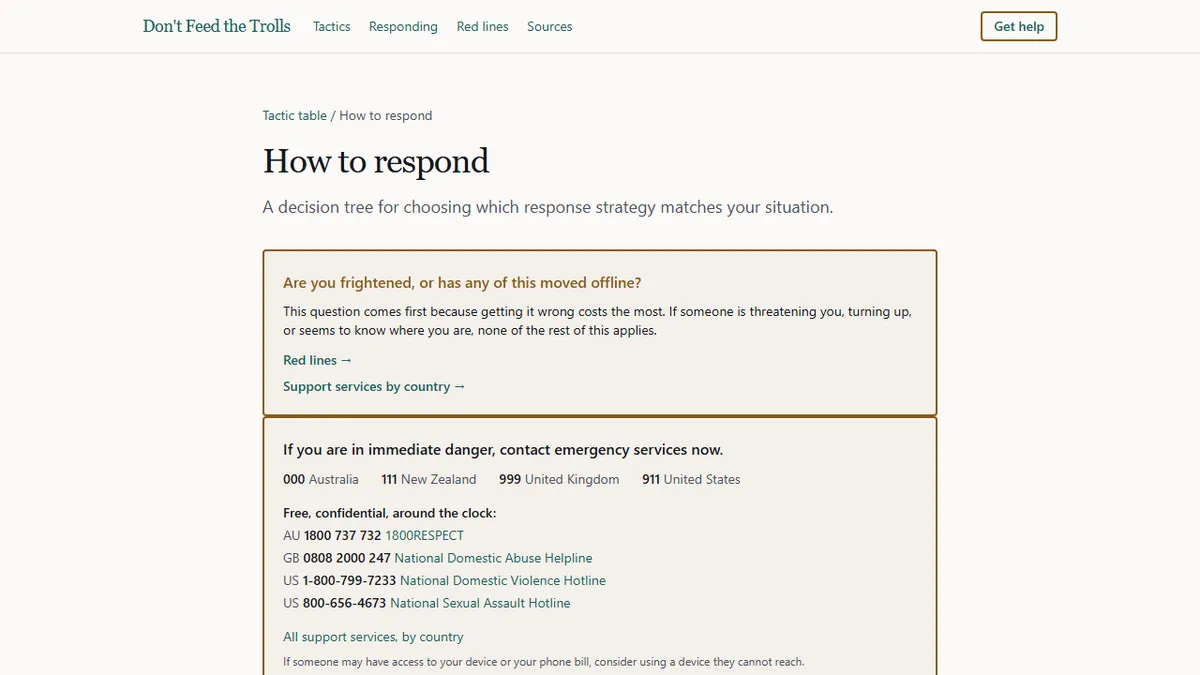
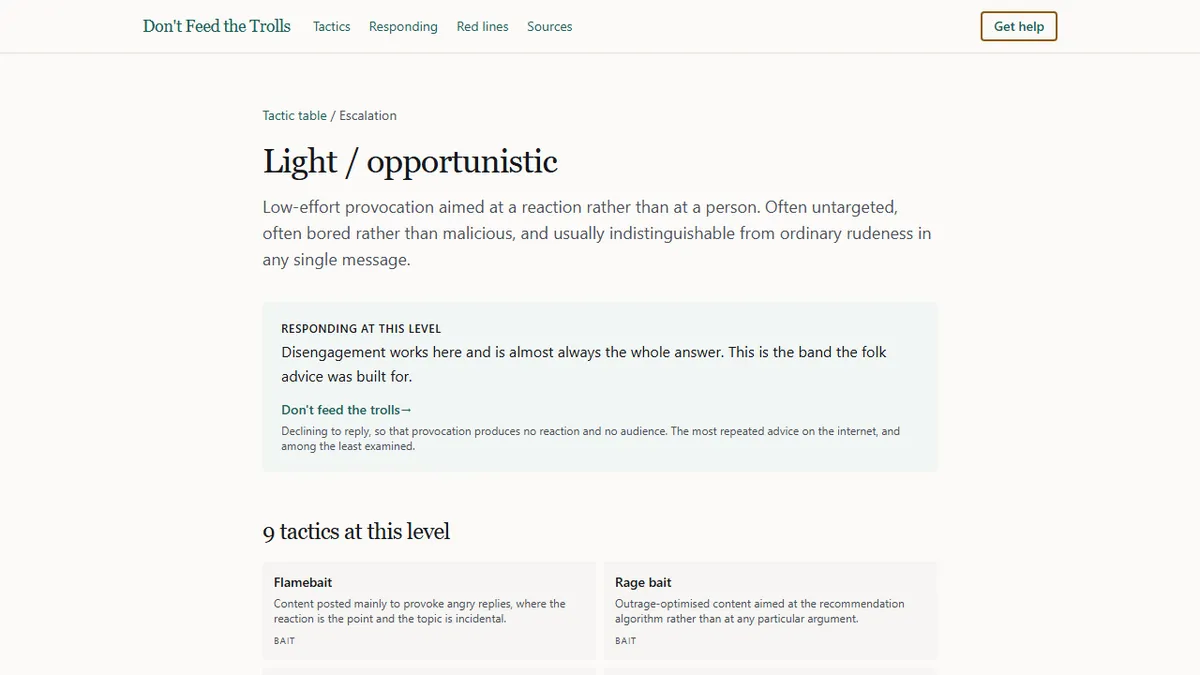
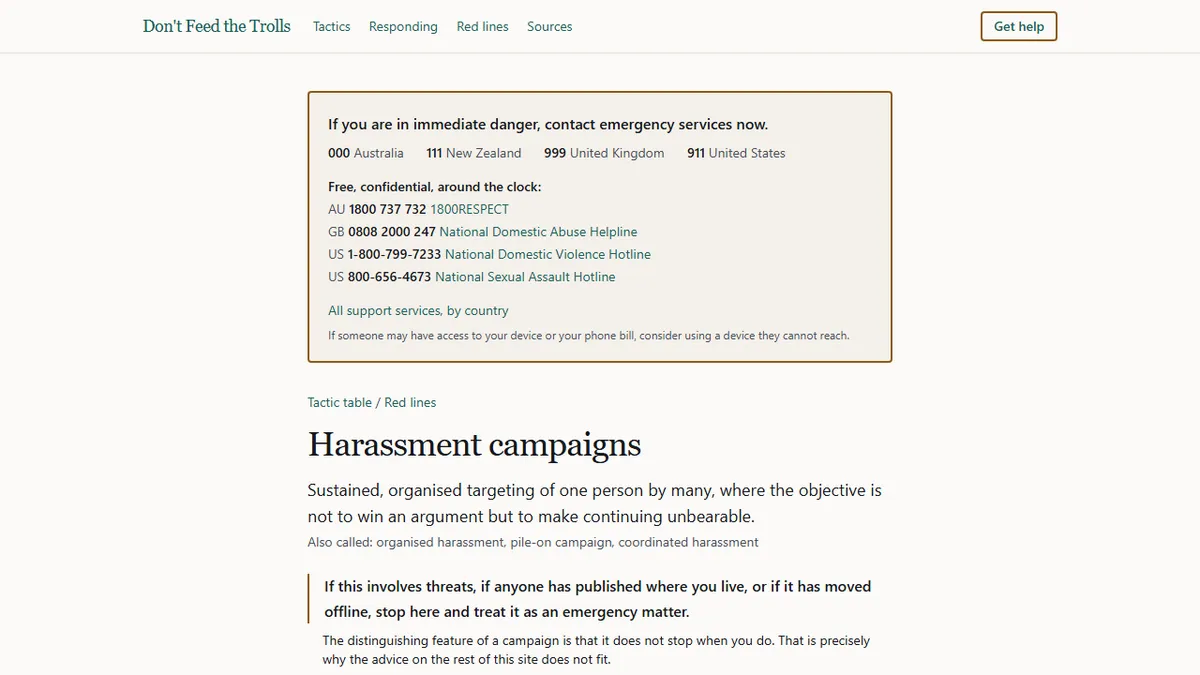
The site's response guide distinguishes safety concerns from ordinary exchanges and describes limits to disengagement advice. Use it as a prompt to examine the form's purpose, rather than a guarantee that one response works for everyone.
Start with the route and its limits
State who receives the report, which community it covers and what acknowledgement the user should expect. Only promise a response time the service can actually meet. Do not present an unmonitored form as an emergency service.
Separate the reporter's requested outcome from the review finding. “Please stop these messages” is a request; “the account violated rule 4” needs a review against the rule and available evidence.
Audit an invented form
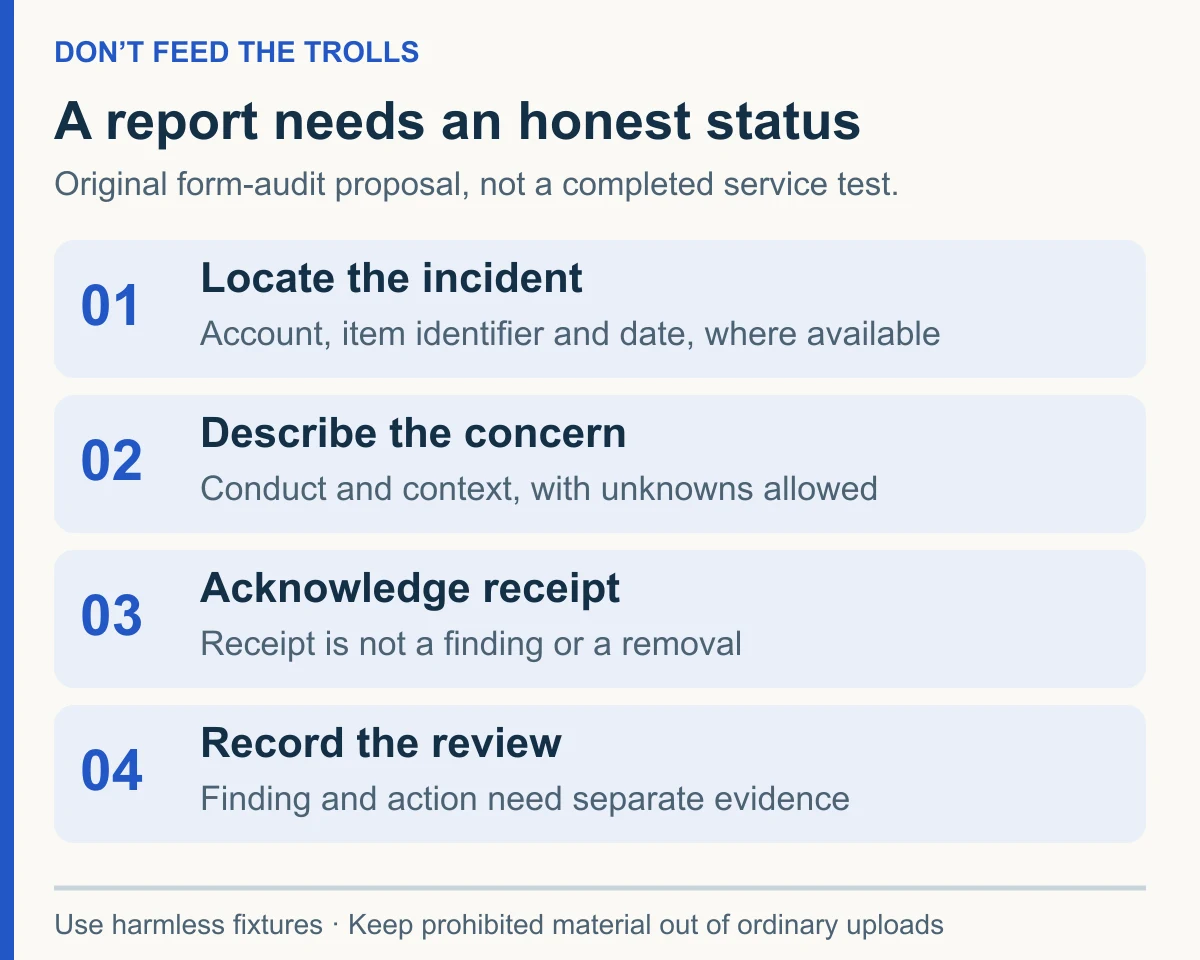
Suppose a fictional form contains only a username, a mandatory “Why are they malicious?” box and an unrestricted attachment field. The following changes would make its purpose clearer:
| Existing field | Proposed replacement | Why it helps |
|---|---|---|
| Username only | Account link and incident link or identifier, if available | Helps locate the relevant account and material |
| Why are they malicious? | What happened, when, and what concerns you? | Allows an account of conduct without guessing motive |
| One incident only | Related incidents, with unknown dates allowed | Makes a reported pattern visible without inventing precision |
| Any attachment | Clear allowed formats and prohibited-content instructions | Gives the reporter an appropriate evidence route |
| No confirmation | Receipt identifier and an honest next-step explanation | Separates receipt from a finding or removal |
These are design proposals. No live report was submitted or moderation workflow tested for this article.
Keep evidence requests proportionate
For serious online abuse, Australia's eSafety collection guidance discusses retaining location, account, date and pattern evidence. Its warnings about illegal material matter: do not ask users to download or attach sexual images of anyone under 18. Provide the platform's relevant specialist reporting route instead.
An ordinary community report should not demand identity documents, passwords or a complete private-message history by default. Ask for the material relevant to the concern and explain who can view it. Treat a missing URL as a gap to investigate, not an automatic finding that nothing happened.
Run a harmless fixture
Test the proposed form with fictional accounts and harmless text. Check keyboard access, understandable errors, a receipt and the reviewer's view of the same report. Record each observed result separately. A visible success screen does not prove an email arrived or that someone reviewed the case.