Separate the person presenting the offer from the entity taking payment and the service actually promised. A recognisable face or confident testimonial does not supply those missing details.
Manosphere Cult's research method describes checking sources and distinguishing quotations from paraphrases. Use that as a research prompt, not proof that every offer or allegation mentioned on the site has been independently verified here.
Make an offer card before paying
Record the seller named in the terms, the payment recipient, the product, access period, total commitment, renewal terms and cancellation route. Note whether the presenter says they receive a referral payment. If the names differ, ask why; a mismatch needs explanation rather than an automatic fraud label.
For business coaching, the US FTC's consumer guidance warns about guaranteed income, misleading testimonials, pressure and additional paid upsells. Those warning signs justify scrutiny; this article makes no allegation about a named seller and does not determine UK refund rights.
Compare a fictional pitch with its terms
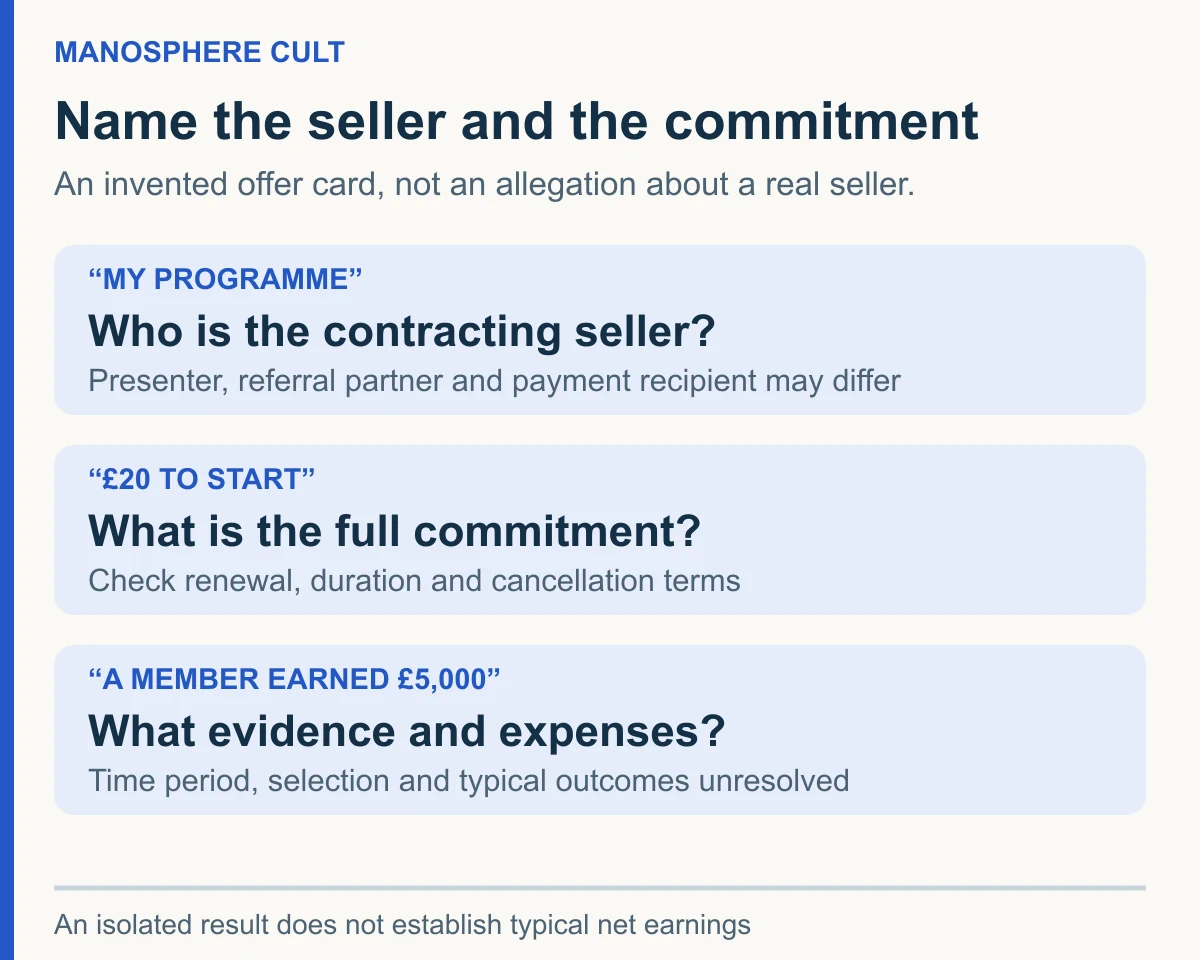
| Item | Invented advertising claim | What needs checking |
|---|---|---|
| Presenter | “My programme” | Who is the contracting seller? |
| Price | “£20 to start” | Initial fee, renewal price and minimum commitment |
| Outcome | “One member earned £5,000” | Time period, expenses, selection and typical results |
| Support | “Personal mentoring” | Who supplies it, format, frequency and exclusions |
The £5,000 statement is fictional and incomplete. Even if an isolated result were genuine, it would not establish the typical net earnings of purchasers.
Ask for answers you can retain
Ask the seller for the full terms and the evidence behind material claims before paying. Search the exact entity name and distinguish a complaint, an allegation, a regulator's action and an adjudicated finding. No search results is not proof of a clean record; the FTC makes the same caution about an absence of complaints.
Keep the version and date of the offer you assessed. A later price or policy cannot silently stand in for the one you were shown. The useful outcome is a clear record of who sells what, the actual commitment and the questions still unanswered.