Why First-Timers Keep Getting Tripped Up
Cambodia is a genuinely welcoming country, and most travelers leave it with overwhelmingly positive impressions. But the first 48 hours tend to filter out the underprepared. A handful of recurring mistakes (each individually minor, collectively capable of souring a trip) keep appearing in forum posts and hostel conversations with remarkable consistency.
The mistakes are not random. They cluster around four predictable areas: visa decisions made without enough information, transport pricing misunderstood as fixed, health risks treated as someone else's problem, and cultural assumptions carried over from other destinations. Fixing any one of them before you land costs nothing. Getting caught out by them costs time, money, and occasionally the trip itself.
Mistake 1: Paying USD 30 for a Tourist Visa When You Needed a Business Visa
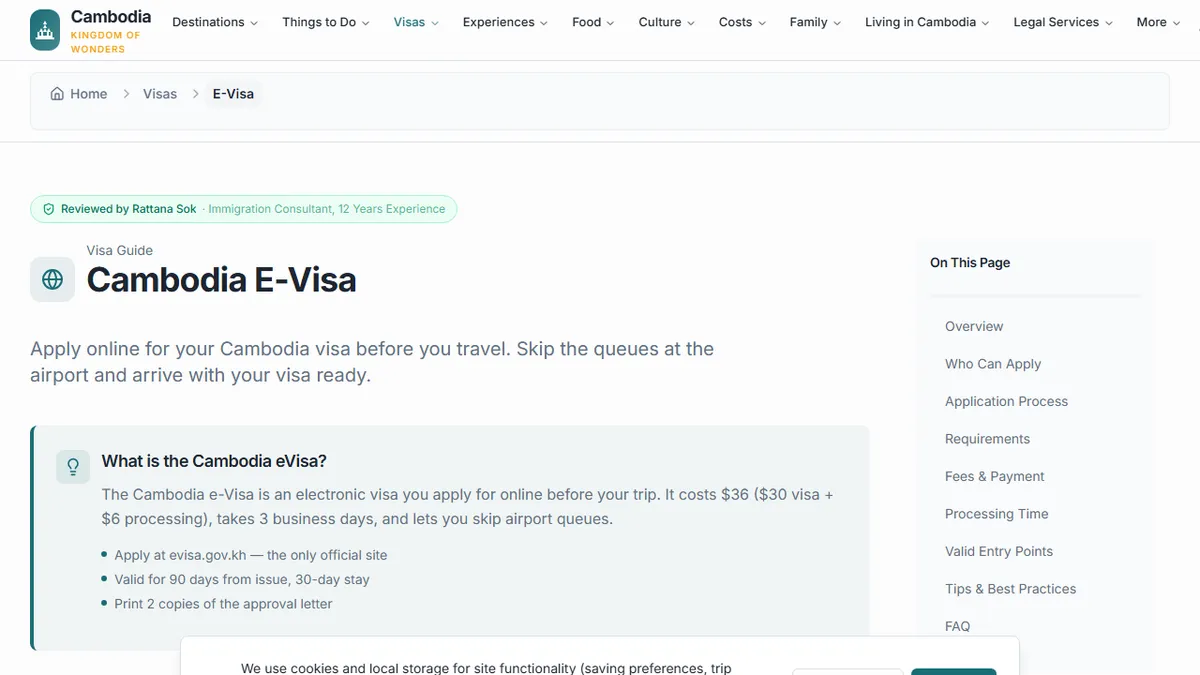
The Cambodia tourist visa (the T-class) grants 30 days and one entry. That covers the majority of first-timers with no ambiguity. But travelers planning to stay longer than a month, cross in and out of the country multiple times, or work remotely while present need the E-class visa (informally called the business visa), which costs USD 35 and can be extended indefinitely in-country.
First-timers who arrive on a tourist visa and then decide to extend their stay face a harder and more expensive path than if they had chosen correctly at entry. The fix is simple: decide before you travel whether you will stay under 30 days and enter once, or whether either of those conditions might change. If there is any doubt, pay the extra USD 5 at the border for the E-class.
Mistake 2: Falling for the Tuk-Tuk 'No Meter' Ambush
Tuk-tuks in Cambodia do not run on meters. Every fare is negotiated before you get in, and first-timers who skip the negotiation step routinely pay three to five times the going rate for routes locals complete without blinking. The driver at the airport arrivals hall quoting USD 15 for a USD 4 ride is not unusual. It is the standard opening position.
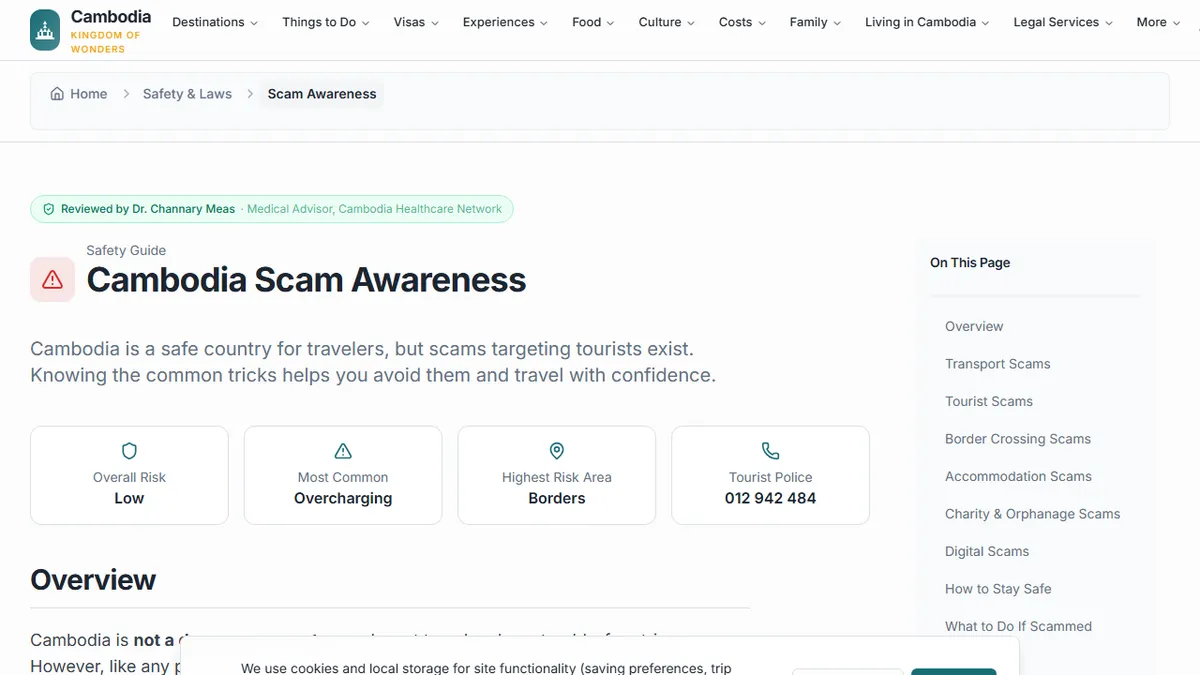
The Grab app (Southeast Asia's dominant ride-hailing platform) operates in Phnom Penh and Siem Reap and provides fixed quoted fares, which makes it the cleanest option for price-conscious travelers who do not want to negotiate every time. For tuk-tuk negotiations where Grab is not an option, knowing the approximate local fare before you start talking matters more than haggling skill. The tuk-tuk overcharging and other tourist scams to watch for lays out standard price ranges and the specific tactics used to inflate them, worth reading before your first journey from the airport.
Mistake 3: Skipping Travel Insurance in a Country With Slow Ambulances
The cost of travel insurance for a Cambodia trip is low. The cost of emergency medical evacuation from a rural province to a facility capable of treating serious injuries can run to USD 30,000 or more. These are not scare statistics. They reflect a real gap between the emergency response infrastructure in provincial Cambodia and what international visitors may need when things go wrong.
Road accident rates in Cambodia are among the highest in Southeast Asia. Getting injured while riding a rented motorbike without insurance, in a location without a competent hospital nearby, is a genuinely serious situation. Travel insurance with medical evacuation coverage is not optional in Cambodia; it is the difference between an expensive inconvenience and a financial catastrophe.
Mistake 4: Drinking Tap Water (And Trusting the Wrong Ice)
Tap water is not potable anywhere in Cambodia. This is understood by most travelers. The more frequent error is trusting ice in lower-end establishments without verifying whether it was made from purified water. Reputable restaurants and most places frequented by tourists use commercially produced cylindrical ice, made from purified water, recognizable by its standardized tube or pillar shape. Crushed or irregularly shaped ice in a non-tourist-facing establishment warrants caution.
Bottled water is universally available and inexpensive. Carrying a reusable bottle and refilling from sealed purified-water stations (common in hostels and guesthouses) reduces plastic waste without introducing risk. The gut infection that takes you out of action for three days of your Cambodia trip is almost always traceable to water or produce washed in tap water, not to cooked food.
Mistake 5: Wearing Shorts to a Temple and Getting Turned Away
Angkor Wat and the broader Angkor Archaeological Park enforce a dress code that catches underprepared visitors at the gate after they have already paid for a pass. Shorts, sleeveless shirts, and clothing that exposes shoulders are refused entry at certain temple sites. The rule is applied inconsistently across different temples in the complex, but Angkor Wat itself enforces it reliably.
The fix requires zero inconvenience: pack one pair of lightweight trousers and one shirt with sleeves, both of which compress to nothing in a day bag. Lightweight linen or quick-dry materials work well in the heat. Attempting to buy suitable clothing from vendors at the gate is possible but expensive and time-consuming. The complete first-timer checklist covering visas, currency, and etiquette includes a packing section that covers both temple dress code and weather considerations.
Mistake 6: Exchanging Currency at the Airport at Terrible Rates
Airport currency exchange counters in Cambodia, as in most countries, operate on significant margins. Exchanging USD or other currencies at the Phnom Penh arrivals hall will cost you more than any exchange inside the city. The practical fix is straightforward: carry enough USD to cover your taxi and the first day. Cambodia runs heavily on the US dollar, so arriving with USD in hand means you may not need to exchange anything at all.
Cambodian riel circulates mainly for small denominations below USD 1, which merchants provide as change. Most transactions in cities are conducted in USD. ATMs dispense USD from most major banks with fees that, while real, are considerably lower than airport exchange rates. Using a card or ATM inside the city on the first or second day is a better strategy than exchanging a large sum at the airport counter.
Mistake 7: Not Booking Angkor Passes in Advance During Peak Season
The Angkor pass ticketing system operates from a single facility near the park entrance. During peak season (roughly November through February) queue times to purchase passes can reach one to two hours before sunrise, which is the most popular time to visit. First-timers who plan to arrive at the gates at 4:30am for the sunrise without having purchased their pass in advance spend that time in a queue rather than in position.
Passes can be purchased online through the official Angkor Enterprise portal the day before. The three-day pass, frequently the best value for travelers spending more than a single day at the complex, requires planning ahead anyway. Booking the pass the evening before your first visit takes five minutes and removes the single largest practical friction point of the entire experience.