Why the Highlands Produce Such Distinctive Whisky
Single malt Scotch whisky is one of those products where geography is not a marketing construct but a genuine influence on what ends up in the glass. The Highlands produce a style range wider than any other Scottish whisky region (from the honeyed, sherried malts of Speyside in the east to the maritime, peated expressions of the far north and west), and the reasons are rooted in water, climate, and tradition rather than branding.
The soft, mineral-rich water flowing off Highland granite and peat gives Highland malt its particular texture. The long, cold maturation period in warehouses that experience genuine seasonal temperature swings produces a level of cask interaction that produces complexity in ways that shorter, warmer maturation cannot replicate. Distilleries that have been operating on the same site since the eighteenth century have, over generations, refined processes that are now inseparable from their specific location: the angle of their stills, the shape of their spirit safes, the source of their barley and water.
For the beginner, all of this matters practically: not because you need to memorise it, but because it explains why a distillery tour in the Highlands is more interesting than a factory tour. You are watching a centuries-old process operating in the environment it was designed for.
The Three Main Distillery Clusters to Know
The Highlands break into three practical clusters for distillery touring. Speyside (centred on the River Spey and its tributaries around Dufftown and Aberlour) is the most concentrated whisky district in the world, with more distilleries per square mile than anywhere else in Scotland. This is the place for visitors who want maximum variety in minimum distance: Glenfiddich, Balvenie, Macallan, Glenlivet, and dozens of smaller operations all sit within a compact area served by the Malt Whisky Trail touring route.
The Cairngorms and Perthshire corridor offers a different character: larger distances between distilleries, more dramatic mountain scenery, and a shift toward a heavier, earthier style. Blair Athol in Pitlochry and Edradour (Scotland's smallest distillery, producing in a farmhouse setting that has barely changed in 200 years) make excellent anchor stops.
The far north (Inverness to John o' Groats, and the northeast coast) carries the most remote and dramatically situated distilleries. Clynelish near Brora and Glenmorangie in Tain each sit in landscapes that justify the drive independently of the whisky.
What to Expect on a Distillery Tour
Standard distillery tours run between 45 minutes and two hours and follow a consistent structure: mash house, where barley is converted to sugary liquid; wash backs, the large wooden or steel fermentation vessels; still room, where distillation happens in copper pot stills; and warehouse, where casks are maturing. At the end, a guided tasting of two to four expressions.
The quality of tours varies considerably. Some large distilleries have invested heavily in visitor infrastructure and offer genuinely informative, well-paced experiences. A few feel like marketing exercises in heritage packaging. The most memorable tours are usually at medium-sized or smaller distilleries where the guide is an actual production employee rather than a dedicated hospitality hire. Their knowledge of process detail is typically deeper and their answers to specific questions more candid.
Always book in advance for premium tours. The standard 45-minute tour is usually walk-in friendly except at the highest-traffic sites in peak summer.
Planning Your Route — North, South, or Coast?
The practical question for anyone planning a multi-day distillery trail is which axis to follow. A north-south route through the central Highlands (say, Perth to Inverness via Pitlochry and Dalwhinnie) covers a manageable 120 miles and passes through some of the most beautiful driving country in Britain. A Speyside loop from Inverness, circling through Dufftown and back, can be done in two days and still visit eight or ten distilleries without feeling rushed.
The coastal route (Inverness along the A9 and B9175 through Fearn and Tain, continuing north) is slower but scenically exceptional. This is the corridor for visitors who want the whisky trail embedded within a broader Highland trip rather than as a dedicated activity.
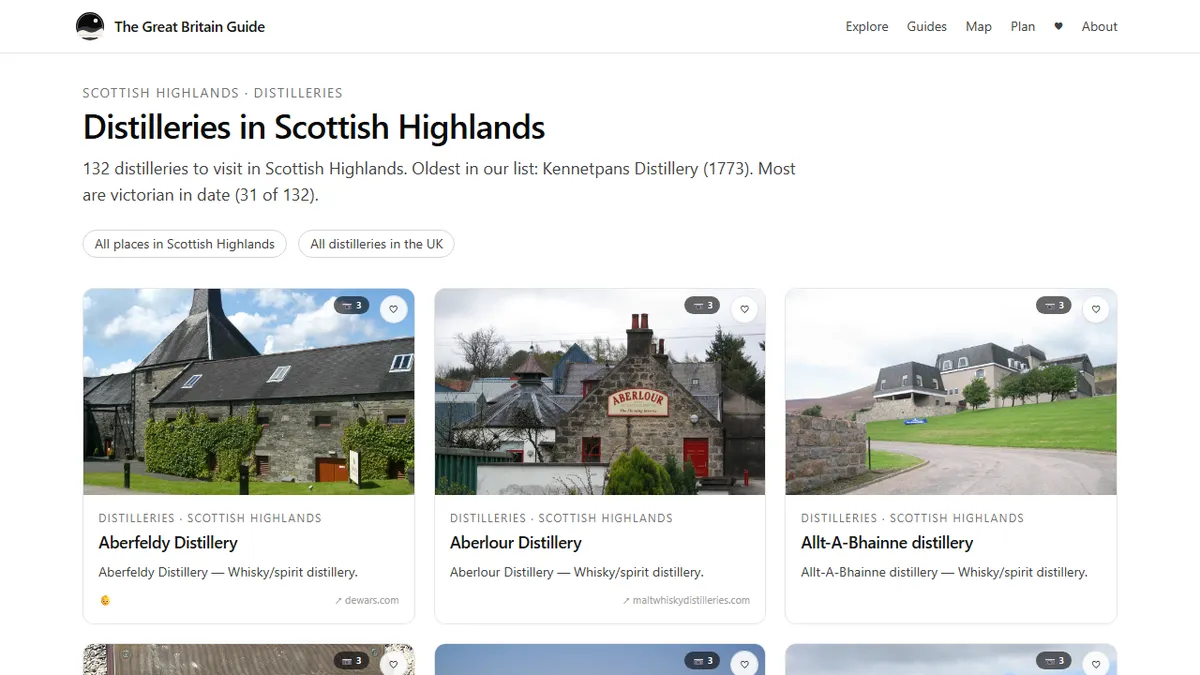
For detailed location data and proximity between sites, Highlands distilleries indexed by location provides a practical starting point for constructing your own sequence rather than following a preset itinerary.
Combining Distilleries With Other Highland Attractions
The Highland landscape offers enough alongside the distillery trail to fill several days without the two activities competing for time. The Cairngorm National Park sits at the heart of the Speyside cluster and offers mountain walking that is genuinely demanding; the plateau above Aviemore is Arctic in character and rewarding for those prepared for its exposure.
Culloden Battlefield, on the outskirts of Inverness, is one of the most thoughtfully interpreted historic sites in Scotland: the museum is honest about the reality and consequences of the 1746 battle without sensationalising it. Urquhart Castle on Loch Ness pairs naturally with a distillery stop in the Great Glen. And the Cairngorm Reindeer Centre near Aviemore is unexpectedly charming for visitors travelling with children.
The distilleries that are most interesting to combine with non-whisky attractions tend to be the ones that sit in towns with their own historical identity (Pitlochry, Dufftown, Forres) rather than in isolated rural positions where the distillery is the only reason to stop.
Budget Considerations and Booking in Advance
Standard distillery tours typically cost between ten and twenty-five pounds per person, with tastings included. Premium experiences (private tours, warehouse-hosted tastings, tutored vertical flights of specific expressions) can run to sixty pounds or more. A three-day trail visiting six or seven distilleries with standard tours will cost between sixty and one hundred pounds in admission alone before travel and accommodation.
Booking in advance matters most for the heavily visited Speyside operations in July and August. In spring and autumn, walk-in availability is generally good except at the smallest distilleries with limited tour capacity. Many distilleries offer a free or reduced-price introductory tour alongside their paid experiences. It is worth checking before booking the premium version if your interest is primarily in seeing the production process rather than conducting a deep tasting.