Two Types of Sextortion — and Why the Distinction Matters
Sextortion (using intimate images as leverage for blackmail) presents in two distinct forms, and the appropriate response differs enough between them that the distinction is worth understanding before a crisis arises.
The first type is financially motivated. Organised networks (many based in West Africa and Southeast Asia) use fake profiles built around attractive young people to contact teenagers on Instagram, Snapchat, and gaming platforms. The goal is to obtain one intimate image as quickly as possible, then immediately demand payment to prevent its distribution. These operations are systematic and are run at scale; a single operation may be simultaneously targeting hundreds of teenagers across multiple countries.
The second type is relationship-based, typically involving a former partner or someone the victim knows who is using real images obtained consensually within a relationship. The motivations are usually control and retaliation rather than financial extraction. Understanding what sextortion is and how it targets young people covers both patterns in detail, but the financially motivated form has grown dramatically in prevalence among 14-17 year olds and is the one most parents are least aware of.
How Campaigns Start: The Fake Profile Playbook
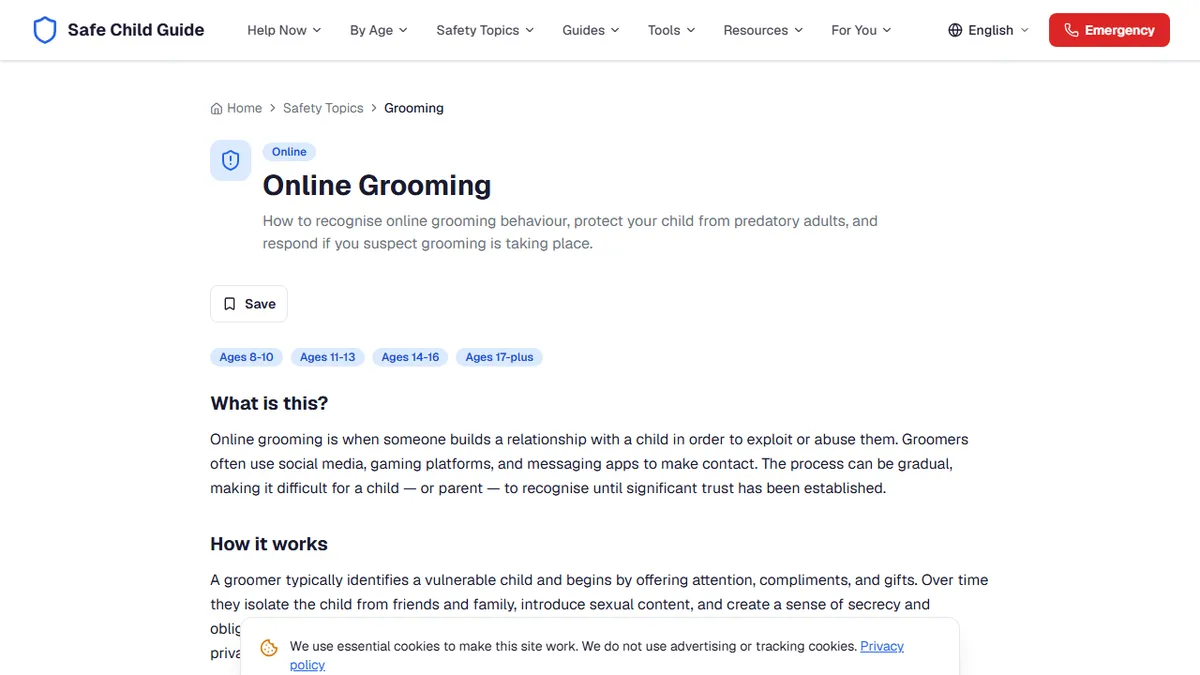
The initial contact is engineered to appear exactly like a normal social interaction. A profile presents as an attractive peer, the same age, with relatable interests, and flattering and direct in tone. It sends a follow request or a message. The conversation moves quickly toward intimacy, with the fake contact sharing a fabricated image early and asking for one in return.
The window between first contact and blackmail demand is often under an hour in organised campaigns. Once a single image is received, the tone switches entirely. A second person may appear on the call presenting as law enforcement or a concerned parent, adding pressure. Demands for payment (typically via gift card, cryptocurrency, or money transfer) arrive with a short deadline and a threat to send the image to the victim's contacts, school, or family.
The speed is deliberate. Before the victim has time to think clearly, they are in a crisis state that makes rational decision-making extremely difficult. Teenagers in this situation typically oscillate between paying to make it stop and paralysis. They almost never tell a parent, because shame and fear of consequences at home are overwhelming.
Why Teenagers Do Not Tell Parents
Silence is the outcome that perpetrators most depend on, and they are skilled at engineering it. Teenagers in sextortion situations almost universally believe that telling a parent will result in one or more of the following: having their phone taken away, being blamed for what happened, being reported to school or police in a way that will make the situation worse, or being permanently prevented from using social media.
None of these fears are entirely unreasonable based on how adults tend to react to news they find distressing. A parent whose first response is "why did you send that?" rather than "thank you for telling me, we will sort this out together" confirms everything the perpetrator told the victim to expect. The shutdown happens, the teenager returns to trying to manage the situation alone, and the harm escalates.
This is why the pre-emptive conversation (before any incident) is the most protective intervention available. A child who already knows, unambiguously, that they will not be in trouble for telling is far more likely to disclose early.
The First 24 Hours: What to Do If Your Child Comes to You
If a teenager discloses a sextortion attempt, the immediate response should be calm acknowledgment followed by practical steps, not emotional reaction.
First: do not pay. The demand will not stop after one payment. Paying confirms that the target will pay and invites higher demands. Second: do not delete anything. Screenshots of all contact, the profile involved, and any demands should be preserved before anything is reported. Third: change privacy settings immediately so the account showing who the teenager's contacts are becomes invisible to the blackmailer, reducing the threat's leverage. Fourth: report the profile to the platform directly, which will typically result in account removal within hours.
The urgent steps when a child is being blackmailed online provides a current, step-by-step sequence covering these actions for each major platform.
Do Not Pay — and Why That Is Hard Advice to Follow
The logical case against paying is clear: it does not stop the blackmail, it confirms that payment works, and in financially motivated campaigns the images are typically not distributed regardless of whether payment is made, because distribution ends the revenue opportunity.
The emotional reality for a parent is quite different. Your child is terrified, the deadline is artificial but the distress is real, and payment feels like it would end the crisis immediately. Perpetrators know this and design the experience precisely to make payment feel like the only option.
It is worth holding to the position. The vast majority of financially motivated sextortion cases do not result in image distribution when payment is refused. The demand collapses when the leverage no longer functions. Paying, by contrast, can result in months of continued extraction.
Reporting to CEOP, the IWF, and the Police
In the UK, the primary reporting route for online sexual exploitation of children is the Child Exploitation and Online Protection command. Reports can be made directly through the CEOP website without needing to go through a local police station first. CEOP operates specialist units with cross-border capability relevant to the organised campaigns often based overseas.
The Internet Watch Foundation handles the takedown of intimate images shared without consent, including those involving minors. If images have been distributed, a report to the IWF can result in removal from platforms and search indexes far more quickly than waiting for individual platform processes.
Local police should also be informed, particularly if the perpetrator is known to the victim or is located in the UK.
Prevention: The Conversation to Have Before It Happens
The most effective intervention is a direct, low-drama conversation before any incident occurs. The core message is threefold: these campaigns exist and target teenagers specifically, the people operating them are professionals at manipulation and it is not a reflection on the victim if it happens, and coming to a parent immediately (before paying anything) is always the right response regardless of the content involved.
Framing it as something that happens to many people, rather than something that reveals poor judgement, removes the shame component that perpetrators most rely on. A teenager who has heard this conversation once, from a parent who handled it calmly, carries a different internal script when a suspicious contact appears in their notifications.