On this page
Myth 1 — 'Everything Is Closed in Winter'
This is probably the most widespread misconception and the one that does the most damage to people's planning. The truth is that nearly everything significant stays open year-round. Britain's major national museums (the British Museum, the Natural History Museum, the National Gallery, the V&A) operate on their standard hours throughout winter. Most National Trust properties remain open, often with reduced hours but not closed outright. English Heritage's outdoor sites are accessible regardless of season.
What does close seasonally tends to be the summer-only peripheral infrastructure: ice cream stands, boat trips, some smaller seasonal visitor centres. The heritage and cultural attractions that are the primary reason most people come to Britain are almost invariably open.
Myth 2 — 'The Weather Makes It Not Worth It'
British winter weather is overrated as a deterrent. The country sits in a maritime climate that moderates temperature extremes in both directions. It rarely gets very cold, and it rarely gets hot enough to be pleasant either. Winter temperatures across most of England average between 4 and 9 degrees Celsius. That is cold enough to require a coat but not cold enough to be genuinely limiting.
The bigger issue is daylight, not temperature: December days are short, with London getting around eight hours of light and Edinburgh around seven. Itineraries need to account for this by front-loading outdoor activities into the middle of the day rather than assuming a full twelve-hour window. Rain is possible year-round; waterproof layers matter more than season.
Myth 3 — 'Heritage Sites Are Less Interesting Without Greenery'
Winter light is often better for heritage sites than summer light. Low-angle winter sun rakes across stone surfaces in ways that reveal texture and make the natural drama of landscapes like Hadrian's Wall or Avebury more pronounced. Photography enthusiasts who shoot heritage landscapes know this instinctively; casual visitors often discover it by accident and leave surprised.
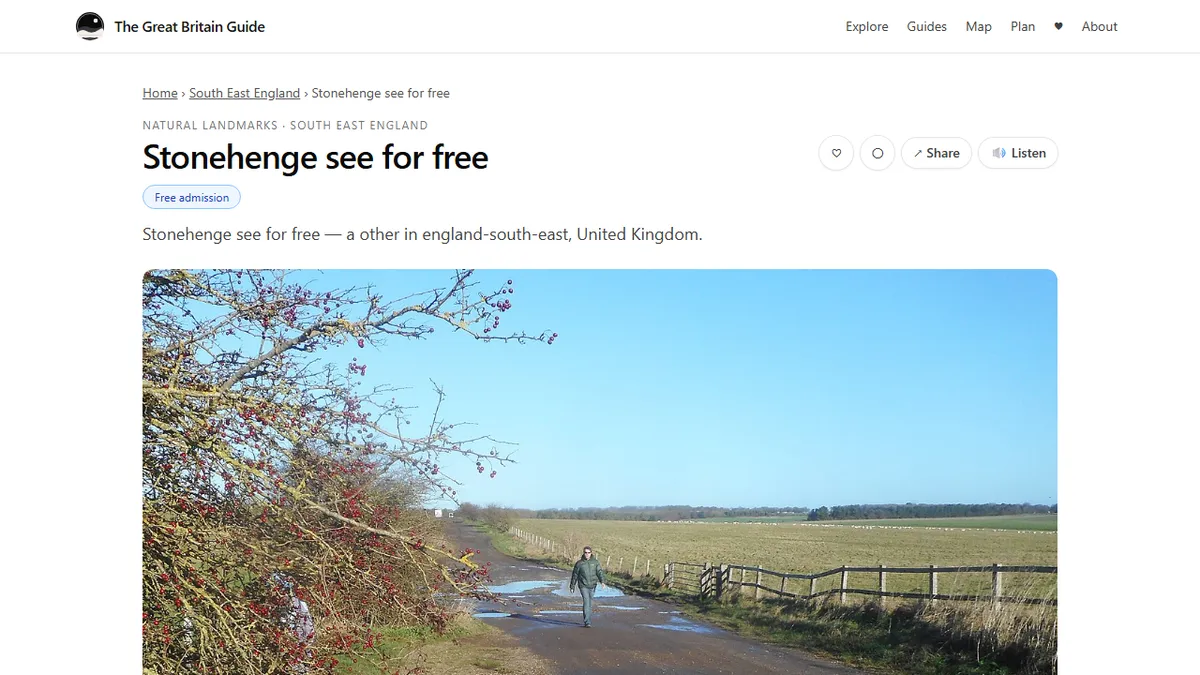
Stonehenge was astronomically aligned to the winter solstice. The stones frame the setting sun on 21 December in a way that has no equivalent in summer. Edinburgh's Old Town, its volcanic geology amplified by clear winter skies, looks measurably more striking when the low sun catches the Castle Rock in late afternoon.
Myth 4 — 'You Won't Find Anything to Do Outdoors'
Some of the best outdoor experiences in Britain are specifically winter activities. The mountains of Scotland, Wales, and the Lake District take on genuine alpine character in hard winters. Walking routes that are straightforward in summer become navigational challenges that reward skill and preparation. The Cairngorm plateau, in particular, offers a high-altitude Arctic landscape that is completely inaccessible in spirit during summer's green familiarity.
Coastal walking improves dramatically in winter. The tourist infrastructure disappears, beaches empty, and the full dramatic character of cliff paths (the Seven Sisters in East Sussex, the Northumberland coast, the Pembrokeshire headlands) becomes available without the competition. Storm-watching on the North Atlantic coasts of Scotland, Cornwall, and the Gower is a specific activity with its own dedicated following.
Myth 5 — 'Christmas Markets Are Just for Locals'
The opposite is true for the best ones. Manchester's Christmas market, spread across multiple city centre squares from mid-November, regularly draws visitors from across Europe and is frequently cited as one of the finest in Britain. Edinburgh's winter festival, centred on Princes Street Gardens with the castle illuminated above, is among the most atmospheric in Europe.
Bath's market, Winchester's, and York's all occupy settings (a Roman city, a medieval close, a Viking street plan) that give them a character no purpose-built market can replicate. These events actively reward a special visit rather than simply rewarding proximity.
Myth 6 — 'Wildlife Watching Shuts Down'
Winter is one of the best seasons for wildlife observation in Britain, not one of the worst. Deciduous leaf cover disappears, making birds substantially easier to spot. Coastal estuaries fill with tens of thousands of overwintering waders and wildfowl from October through March. The wetlands of the Solway Firth, the Wash, and the Thames Estuary host spectacles on a scale that simply does not occur in summer. Red deer are in rut in October and November across Highland estates, and grey seals pup on northern beaches from November onwards.
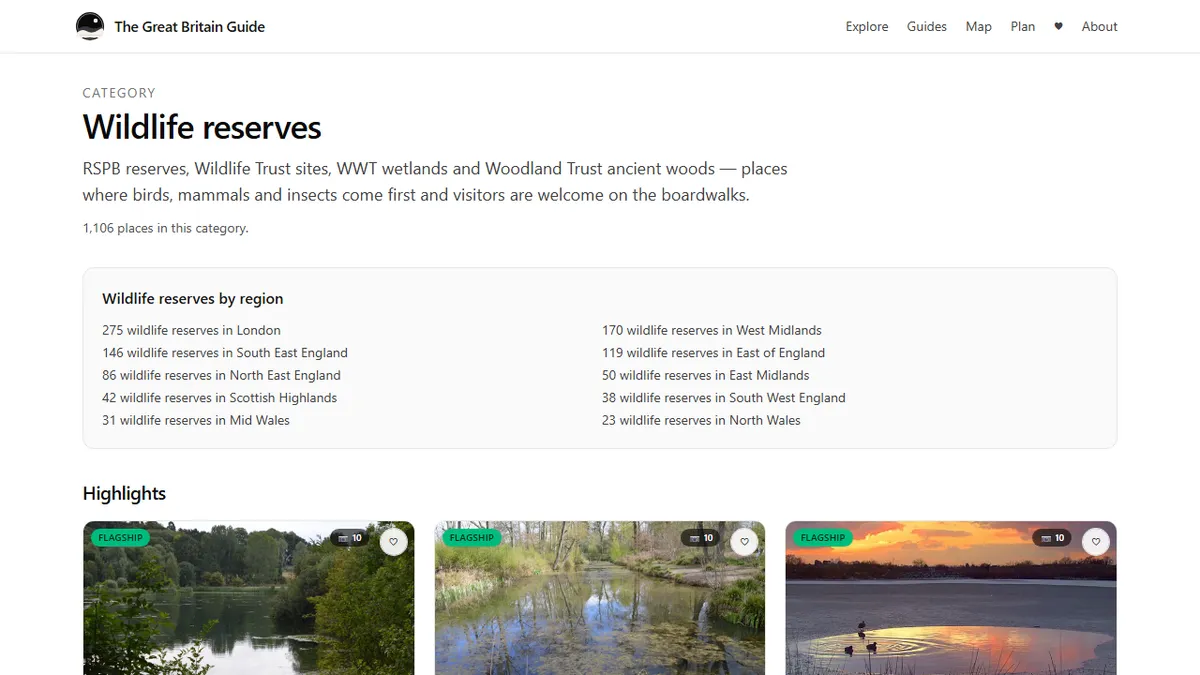
The wildlife reserves open year-round across Britain include a significant number of coastal and wetland habitats that are at their most productive precisely in winter. RSPB Minsmere in Suffolk, the Wildfowl and Wetlands Trust centres at Slimbridge and Martin Mere, and the Farne Islands (accessible by boat from Seahouses in Northumberland) all offer exceptional winter wildlife experiences.
Myth 7 — 'Public Transport Grinds to a Halt'
British public transport does not particularly enjoy winter either, but the myth that services collapse is an overstatement. Rail services across the national network operate normally through the overwhelming majority of winter. The disruption that does occur (caused by infrastructure failures in very cold or very wet conditions) tends to be localised and temporary.
Rural bus services are thinner in winter than summer in some regions, and some ferry routes to islands reduce their frequency. But for the main touring circuit (London to Edinburgh by rail, the West Midlands hub, the Southwest Mainline), winter service is effectively normal. Booking ahead remains advisable for major intercity routes during the Christmas and New Year holiday window, when demand spikes sharply. Outside that two-week period, rail travel in January and February is often quieter and cheaper than at almost any other point in the year.