Why Airbag Defects Are Almost Always Rated Severity 4 or 5
Airbags are a passive restraint system designed to absorb crash energy in the fraction of a second between impact and the point at which an occupant would strike the steering column or dashboard. When the system works, the driver and passengers walk away from crashes that would otherwise be fatal. When it fails, whether by not deploying at all, deploying at the wrong time, or deploying with excessive force, the consequences are rarely minor.
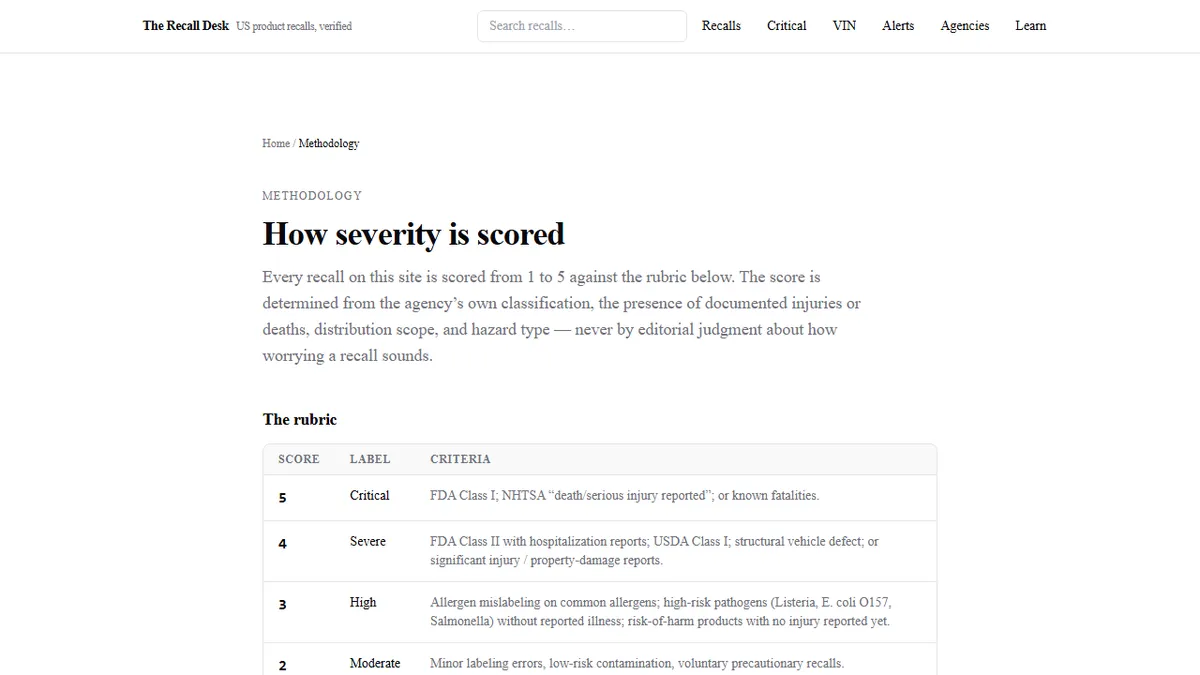
This is why virtually every airbag-related recall receives a severity score of 4 or 5. The defect either removes a layer of protection that a driver expects to be there, or it converts the airbag itself into a hazard. Both failure modes have documented histories of causing serious injury and death, which is why NHTSA-issued vehicle safety recall notices treating airbag defects are treated with more urgency than most other vehicle safety categories.
The practical upshot for owners is clear: an open airbag recall is not something to schedule for next month when it's convenient. It belongs in the next available dealer appointment window.
Passenger Occupant Sensor Failures: The Hidden Hazard
Modern vehicles automatically suppress the passenger-side airbag when a child or lightweight occupant is detected in the seat, because deploying a full-force airbag against a small child can cause more harm than the collision itself. The occupant classification sensor determines whether the seat is occupied by a person heavy enough to safely receive airbag deployment.
When this sensor fails or misclassifies occupants, the consequences cut both ways. An adult passenger may not receive airbag protection in a crash because the system believed the seat was empty. A child properly seated in a booster may receive deployment that the sensor failed to suppress.
Several significant recalls in recent years (including Ford Bronco Sport and Maverick campaigns) have cited passenger occupant classification sensor failures as the primary defect. If your vehicle falls within an affected model year and production range, this recall warrants particular urgency if you regularly carry passengers.
Inadvertent Deployment: When the Airbag Is the Danger
A less intuitive category of airbag recall involves airbags deploying when no crash has occurred. The causes vary: faulty crash sensors that misinterpret road vibration as impact data, software errors in the occupant protection control module, or short circuits in sensor wiring harnesses. In each case, an airbag fires unexpectedly, typically at highway speed with the driver's hands on the wheel.
The physics of an inadvertent deployment at speed are severe. The blast force can fracture facial bones, cause whiplash injuries, and momentarily obscure the driver's vision — all without a collision having initiated the event. The unexpected nature of the deployment is itself a risk factor, because a driver who has never experienced it has no time to prepare.
Honda and Acura issued a recall in this period covering multiple model years due to a passenger seat weight sensor that could short circuit and cause unintended airbag deployment during a crash. The distinction between no-crash deployment and deployment triggered at the wrong moment in an actual crash matters for the outcome, but both are serious.
Side Curtain Airbag Seam Failures and What They Mean
Side curtain airbags inflate in a column along the side windows to protect occupants from intrusion and ejection in side-impact and rollover events. Unlike front airbags, which operate in a fraction of a second and then deflate, side curtains in rollover scenarios are designed to remain inflated for several seconds to provide sustained protection during a roll.
Improperly sealed seams in the airbag fabric can cause the curtain to lose pressure rapidly, defeating its extended-protection purpose. Chrysler issued a recall on Voyager and Pacifica side curtain airbags in 2026 citing exactly this failure mode — insufficient pressure retention due to manufacturing seam defects, with a severity score of 3 reflecting serious potential harm without confirmed incidents at the time of announcement.
For owners in these recall ranges, the defect is not visible without inspection. The only way to know whether your specific vehicle is affected is to check your VIN against the campaign.
Software-Triggered Airbag Delays: A Growing Trend
A growing share of recent airbag recalls involve software errors in the Supplemental Restraint System control module rather than physical hardware failures. Jeep Grand Cherokee models, for instance, were recalled after a software error was found that could delay side airbag deployment in a crash. Hyundai issued a related campaign covering Tucson, Elantra, and related models due to misassembled B-pillar impact sensors that could slow the trigger signal.
Software-based airbag recalls are repaired through a module reflash — the dealer connects to the vehicle's diagnostic port and overwrites the control software — rather than physical component replacement. This typically makes the repair faster and less disruptive than hardware-based recalls. But the urgency is the same: a delayed airbag in an actual crash is functionally equivalent to no airbag in many impact scenarios.
How to Find Out If Your Airbag Is Under Recall
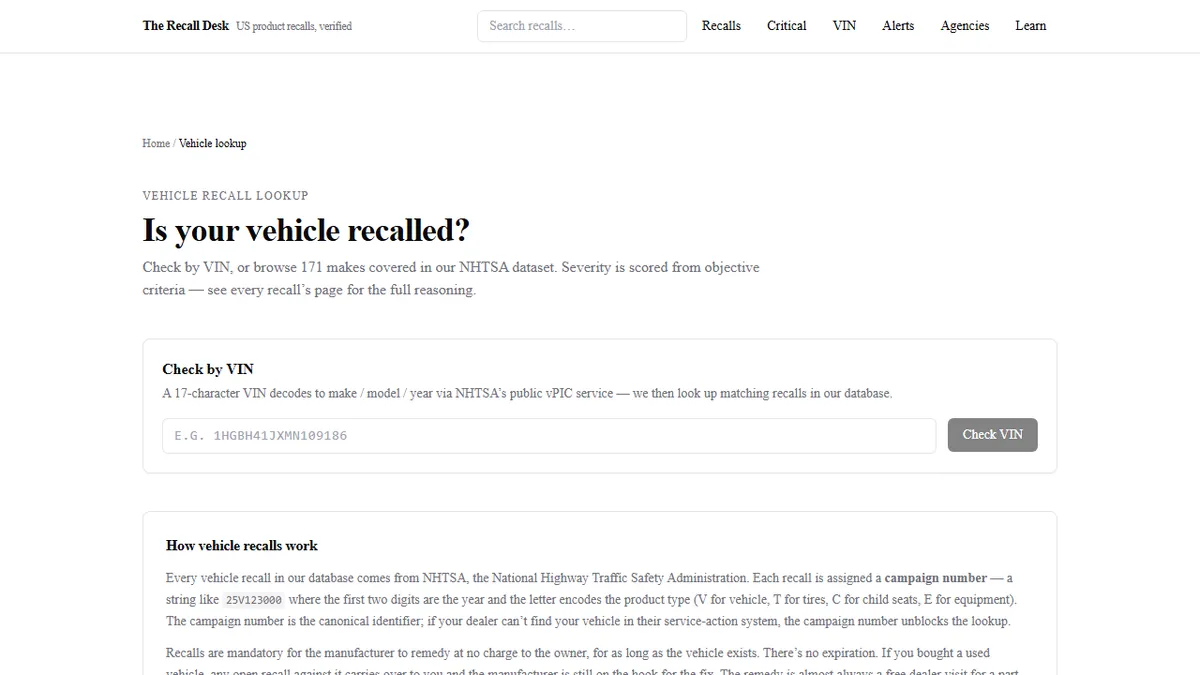
The definitive check is a VIN lookup through the NHTSA database, which returns all open recall campaigns against your specific vehicle. Your 17-character VIN is on the driver's side dashboard, visible through the windshield. Enter it at the NHTSA website and look for any campaigns describing airbag, supplemental restraint system, passenger sensor, or SRS failures.
If you purchased a used vehicle and received a stack of maintenance records, check whether any previous airbag recall was already remedied and documented. A dealer repair receipt showing the campaign number and repair date means that specific recall is closed for your VIN. Closed recalls do not appear in the NHTSA open-recall results, so if nothing comes up, you are either clear or a previous owner addressed it.
What Dealerships Do in an Airbag Recall Repair
The specific repair varies by recall. For occupant sensor failures, the dealer typically replaces the sensor module. For SRS software errors, a reflash of the control unit is often sufficient. For inflator and side curtain defects, physical component replacement is required.
All work is performed at no cost to the owner, regardless of vehicle age or whether you are the original purchaser. Bring your VIN and the recall campaign number — found through the NHTSA lookup or your recall notice — when you call to schedule. Ask the service adviser to confirm parts availability before booking, particularly for complex hardware replacements where supply may be constrained on recent high-volume recall campaigns.