Techno's Detroit-Berlin DNA
Techno was not invented in a studio by producers trying to create a genre. It was invented in Detroit in the mid-1980s by a small group of young Black artists (Juan Atkins, Derrick May, Kevin Saunderson, and a handful of others) who were responding to the economic collapse of their city, the influence of European electronic music, and the theoretical ideas they encountered in sociology classes. The music they created was deliberately futuristic, stripped of the warmth and nostalgia that characterised soul and funk, and aimed at a possible future rather than a remembered past.
When that music reached Europe, specifically West Germany in the late 1980s and Berlin following reunification in 1990, it found a second home with entirely different cultural context. Berlin's newly opened clubs (operating in abandoned industrial spaces without licences or oversight) absorbed Detroit techno and transformed it into something even harder, darker, and more hypnotic. The Berlin interpretation emphasised the industrial quality of the music, the sense of disorientation, the long form. The two-city lineage is not just historical trivia: it explains why techno has both a politically utopian and an aesthetically severe character simultaneously.
The four main techno subgenres explained
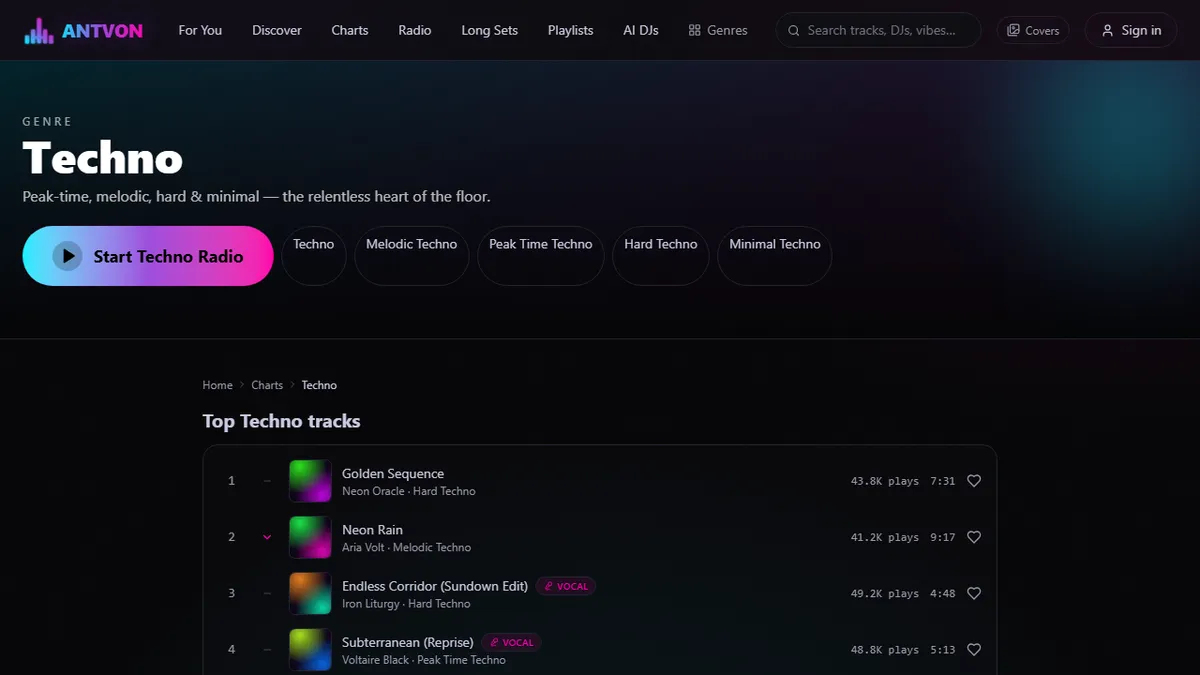
Minimal techno is techno reduced to its essential elements: a kick, sparse percussion, a bass pulse, and very little else. Tracks can run for ten minutes on what appears to be barely three or four elements, but the micro-variations in those elements (subtle filter sweeps, fractional timing shifts, the entry and exit of a single hi-hat) reward close attention. Minimal techno is the most demanding subgenre for new listeners and the most rewarding for experienced ones.
Melodic techno, also called melodic-hypnotic or simply dark techno in some markets, reintroduces harmonic and melodic content into the minimal template. Synthesiser leads, arpeggiated sequences, and atmospheric pads layer over the rhythmic foundation to create tracks that have an emotional arc comparable to a film score. This is the most accessible subgenre for listeners entering techno from electronic music with stronger melodic traditions.
Peak-time techno is built for the peak hour of a club night (typically the 2am to 4am window when a crowd is at maximum energy and the DJ needs maximum impact). Tracks are aggressive, driving, and less interested in subtlety than in force. The kick is heavily compressed, the bass is relentless, and the breakdown moments, when they arrive, hit harder because of the sustained intensity surrounding them.
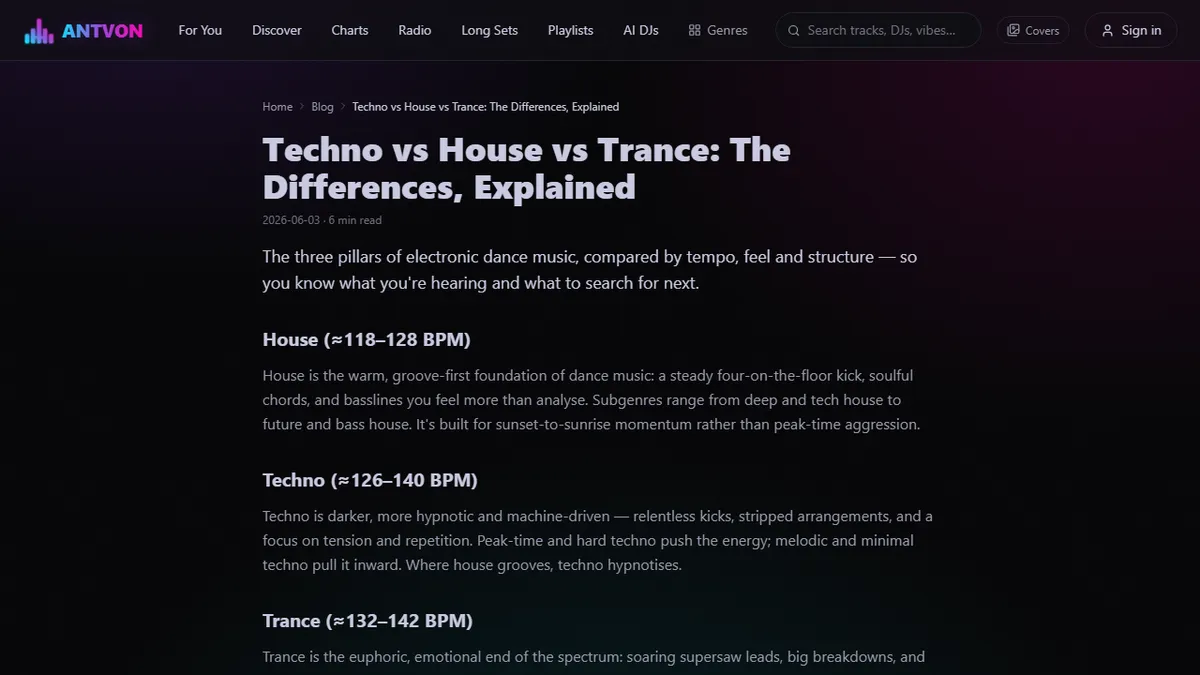
Hard techno pushes tempo and aggression to the outer limits of the genre, running at 140–150 BPM with distorted, pitch-shifted kicks and a general atmosphere of controlled chaos. It is an acquired taste even within the techno community, but it has built a devoted following at underground events.
Anatomy of a techno track: kick, groove, tension, release
The kick drum is the foundation of every techno track. Its weight, timing precision, and frequency character define the energy of the whole track. A techno kick typically occupies the sub-bass frequencies (somewhere below 80 Hz) and is tuned rather than simply hit, meaning it has a pitch that interacts with the rest of the mix.
Around the kick sits the groove: the combination of hi-hats, claps, percussion loops, and bass patterns that give the track its rhythmic texture. Contrary to the assumption that techno is rhythmically simple, the groove in a well-produced techno track is complex: it creates a sense of momentum and slight syncopation that keeps the listener's body engaged even when the harmonic content is near-static.
Tension in techno is built through accumulation and restraint: new elements enter slowly, filters open gradually, the harmonic tension rises without resolving. Release comes not with a triumphant major chord but with a drop back to the raw kick and groove after a period of suspended tension. This cycle of accumulation and release, repeated across a long-form track, is what creates the distinctive transformative feeling that experienced techno listeners describe.
How to train your ears: what to listen for on first plays
New listeners typically attend to the wrong things when approaching techno for the first time. They listen for melody, for chord changes, for a chorus, all the things that mark progress and familiarity in pop and rock. When those things don't arrive, the track feels static and unremarkable.
The better listening strategy is to attend to texture and time. On a first listen to any techno track, try to identify when a new element enters or exits. Count how long a section runs before something changes. Notice the relationship between the kick and the hi-hat. Are they locked together, or is there a slight swing? Listen for what is absent as much as what is present. This attentional approach trains the ear for the language the music is actually speaking.
BPM and energy: why tempo matters more in techno than other genres
At 132 BPM, techno creates a physiological effect that operates below conscious awareness. The tempo maps onto a slightly elevated resting heart rate, and sustained exposure to rhythmic audio at this frequency has measurable effects on perceived energy, body movement, and subjective time perception. This is why the same person who finds a techno track boring in headphones at a desk may find the same track genuinely overwhelming at a club at appropriate volume.
The physical dimension of techno is part of the musical appreciation, not separate from it. Experienced techno listeners seek out tracks in specific BPM ranges depending on what physical and mental state they want to achieve or sustain. The free techno streaming catalogue across all subgenres allows filtering by BPM, which is one of the most useful tools for building a listening practice around the energy states that techno produces.
Building a listening habit: radio, playlists, and deep catalogue
The best introduction to techno is sustained exposure over time rather than a single intensive listening session. Genre radio (a continuous stream of tracks curated to a specific subgenre) is ideal for building familiarity without the cognitive load of actively selecting tracks. After thirty or forty hours of passive exposure to melodic techno or minimal techno, the grammar of the genre becomes intuitive and the subtle variations between tracks become audible.
Once the genre radio approach has established basic familiarity, moving into a deep catalogue (exploring tracks by specific AI DJs or producers, following the connections between tracks that appear in the same sets, investigating the relationship between minimal and melodic subgenres) becomes far more rewarding. The music rewards patience and cumulative attention in a way that genres built around immediate melodic impact cannot.