Mistake 1: Thinking the Guy Who Bleeds More Is Losing the Fight
Blood is the most viscerally compelling thing a new MMA viewer can see. A fighter with a cut above the eye, a swollen face, or a bloody nose looks like he is losing. The crowd responds to it. Commentators mention it. And in almost every sport most new fans have watched before, visible physical damage correlates directly with being on the wrong end of the exchange.
MMA does not work that way, for a specific anatomical reason. Many of the most significant-looking cuts in UFC history have come from glancing blows, head clashes, or elbows that opened skin rather than delivered concussive force. A fighter can cut badly on a routine jab. Meanwhile, clean, precise punches that cause genuine neurological disruption often leave no surface mark at all: the damage is internal, not visible.
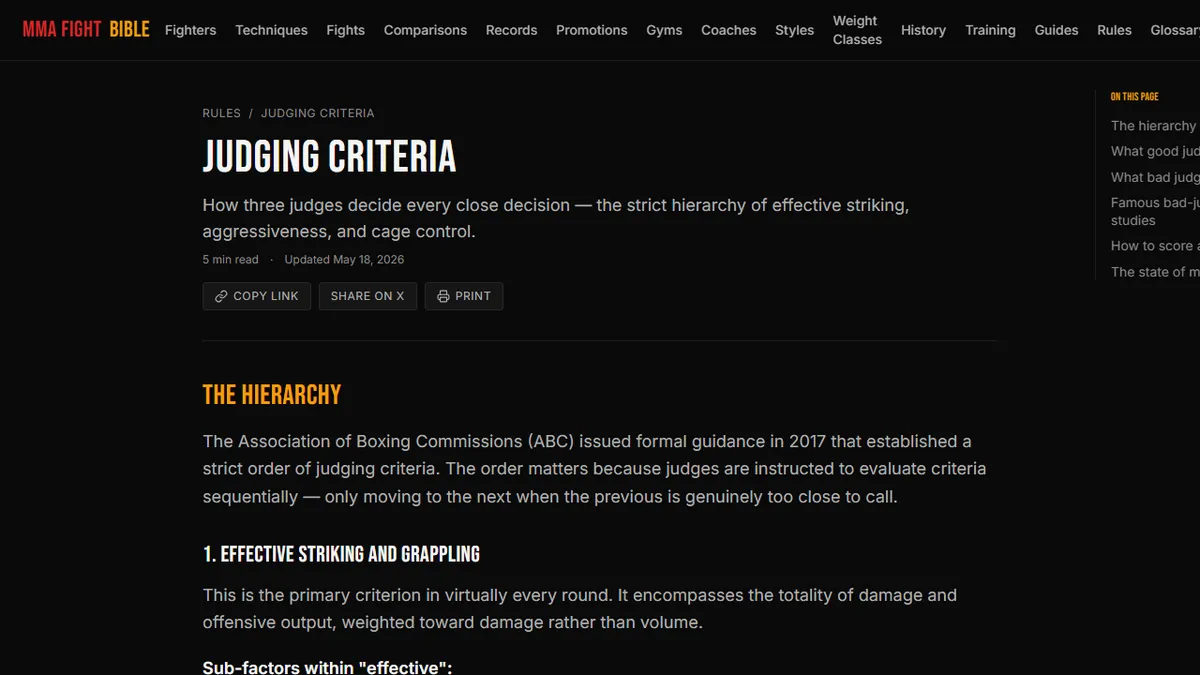
The official criteria for scoring ask judges to assess effective striking (which includes damage, accuracy, and defense), not cosmetic damage. A fighter who is bleeding but landing the cleaner shots, controlling distance, and outworking their opponent in every measurable way is still winning the round. The blood tells you about skin fragility and the quality of a specific landing. It does not tell you about the score.
Mistake 2: Scoring Forward Pressure as Effective Aggression
This is the single most common reason fan scorecards diverge from official results. When one fighter spends three rounds pressing forward, chasing the opponent around the cage, and throwing the higher volume of strikes, the crowd generally gives that fighter the round. The term the Unified Rules use for this type of behavior is effective aggression, and the word "effective" is the entire point.
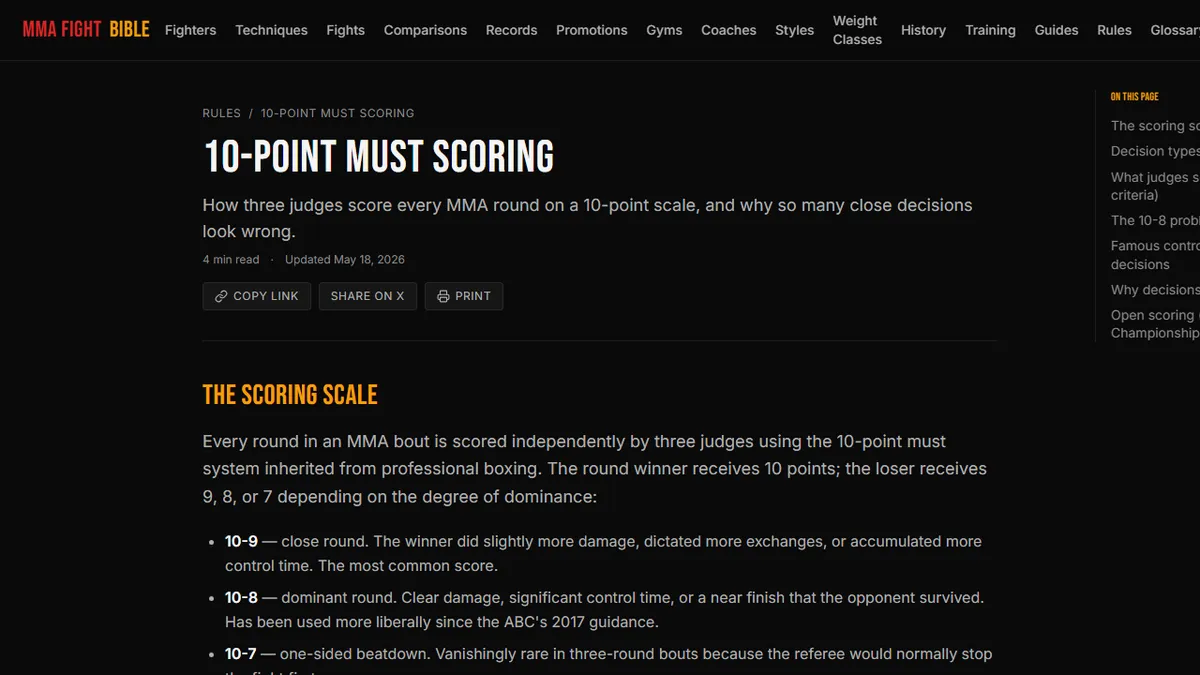
How the ten-point must system actually scores rounds is explicit on this: aggression is only counted when it is producing offense: when the forward movement is resulting in damage, near-finishes, or successful takedown attempts. A fighter who marches forward for three minutes and absorbs clean counter shots during every advance is not demonstrating effective aggression. They are demonstrating ineffective aggression, which scores nothing.
The confusion arises because forward pressure looks like intent and desire. It signals willingness to engage. But intent and desire are not scoring criteria. The counterfighter who circles out, lands clean shots, and denies the forward-pressing fighter any meaningful offense is winning by the rules, even if the crowd is behind the guy coming forward.
Mistake 3: Ignoring Top Control Time During Grappling Rounds
When a fight goes to the ground and the top fighter is not landing visible ground-and-pound, new fans often tune out the grappling exchange and wait for the fight to stand up again. This leads to systematically under-scoring grappling rounds in favor of fighters whose preferred method is striking.
The effective grappling criterion rewards not just submission attempts and takedowns; it includes control time in dominant positions. A fighter who puts their opponent on the mat, advances to a dominant position, and holds that position for three minutes of a five-minute round has won the effective grappling criterion for that round, even if they did not land a single punch from top. That accumulated positional control has tactical value: it forces the bottom fighter to expend energy defending, it prevents the bottom fighter from striking or attempting offense, and it wears down the cardio reserve that a striker needs for late rounds.
Judges at elite level understand this. The mistake new fans make is expecting ground rounds to look like striking rounds: visible, scored through clear landed attacks. Many of the most decisive grappling performances in UFC title fight history look quiet from the broadcast angle.
Mistake 4: Calling Every 10-9 Round a 'Clear' Win
The 10-point must system scores competitive rounds as 10-9 by default. This means the margin can range from a single clean exchange that was not answered to three rounds of completely one-sided dominance, and both produce the same scorecard number. New fans often hear post-fight scorecards announced and assume each 10-9 round represented a clear, obvious advantage. In reality, the same 10-9 designation covers everything from close rounds to moderately competitive ones to rounds where one fighter barely won the last thirty seconds.
This matters because it shapes expectations for what a "robbery" actually looks like. When three rounds each went 10-9 to different fighters over a five-round fight, and the decision is tight, calling the result a robbery implies the judges got the math wrong. Often what happened is that three very close rounds went to one fighter by margins the official scorecard cannot distinguish from dominant wins.
A genuinely dominant round — one featuring a knockdown, a near-finish, significant top control time with visible damage, or a sustained period where one fighter had no meaningful offense — earns the 10-8. When that designation appears on a scorecard, it is the system flagging something qualitative that the 10-9 default cannot express.
Mistake 5: Discounting Cage Wrestling as 'Stalling'
The most misunderstood phase in all of MMA is the fence clinch — the wrestling exchange where one fighter has the other pressed against the cage wall, trying to complete a takedown or score from the clinch range. New fans frequently read this as both fighters stalling and request that the referee restart the action. Sometimes the referee agrees. Often they do not, and the crowd gets frustrated.
Here is what is actually happening: the fighter pressing the opponent against the cage is attempting to isolate a body-lock position for a takedown or to score with short knees to the body. The defender is framing against the cage, using the fence as a third support point to maintain base, and fighting off the hands that are trying to complete the entry. Both fighters are working in a very tight space against significant resistance.
Cage wrestling scores under the effective grappling criterion when one fighter is clearly winning the exchange: when takedowns are being attempted, when the attacker is denying the defender's frame attempts, when the physicality of the exchange is clearly advantaging one side. The fighters who use this method strategically (pressing a shorter, lighter-framed opponent against the fence and refusing to let them operate in open space) are executing a legitimate tactical approach that judges are instructed to recognize and reward.
Knowing visual cues that a finish is about to happen can help recalibrate attention during these phases. Not every moment of a fight announces itself loudly. The most decisive exchanges are sometimes the quietest ones.
What You Should Actually Watch on the Replay
Post-fight replays offer something live broadcasts rarely can: the ability to observe both fighters simultaneously rather than following the camera's narrative choices. When a round feels contentious, watch the replay with one question per viewing pass: first pass, who is landing cleaner; second pass, who is controlling position; third pass, who is dictating range. Three passes with a single criterion each will generally align your scorecard more closely with what the judges saw from cageside, and will almost certainly reduce the volume of post-fight outrage.