Why Romance Scams Are Not the Victim's Fault
Before any practical steps: the emotional experience of discovering a romance scam is not analogous to being tricked into buying a faulty product. The relationship that was lost (however manufactured) was real in its psychological effect. Attachment formed. Care was expressed and received. Plans may have been made. Discovering that every moment was engineered by a fraud operative does not erase the neurological reality of what was experienced.
Romance scam operators are skilled manipulators who often work in teams, with individuals responsible for different emotional phases of the relationship. Some operations involve dozens of people managing hundreds of targets simultaneously, each using detailed profiles and scripted responses refined through thousands of previous victims. A person who formed genuine feelings in response to a sophisticated, sustained campaign of affection and trust-building was not naive. They were targeted.
This framing matters practically as well as emotionally. Victims who internalise shame often delay reporting, avoid telling family members, and are more susceptible to the recovery scams that follow precisely because they cannot face admitting the original loss to people they trust.
Immediate Steps: What to Do in the First 48 Hours
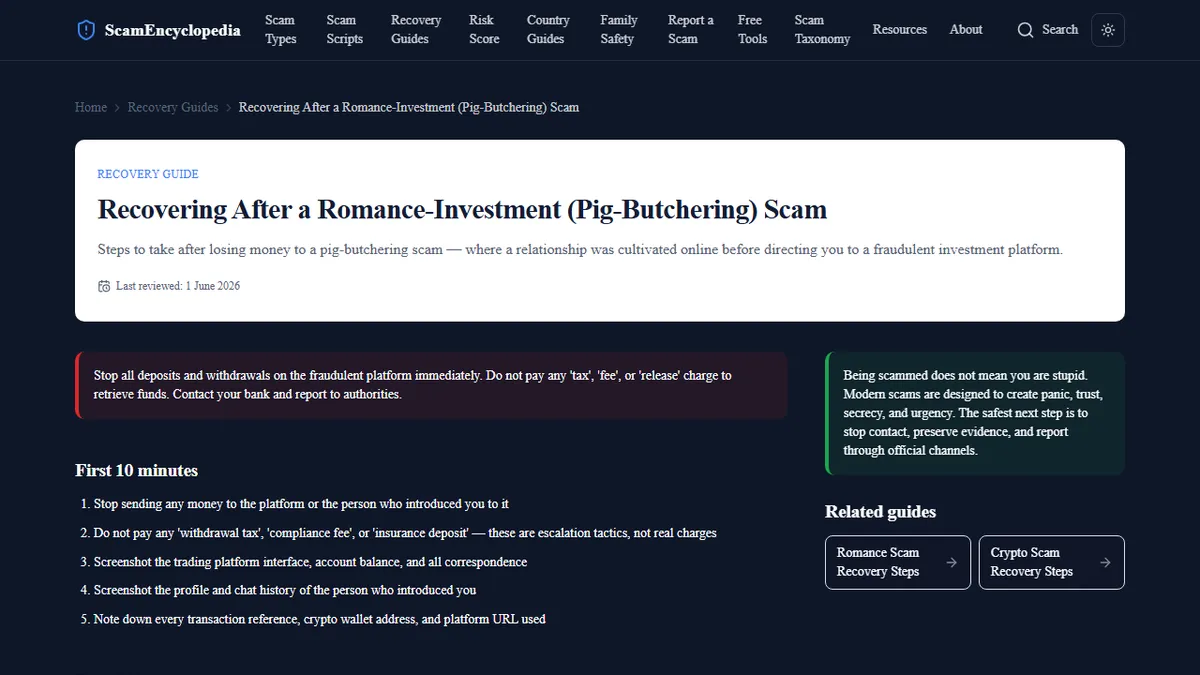
The first priority is to stop all contact with the person or platform involved. Do not explain, accuse, or challenge. Simply stop responding. Any engagement gives the operative an opportunity to maintain the relationship long enough to extract further funds or information.
In the same window, capture evidence before it disappears. Screenshot every conversation thread, profile, photograph, and communication you have. Back these up to cloud storage and email copies to yourself. Dating profiles, email addresses, phone numbers, and website URLs should all be documented with dates and timestamps where possible. Scammers typically delete profiles and change contact details quickly once a victim has disengaged, and the window for evidence capture is narrow.
Change the passwords for any accounts the person had access to: email, social media, financial platforms. If you shared your physical address, workplace, or daily routine, be aware that this information could be used in follow-on contact.
Financial Recovery: Contacting Your Bank and Managing Expectations
Contact your bank as soon as possible after stopping contact, the same day if you can. Explain that you have been the victim of fraud and provide transaction details. In the UK, banks are required under the Contingent Reimbursement Model to reimburse authorised push payment fraud in many circumstances, though the specifics depend on when and how the payment was made and whether the bank met its obligations to warn you at the point of transfer.
For credit card payments, file a chargeback claim immediately. Credit card fraud protections are more robust than bank transfer protections in most jurisdictions and chargeback timelines are strict. Delay can forfeit your right to dispute.
Managing expectations is important. For cryptocurrency transfers, cash payments, gift card payments, and wire transfers to overseas accounts, recovery is rarely possible through conventional channels. Banks will log the report and provide a reference number for your records, but the likelihood of fund recovery in these cases is low. A realistic understanding of this does not mean you should not report (reporting creates official records that may support insurance claims and contributes to broader enforcement intelligence), but it does mean you should not make financial decisions (such as paying a recovery service) based on optimistic expectations.
For a practical recovery checklist for romance and investment fraud victims, working through each category methodically reduces the risk of missing a recoverable element while also capturing the documentation every agency will need.
The Recovery Scam Trap: How Fraudsters Target Romance Victims a Second Time
Within days of posting on a victim forum, filing a report, or searching online for help, many romance scam victims are contacted by individuals offering to recover their lost funds. These recovery services charge upfront fees, claim specialist legal or technical abilities to reverse cryptocurrency transactions or trace overseas transfers, and in some cases are operated by the same networks that ran the original scam.
Cryptocurrency transactions on public blockchains are technically traceable but not reversible. A company that claims to recover crypto by exploiting technical vulnerabilities or regulatory levers is almost certainly fraudulent. The same applies to services claiming to pursue legal action on your behalf for a fee paid in advance.
Legitimate support organisations (Action Fraud in the UK, the FTC in the US, local police) do not charge for their services. Citizens Advice, Victim Support, and similar charities can direct you to genuine resources at no cost. If someone contacts you offering paid recovery services after you have posted publicly about being scammed, treat that contact as another attempted fraud regardless of how professional their website or documentation appears.
For anyone trying to support a friend or family member who is in contact with a suspected scammer, the approaches that work are different from direct confrontation. Understanding how to help someone who is still emotionally invested in a scammer is particularly important in cases where the victim is not yet convinced the relationship is fraudulent.
Reporting: Which Agencies to Contact and What Evidence They Need
In the UK, report to Action Fraud (actionfraud.police.uk) with your evidence package — screenshots, transaction references, dates, communication logs, and a chronological account of the relationship and the money transferred. Action Fraud does not investigate individual cases directly but passes intelligence to the National Fraud Intelligence Bureau, which identifies patterns and supports broader enforcement. Reports also create an official record for insurance purposes.
In the United States, report to the FTC at reportfraud.ftc.gov and to the FBI's Internet Crime Complaint Center at ic3.gov. If the fraud involved a dating platform, report the profile to the platform directly. Most major platforms have dedicated fraud teams and will cooperate with law enforcement requests.
Provide as much identifying information as possible: phone numbers, email addresses, Whatsapp or Telegram handles, profile screenshots, any names used, any photographs sent (which may be stolen from real individuals and traceable via reverse image search), and any websites or platforms referenced.
Emotional Support Resources and Why Isolation Makes Recovery Harder
The shame and embarrassment many romance scam victims feel are precisely the emotions fraudsters count on to prevent reporting and disclosure. Research on fraud recovery consistently shows that victims who disclose to trusted friends or family and who seek peer support from other survivors have better emotional outcomes and are less likely to be targeted again.
The Global Anti-Scam Organisation (GASO) runs peer support groups for pig-butchering and romance scam victims. Victim Support in the UK offers free confidential support regardless of whether a crime has been reported to police. In the US, the AARP Fraud Watch Network provides a helpline and community forums.
Talking to others who have had similar experiences normalises the response and reduces the self-blame that otherwise dominates recovery. It also provides practical intelligence about which recovery resources are genuine and which are themselves fraudulent.
Rebuilding: When and How to Consider Online Relationships Again
There is no fixed timeline. Some people find that returning to online socialising relatively quickly — with updated awareness — is part of recovery. Others need a longer period of distance. Both are valid responses. The goal is not to prevent future connection but to approach it from a more informed position.
The signs of a genuine online connection include a consistent willingness to video call early in the relationship, a verifiable presence across multiple independent platforms, an absence of manufactured financial urgency at any stage, and contact that does not become exclusive or possessive unusually quickly. These markers do not guarantee authenticity but they make sophisticated fraud significantly harder to maintain.