Start With the Edition in Force
This guide checks the 2026 rules, effective from 1 January 2026. AOD-9604 is explicitly named in section S2.2.3; it is prohibited both during and outside competition. Calling it a grey area in a 2026 guide is incorrect. WADA 2026 Prohibited List, pages 3 and 8
UK Anti-Doping says the 2027 edition has already been published and takes effect on 1 January 2027. Keep the edition and effective date beside any saved result. A newer publication date does not make the next year's rules effective early. UKAD's 2027 changes
Three Examples You Can Check Yourself
Open the official 2026 PDF linked below, search each name and read the surrounding section. The table gives the destination rather than relying on a supplier's classification.
| Search term | 2026 location | Finding |
|---|---|---|
| BPC-157 | S0, page 4 | Named example of a non-approved substance |
| AOD-9604 | S2.2.3, page 8 | Named growth hormone fragment |
| TB-500 | S2.3, page 8 | Named example among thymosin-beta4 derivatives |
All three entries sit within categories prohibited at all times. S0 applies to pharmacological substances outside the later sections that lack current governmental approval for human therapeutic use. Read both parts of that definition. WADA 2026 List, S0 and S2
What a Failed Name Search Means
A missing search result does not establish permission. UKAD explains that the List covers unnamed substances with relevant structural or biological similarities too. Do not turn a failed search for KPV, larazotide or another peptide into a permitted-substances list. UKAD's explanation of the List
For an unresolved peptide, write down the exact name, synonyms, product information and the section you checked. Send that question to the relevant anti-doping organisation before treating the result as settled. UKAD directs questions about non-approved peptides to [email protected]. Its 2027 summary also notes that experimental peptides are not exhaustively named. UKAD's peptide clarification
Keep a Record Someone Else Can Reproduce
Use one row per check. Here is a worked record for the example above:
| Field | Example entry |
|---|---|
| Question | Is AOD-9604 named in the 2026 List? |
| Document | Official English 2026 Prohibited List |
| Effective date | 1 January 2026 |
| Search and location | AOD-9604; S2.2.3; page 8 |
| Result | Explicitly named; prohibited at all times |
| Checked | 18 October 2026 UTC |
| Next action | Recheck the applicable edition before relying on this record later |
The entry is a document lookup. It does not identify the contents of a purchased vial or assess a research protocol. Keep questions about product identity, medicines regulation and institutional approval in separate records with their own evidence. This guide corrects the AOD-9604 wording in the network explanation of how the WADA Prohibited List categories apply to research peptides. For wider background, the network also discusses the full UK regulatory framework for research peptides in 2026. Verify each regulatory question against its own authority; neither network page establishes anti-doping clearance.
For Athletes and Support Personnel
UKAD explains that responsibility for substances found in an athlete's system does not depend on an intention to cheat. It recommends checking medicines through Global DRO and telling medical staff about applicable anti-doping rules. For a medical treatment question, follow the relevant therapeutic-use-exemption process with qualified advice. UKAD's athlete guidance
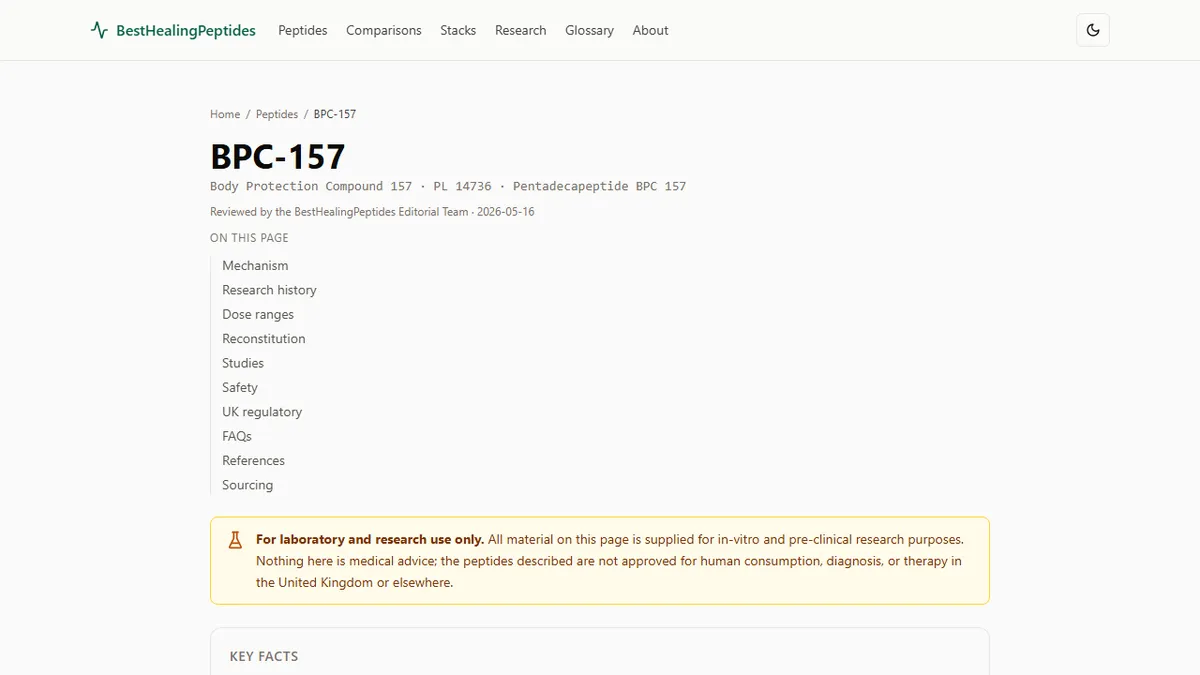
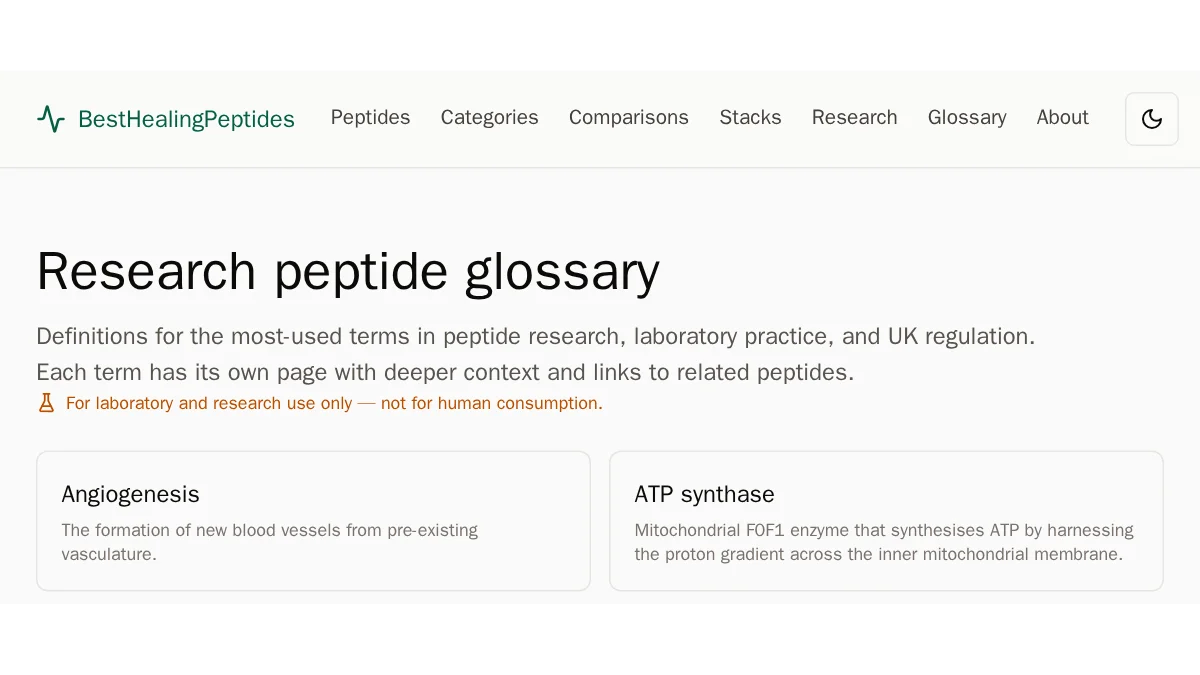
Cover: BestHealingPeptides glossary, captured 18 October 2026. Website text and design used with the owner's authorisation; Lucide and Feather icon licence. The cover shows glossary navigation, not an anti-doping search result.