BPC-157: Gastric Origin, Angiogenesis, and Tendon Research
Body Protection Compound-157, universally abbreviated to BPC-157, is a synthetic 15-amino-acid peptide derived from a protein found in gastric juice. That origin is not incidental to its research profile — the connection between gastric-origin compounds and gastrointestinal healing drove the earliest BPC-157 investigations, and the peptide has since accumulated a research footprint that extends well beyond the gut.
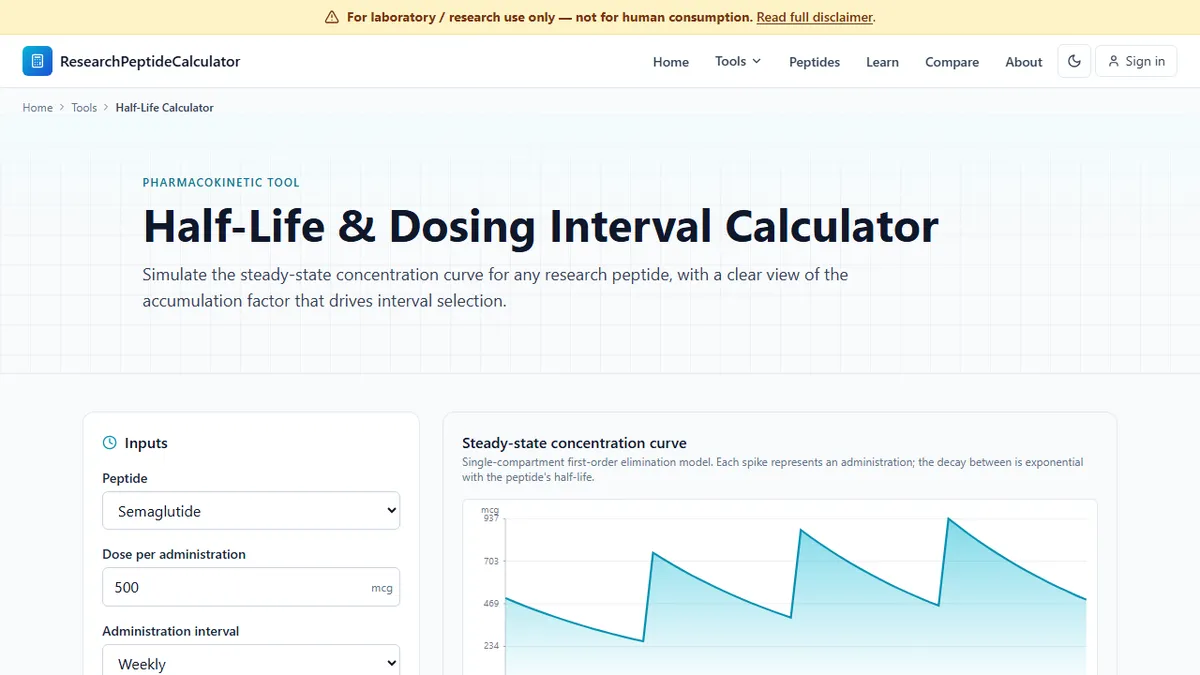
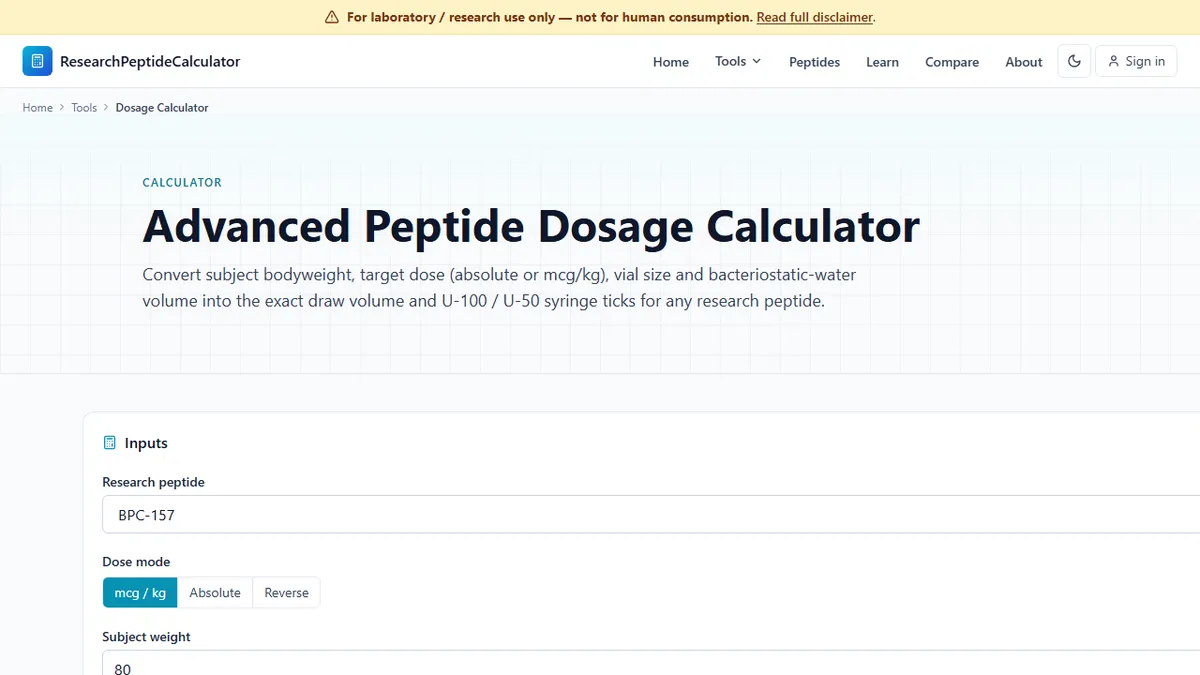
BPC-157's molecular weight is approximately 1,419 daltons and its half-life is roughly four hours, placing it in the short-half-life category that requires daily or twice-daily subcutaneous administration to maintain consistent research-phase exposure. Typical research doses range from 250 to 500 micrograms daily.
The mechanistic focus of BPC-157 research centres on two pathways: angiogenesis and tendon repair. On the angiogenesis side, studies in animal models document accelerated formation of new capillary networks in damaged tissue, a finding with relevance to any repair context where adequate blood supply is the limiting factor. On the tendon side, BPC-157 has been among the most studied peptides for fibroblast proliferation and collagen synthesis in tendon and ligament models. These two mechanisms are related (improved local vascularity supports the cellular activity of repair), but they operate through distinct receptor-level events.
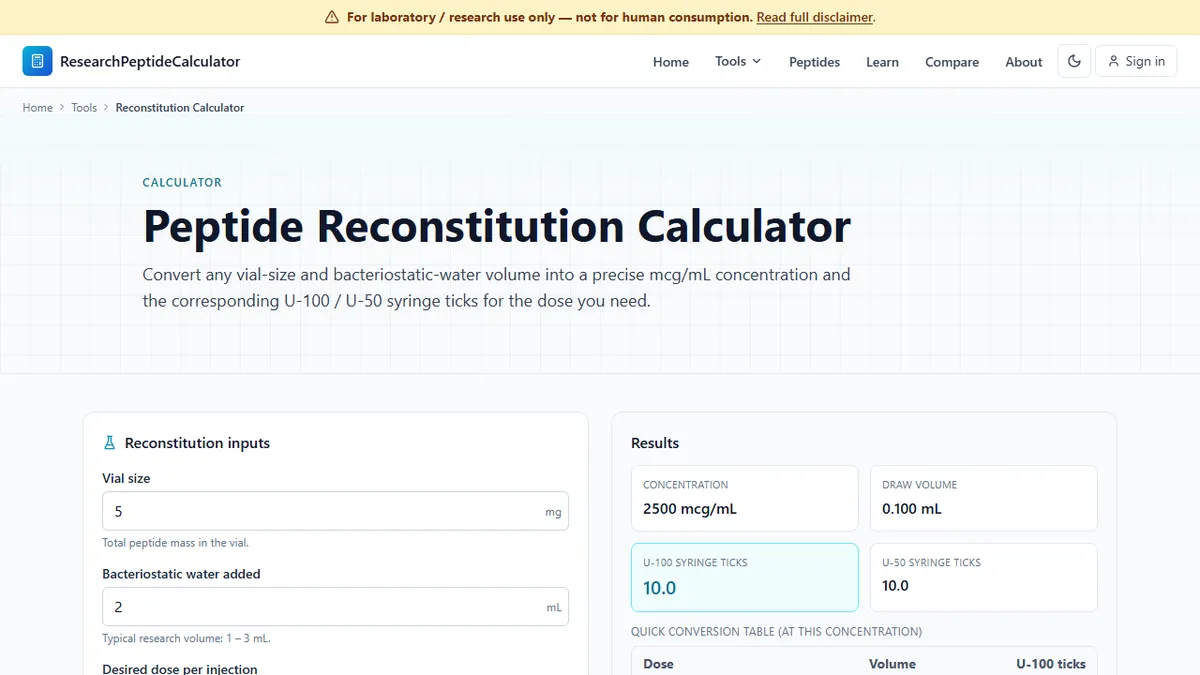
For a comprehensive overview of the reconstitution parameters and mechanism detail, the BPC-157 full research profile including reconstitution defaults provides the relevant data.
TB-500: Actin Sequestration and Cell Migration
TB-500 is a 17-amino-acid synthetic fragment derived from Thymosin Beta-4, an endogenously expressed peptide found in many tissue types. With a molecular weight of approximately 4,963 daltons and a half-life near 60 hours, TB-500 is pharmacokinetically distinct from BPC-157 in every measurable way: it is larger, it lingers far longer, and it requires only twice-weekly rather than daily administration at typical research doses of 2 to 5 milligrams.
The mechanistic research on TB-500 focuses on its interaction with actin: specifically, its ability to sequester actin monomers (G-actin) and modulate the dynamic between polymerised filament actin (F-actin) and its soluble precursor form. This actin-sequestration activity has downstream implications for cell migration, which is a rate-limiting step in tissue regeneration. Cells that need to move to a wound site to begin repair work must detach from the extracellular matrix, navigate tissue, and re-attach. TB-500's influence on this migratory capacity is the central focus of its healing-class research.
This mechanism is categorically different from BPC-157's angiogenic and fibroblast pathways. TB-500 does not primarily act by building new blood vessels or directly stimulating collagen-producing cells. It acts by enabling the cellular movement that precedes and enables tissue-level repair.
Where the Mechanisms Overlap and Diverge
Both peptides are categorised as healing-class compounds, both are researched in contexts involving soft-tissue injury models, and both have been studied in protocols measuring recovery-related endpoints. The superficial similarity ends there.
BPC-157 is primarily angiogenic and fibroblast-focused. TB-500 is primarily actin-regulatory and cell-migration-focused. The downstream outcomes these mechanisms produce can overlap (improved healing is the common destination), but the pathways leading there are distinct enough that the two compounds are not pharmacologically redundant.
This mechanistic non-redundancy is the core rationale for their pairing in research. A protocol that includes both is not simply doubling down on the same signal. It is targeting the cellular movement step with TB-500 while simultaneously targeting the vascular and structural repair steps with BPC-157. Whether these effects are additive, synergistic, or independent in any given tissue context remains an open research question, which is precisely why the combination is so frequently co-investigated.
Interaction Classification: Caution, Not Avoid
When two healing-class peptides are combined, the relevant question for any research protocol is not just "do these mechanisms differ?" but "do they interact in ways that could confound the research or present safety concerns?"
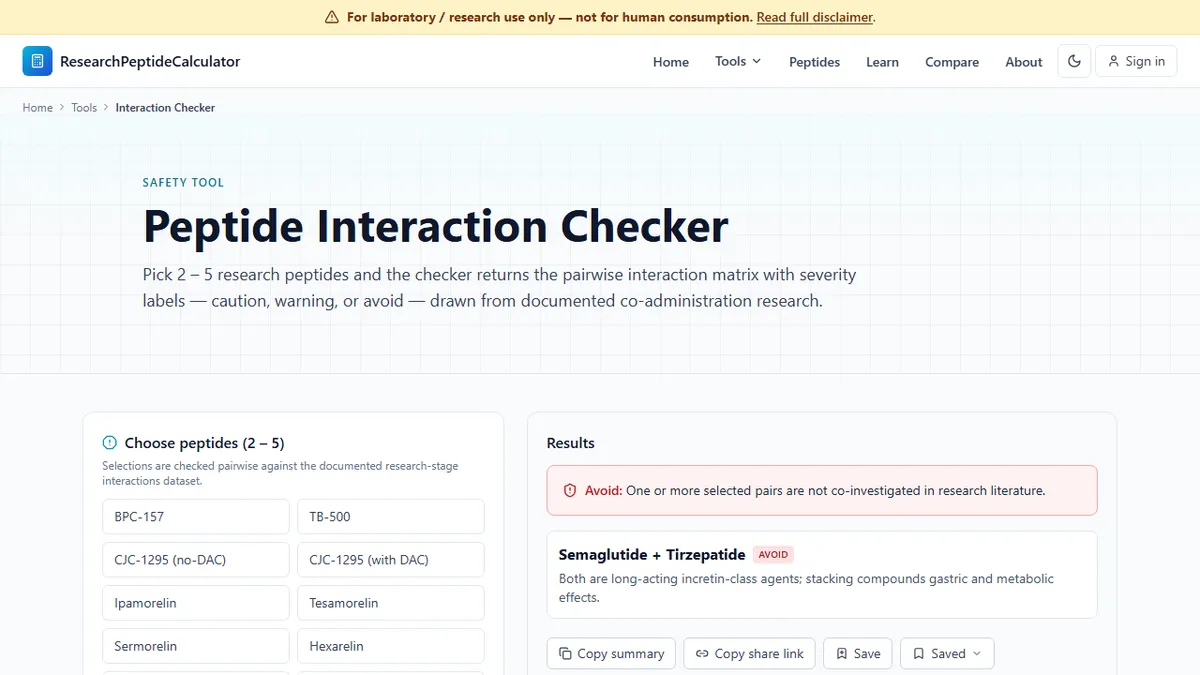
For BPC-157 and TB-500, the published interaction data places this pairing in the caution category, not warning, and not avoid. Understanding what caution means in this classification system is essential for interpreting it correctly. Caution indicates that the combination has enough mechanistic overlap or shared research-stage uncertainty to warrant monitoring and awareness, but it does not reflect a documented harmful interaction or redundant receptor engagement that would produce additive unwanted effects. This is categorically different from an avoid classification, which would indicate either dangerous pharmacological overlap (as with two GLP-1 agonists competing for the same receptor) or a documented adverse interaction profile.
In the case of BPC-157 and TB-500, caution reflects two realities: the combination is extensively researched and no serious safety signals have been reported in the literature, but the interaction between their respective mechanisms has not been fully characterised. Researchers using both simultaneously should track the standard healing-class bloodwork panel (primarily hs-CRP and full blood count) as they would for either compound individually, while remaining alert to any response patterns that differ from single-compound baselines.
Dosing Schedules and Half-Life Mismatch
The dosing schedules these two peptides require are not aligned, and that mismatch is itself a relevant protocol design consideration. BPC-157's four-hour half-life drives daily or twice-daily administration. TB-500's 60-hour half-life supports twice-weekly administration at doses that span the 2 to 5 mg range.
In a combined protocol, BPC-157 administration events occur on days when TB-500 is not administered and also on days when it is. The practical consequence is that on TB-500 administration days, the researcher is co-administering the two compounds. On the five remaining days of the week, BPC-157 is administered alone. This asymmetry is not a problem — it simply means the combined exposure profile is not constant throughout the week — but it should be reflected accurately in the protocol schedule documentation.
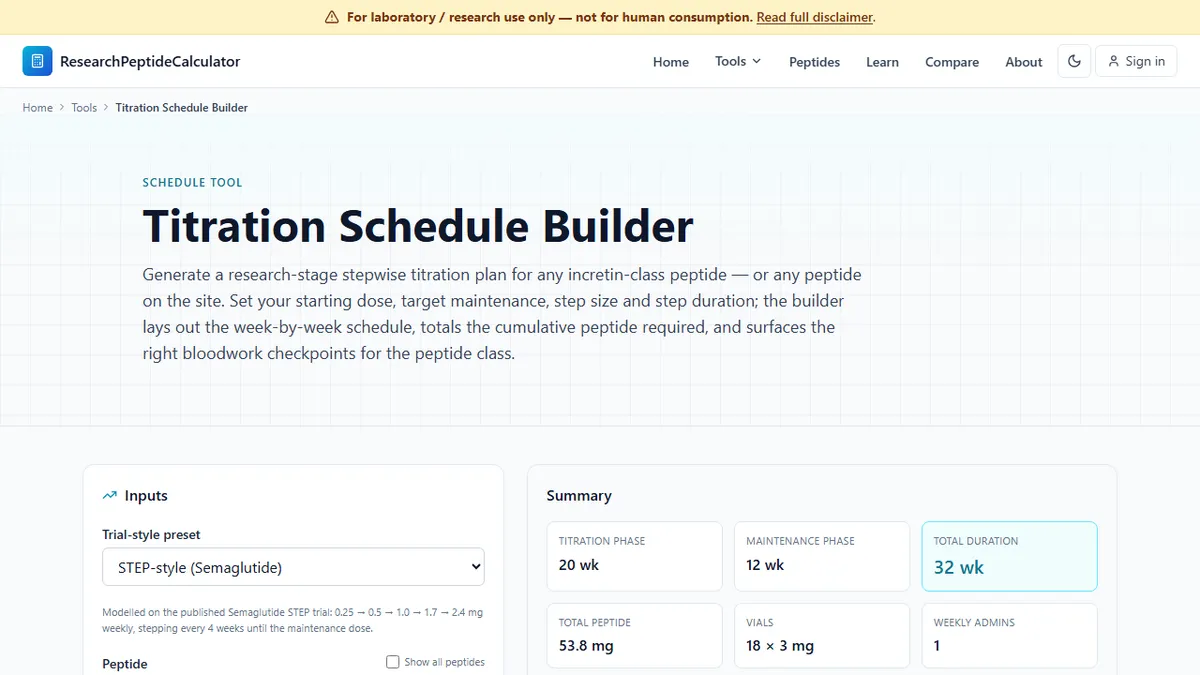
The different administration volumes also reflect the half-life difference. BPC-157 at 250 to 500 mcg from a typical 5 mg vial will draw very small volumes. TB-500 at 2 to 5 mg from a 5 mg vial reconstituted with 1 to 2 mL will draw comparatively larger volumes. Separate syringes and separate reconstituted vials are standard practice.
What Researchers Monitor During Combined Protocols
For any multi-peptide healing-class investigation, the bloodwork panel selected should reflect the tissue targets and mechanisms being studied. For BPC-157 and TB-500 in combination, hs-CRP as an inflammatory marker and a full blood count are the standard minimum. Depending on the tissue context, liver enzyme panels may be relevant given the existing gastric-origin research on BPC-157.
The practical baseline step that many researchers overlook is running a single-compound phase first. Establishing the individual response profile for BPC-157 alone, then for TB-500 alone, before introducing the combination creates a reference point that makes any combined-phase response legible. Without those individual baselines, it is impossible to determine which compound is producing which component of an observed response.
Before designing any multi-peptide healing protocol, it is worth using a dedicated tool to screen healing-class peptide pairings for interaction severity to confirm the current classification state of every compound in the protocol, not just the primary pairing.