Treating Bali as the Whole Country — and Skipping Java
Ask most first-timers what they plan to do in Indonesia and the answer is almost always "Bali." This is entirely understandable: Bali has the international airports, the beach club reputation, and the recognition factor. But it represents one island out of more than 17,000, and it accounts for a fraction of what the country actually offers.
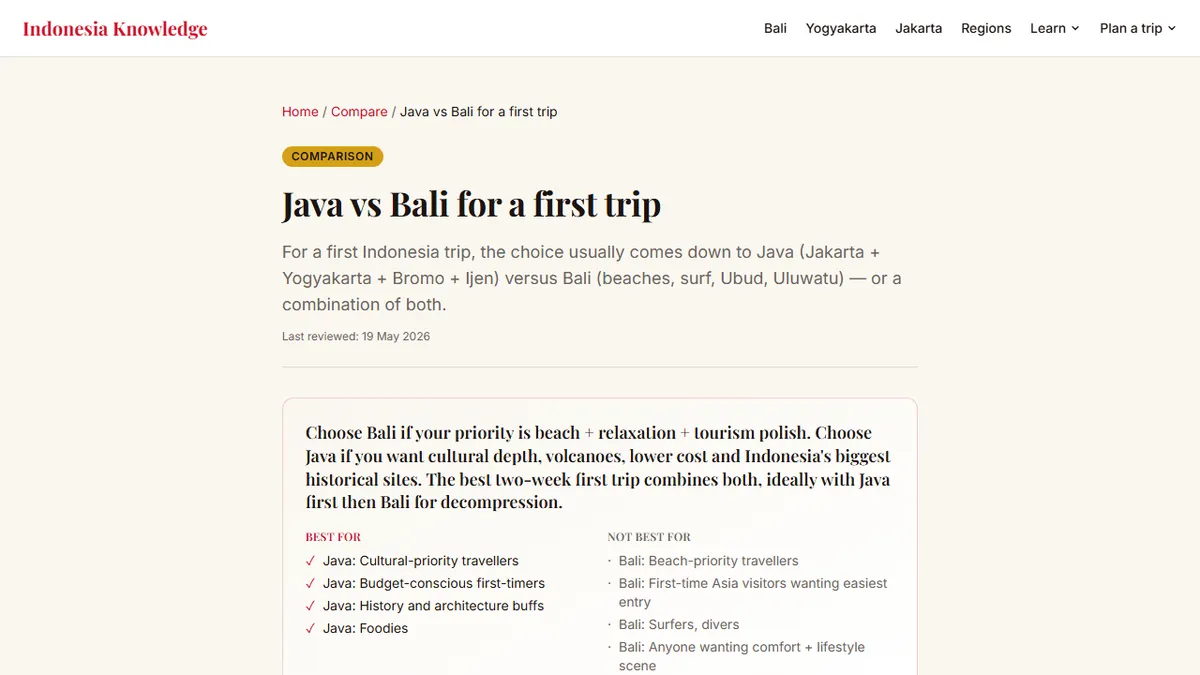
Java, the island directly to Bali's west, contains Yogyakarta's extraordinary temple belt, Jakarta's chaotic urban energy, and the volcanic landscapes around Mount Bromo. The question of which island suits a first-time trip better has a real answer that depends on your travel style, and for culture-seekers and adventurers, Java often wins. A standard two-week itinerary can comfortably combine both: Yogyakarta, Bali, and one outer island, using domestic flights that rarely exceed eighty dollars.
Booking Kuta When You Want Seminyak or Ubud Vibes
Kuta was Bali's original international tourism hub, and it still captures first-time bookings through name recognition and low room prices. What those prices don't advertise is the area's current reality: a dense concentration of budget bars, hawker pressure, and traffic congestion that bears little resemblance to the Bali most people imagine when they picture the island.
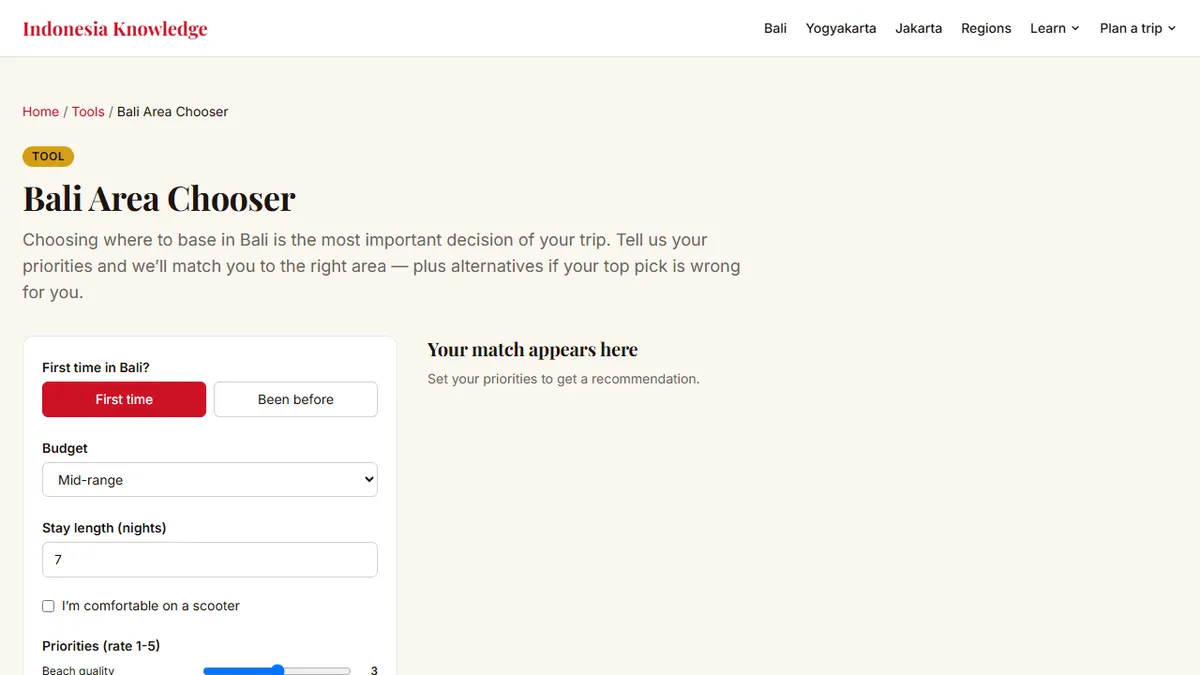
Seminyak and its northern neighbour Petitenget offer the same southern Bali access point but with upmarket restaurants, boutique shopping strips, and far less street hustle, at a modest price premium. Ubud, an hour's drive into the island's interior, is effectively a different destination entirely: rice terrace walks, temple ceremonies, yoga studios, and a pace slow enough to actually decompress. Matching your accommodation area to what you actually want from the trip takes ten minutes of research and determines the whole experience.
Underestimating Inter-Island Travel Time and Cost
The map of Indonesia compresses an enormous geography into a small frame. Java to Bali looks like a short hop; Bali to Lombok looks trivial; Lombok to Flores seems manageable. In reality, the flight and ferry connections between islands add up to serious time and money, and budget flight prices are not guaranteed unless booked several weeks in advance.
The route from Bali to Raja Ampat in West Papua, for example, involves at least two flights and a ferry, taking between 14 and 18 hours total travel time each way. Even shorter hops (Bali to Komodo) require a one-hour flight to Labuan Bajo and then boat transfers. The single most effective itinerary fix for first-timers is to visit fewer islands more slowly rather than trying to skip between six in two weeks.
Arriving Without a Visa Strategy
Indonesia's visa system has evolved considerably since the pandemic-era reopening. Most nationalities arriving at major airports are eligible for the Visa on Arrival (VOA), which grants 30 days extendable to 60. The electronic version, e-VOA, allows pre-approval online before departure and skips the immigration queue on arrival. Understanding how the e-VOA application works before you fly saves an unpredictable wait at the desk.
KITAS, the Temporary Stay Permit, is a separate instrument entirely. It is not a visa extension option for tourists but a longer-term sponsored residence permit. Confusing the two leads to either overstay penalties or unnecessary bureaucracy. If you plan to stay longer than 60 days, the decision between a social-cultural visa, the newer digital nomad E33G route, or the second-home visa should be made at least a month before departure.
Trusting Non-Bluebird Taxis and Unmetered Rides
Bali's airport exit is a tutorial in transport pressure. Unlicensed drivers approach arrivals with confident offers; fixed-rate counters in the arrivals hall look official but are often inflated. The reliable standard for metered taxis in major Indonesian cities has long been Bluebird Group, whose light-blue cabs use tamper-proof meters and have a formal complaints process. Grab and Gojek, the regional ride-hailing apps, now cover most of Bali and Java and are generally the easier option: standard rates, no negotiation required.
The risk from unmetered rides is not dramatic overcharging but the creeping normalisation of paying three to four times the reasonable fare on every journey. Over a two-week trip, that adds up to a meaningful budget impact and, more importantly, begins every interaction on a trust deficit that colours the whole experience.
Carrying Only Cards and Assuming ATMs Work Everywhere
Indonesia's banking infrastructure has improved dramatically in its major tourist hubs, but the archipelago's geography means that rural areas, outer islands, and small homestay towns frequently operate on cash only. The Gili Islands off Lombok have ATMs that run out on busy weekends. Small Flores towns between Labuan Bajo and Ende may have no functioning machine at all.
The practical rule is to carry enough Indonesian rupiah to cover several days of expenses whenever leaving a major city. ATM withdrawal fees from foreign cards also accumulate. Withdrawing larger amounts less frequently is both cheaper and lower-risk. Notify your bank before travelling; international transactions in Indonesia trigger fraud blocks more reliably than almost anywhere else in Southeast Asia.
Over-Scheduling: Why Indonesia Rewards Slower Itineraries
The temptation when planning any Southeast Asia trip is to optimise for coverage: as many islands, temples, and experiences as possible in the time available. Indonesia actively punishes this approach. Travel distances are large, transport connections can be unreliable, and the activities worth doing (sunrise at Borobudur, a full day snorkelling at a Komodo bay, a proper morning exploring Ubud's market) cannot be rushed without losing most of their value.
A trip of two weeks that commits to two or three locations and explores each properly will feel richer than an itinerary that attempts seven. The best Indonesia experiences — watching the light shift across Prambanan's spires in the late afternoon, sitting on a Raja Ampat homestay jetty at dusk — are not scheduled; they are what happens when you leave enough space.